

THE TOTEMS OF SALFORD UNIVERSITY
WRITTEN BY Hayley Flynn
IMAGES BY Hayley Flynn and William Mitchell
READING TIME: 4 minutes
"I don’t give a hoot if you don’t like them, just as long as you look at them"
- William Mitchell
Whilst on The Crescent in Salford, continue towards Salford University’s Allerton Building and there you will find the striking Minut Men by William Mitchell.
Perhaps the first critique of this concrete trio was by Prince Philip, in 1967 when he opened what was then the Technical College, and exclaimed:
“What the hell is that?”

Image Wiliiam Mitchell
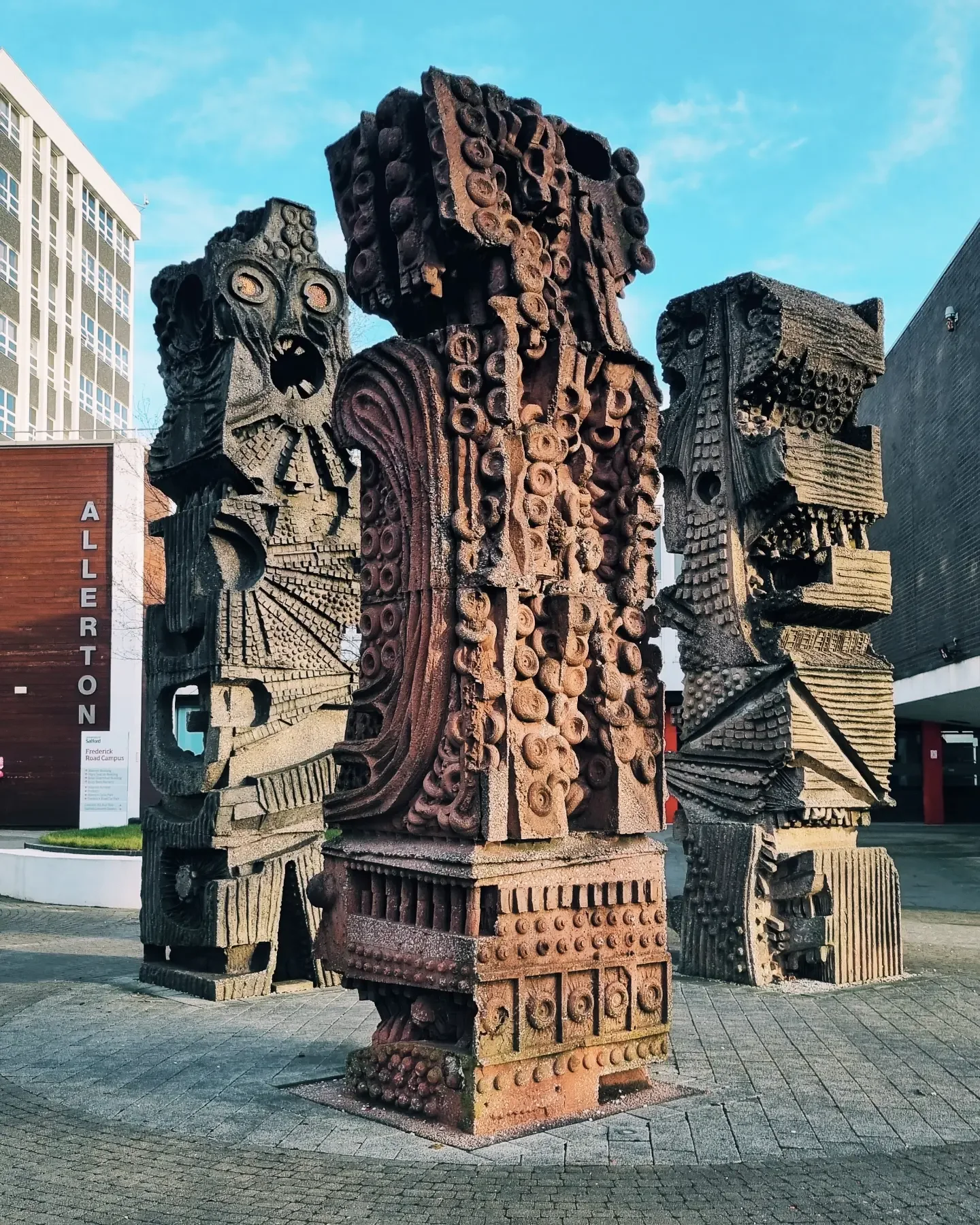
The three figures from 1966 are cast concrete and designed in a kind of Aztec style (long synonymous with Mitchell) and inset with mosaics. Each figure, sometimes referred to as Faith, Hope and Charity, stands 15 feet in height and weighs around 5 tons. William explains:
"The pavement was important to the positioning of the figures as they were etched to resemble a chess board, and the figures placed not only according to light which shone on the ‘faces’ at a particular time of day but were also related to the patterns carved into the pavings."
There’s very striking similarities between the totems, and Mitchell’s 1964 work Corn King and Spring Queen in Buckinghamshire which were influenced by ancient Anglo-Saxon fertility rites and totemic symbols. Mitchell said of them “they were similar to the Corn King and Spring Queen at Wexham Springs, but whereas the countryside around Wexham was green, leafy and lush - a fitting place for ancient fertility rites - Salford was workaday, but optimistic and go-ahead; a place where modern technology would be the future:
“My Minut Men brought the atmosphere of the stars and space travel with them - to show the way”.
The Minut Men were Grade II listed at the beginning of 2012.
In 2026, the Thrive health centre at University of Salford adopted motifs of the Minut Men into their new building facade.
The Minut Men are strapping men indeed, and all of Mitchell’s work has this heft to it - even when it takes the form of a relief it still invites you to look at the edges and see the depth of the work, Mitchell embraces the three dimensional and thinks that the act of using just the face of a wall is wasteful: "Why not show the thickness of a wall?".
A quote you can’t help but recall at the doors of the Liverpool (catholic) Cathedral whose depth is extraordinary. Mitchell also entombed his tools in these doors when the work was finished.
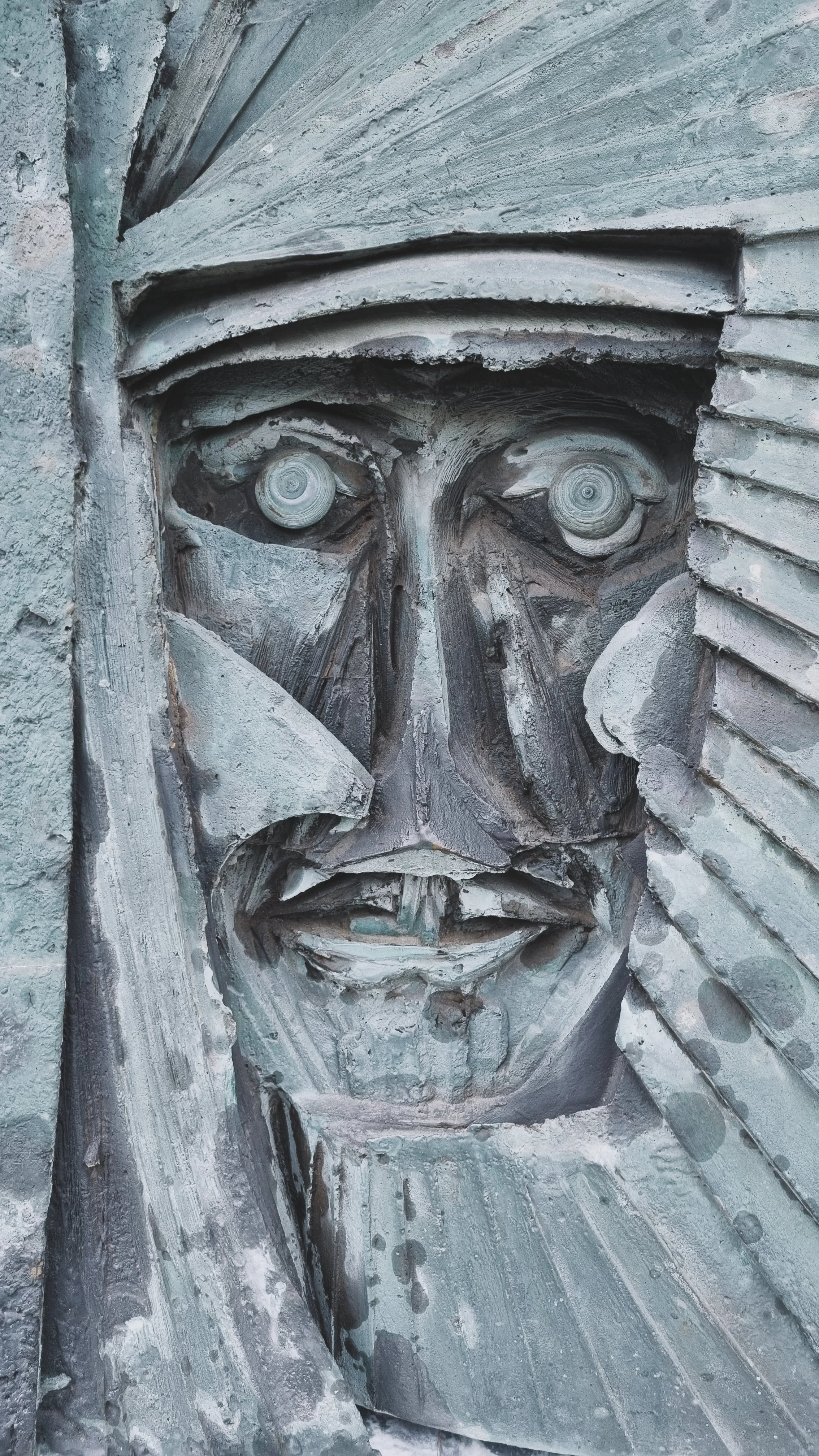
Liverpool Cathedral Doors
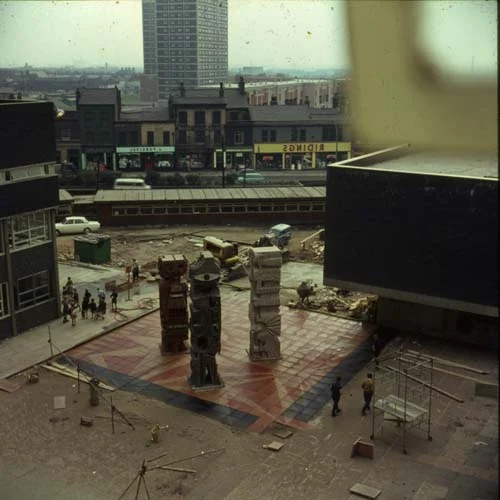
Image William Mitchell
A specialist in post-war architectural sculpture and recipient of the silver medal, Mitchell is a great believer in art and architecture merging as one and many of his works can be found in functional buildings around the country such as office blocks, educational facilites and hotels.
In Manchester you can find his works, including a giant mural made of old pianos and bottles tops, in the foyer of the Mercure Hotel (formerly Piccadilly Hotel); the gable end wall of City Tower; a fibre glass mural in the reception and a carving at the entrance of CIS Tower; around the lift shaft at Gateway House; sculpted panels on the exterior of the Humanties Building off Oxford Road; and a bit further out of Manchester there’s a frieze at the Turnpike Centre in Leigh.
Always experimenting with new techniques and materials, according to an interview with The Shrieking Violet, Mitchell realised after making his Minut Men statues that he would have to set fire to them on site in order to remove the plastic moulds.
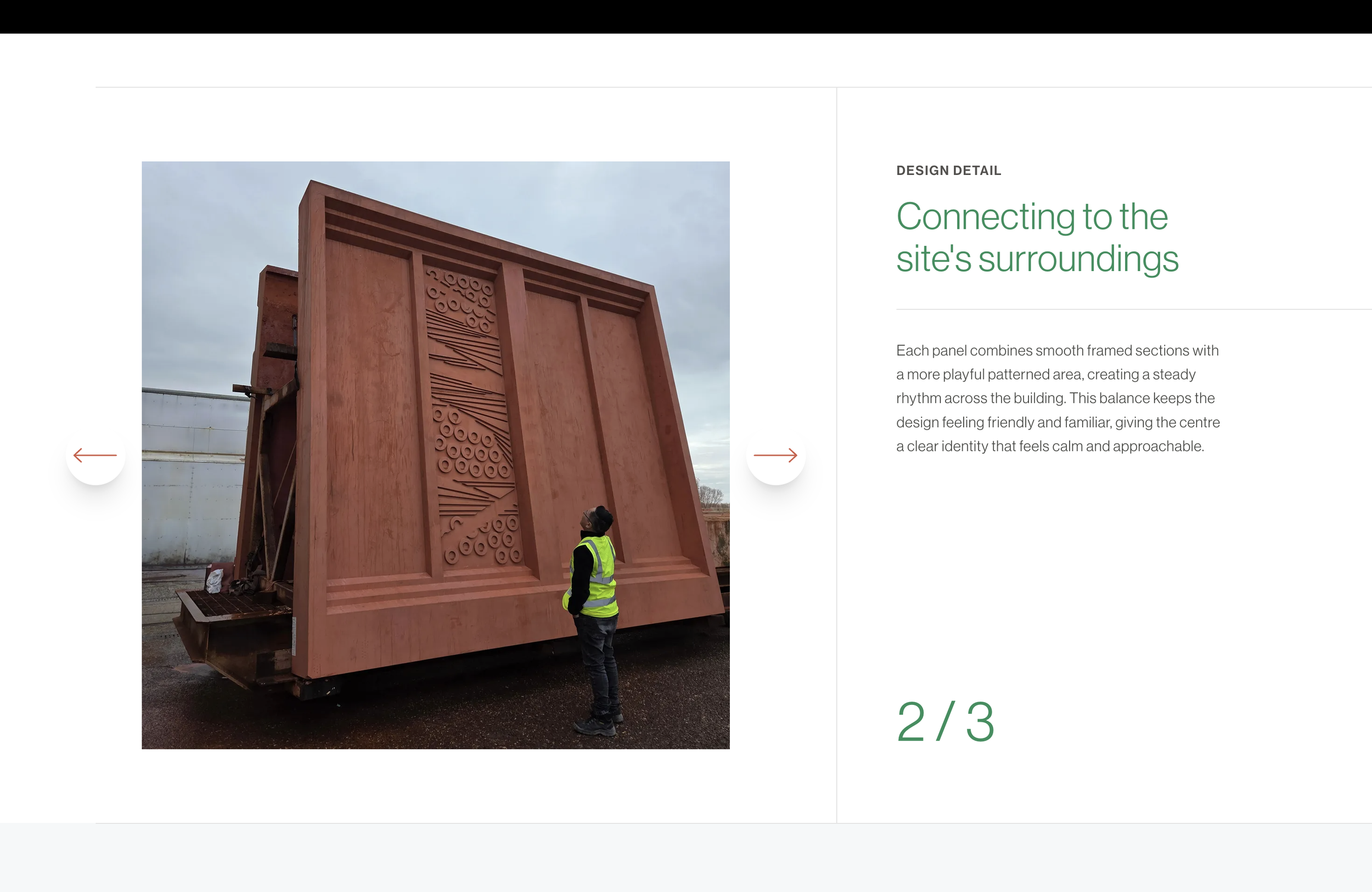
Image: AHR website showing the Minut Men motifs destined for the Thrive health centre building

Mitchell has never quite been recognised; seen as too experimental by some and too closely linked with architecture by others. It seems that finally this viewpoint is changing, with one of his works in Islington becoming the first mural to be listed in its own right (independently of a building).
This style of post-war art is often destroyed along with a building, and many pieces stand uncredited. Mitchell’s work was so prolific that he himself has trouble recalling his back catalogue.
In the summer of 2012 I spotted what looked like a Mitchell in the backdrop of BBC drama 'The Accused'. I sent a screenshot to Mitchell but his reply suggested that it wasn’t actually his work, rather an imitation, stating that he rarely worked in the round nor would he leave so much flat space:
"it could be ‘school of’ - a copy by one of the other ‘artists’ at the time."
There’s since been a bit of debate over this piece but it’s seemingly more and more likely that it is indeed Mitchell’s work, with Mitchell himself reneging on his initial assessment. This kind of limbo of uncertainty is typical of this period and form - after all, these works, like good architecture, are merely the backgrounds to people’s lives and as such lend themselves towards eventual anonymity.
My working theory on this piece, found at Eastford Square in Collyhurst, was that it was originally a collection of three pieces, similar to the Minut Men, destined for a housing estate as much of his work was and it was possibly divided up across three estates instead as a way to stretch a budget and arts programme (there are two more individual totems in Platt Fields and Newton Heath which I theorise form the triptych).
Another similar piece called Four Estates was situated in Hulme until the mid-1990s which I’ve also called into question as part of the whole (whilst the idea in Hulme was each side represented something different - the ‘four estates’, what if all four of these totems formed the actual intended Estates?). I didn’t find time to suggest this to Mitchell before his death in 2020, but it would certainly make for a more complete and satisfactory piece than the three (or four) do in a silo.
The Platt Fields totem…
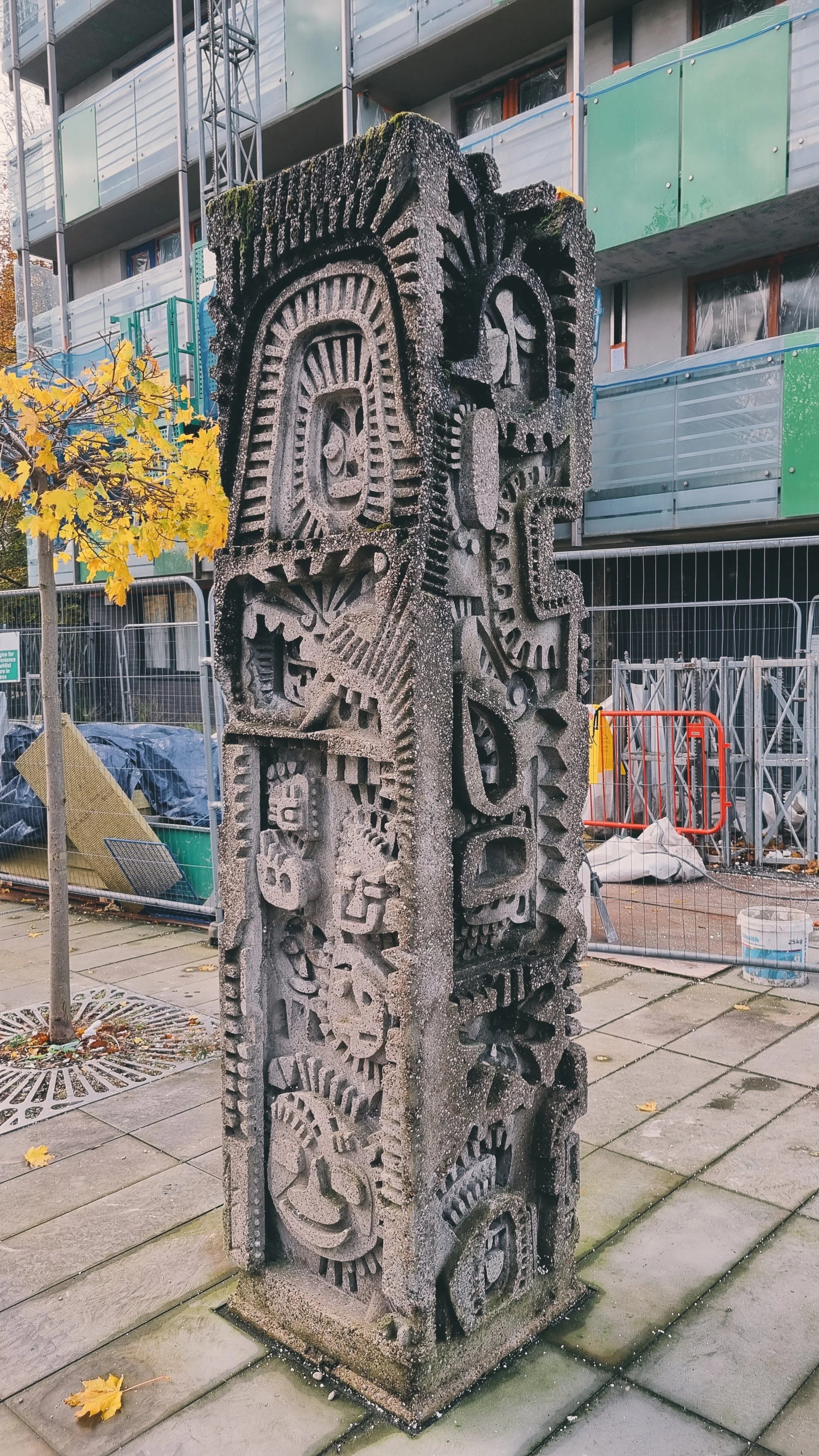
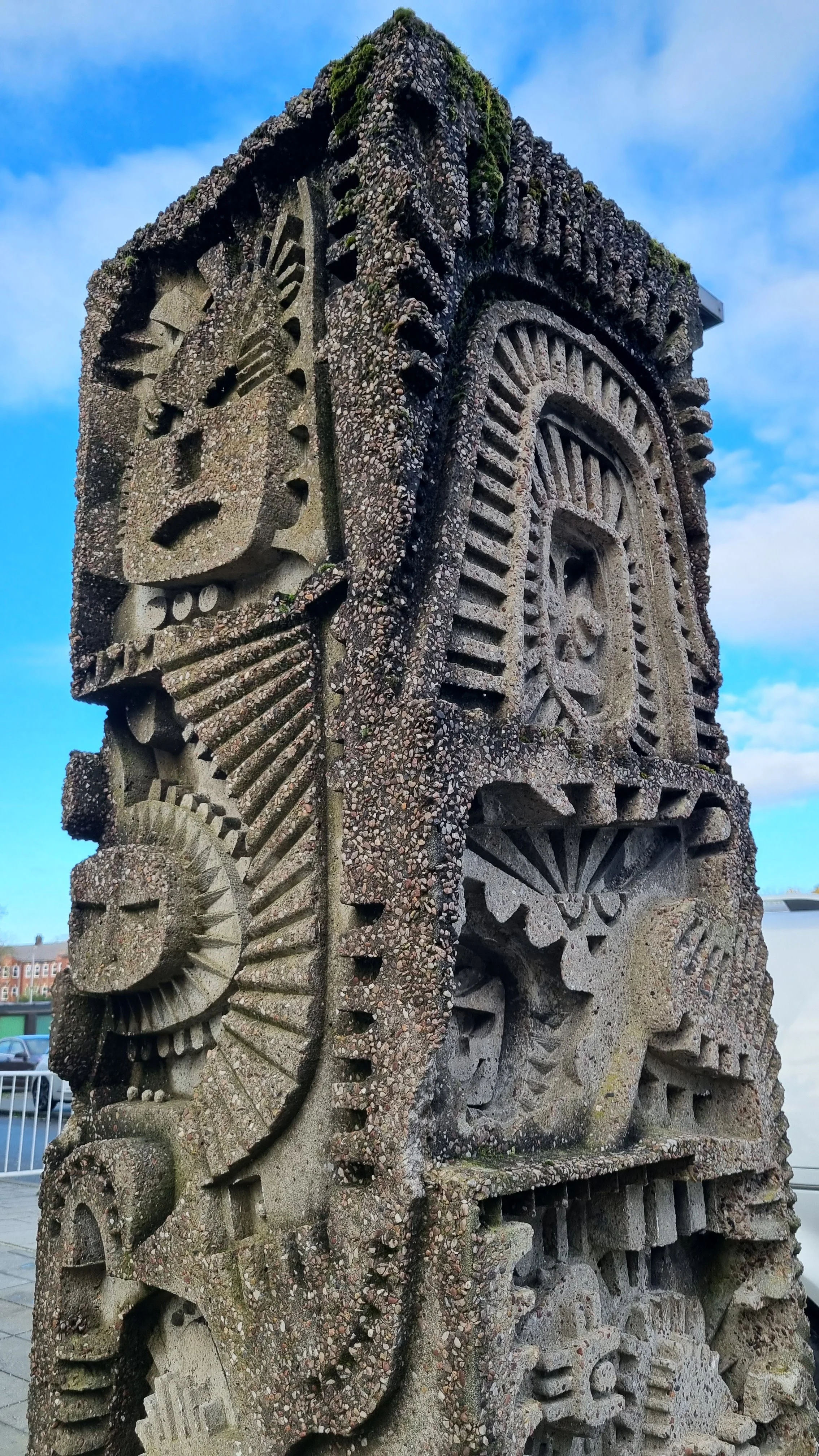
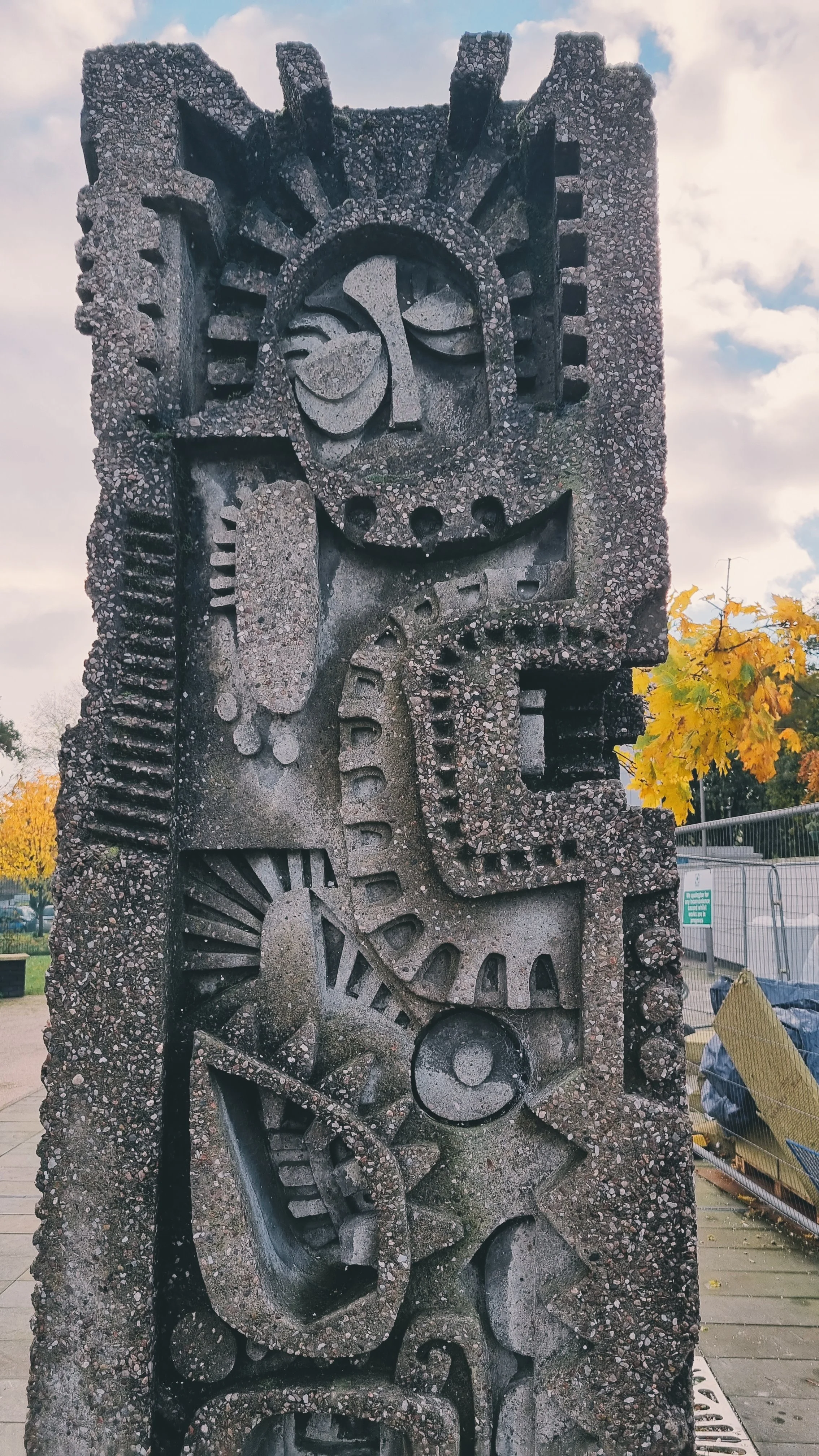
THE COLLYHURST TOTEM…
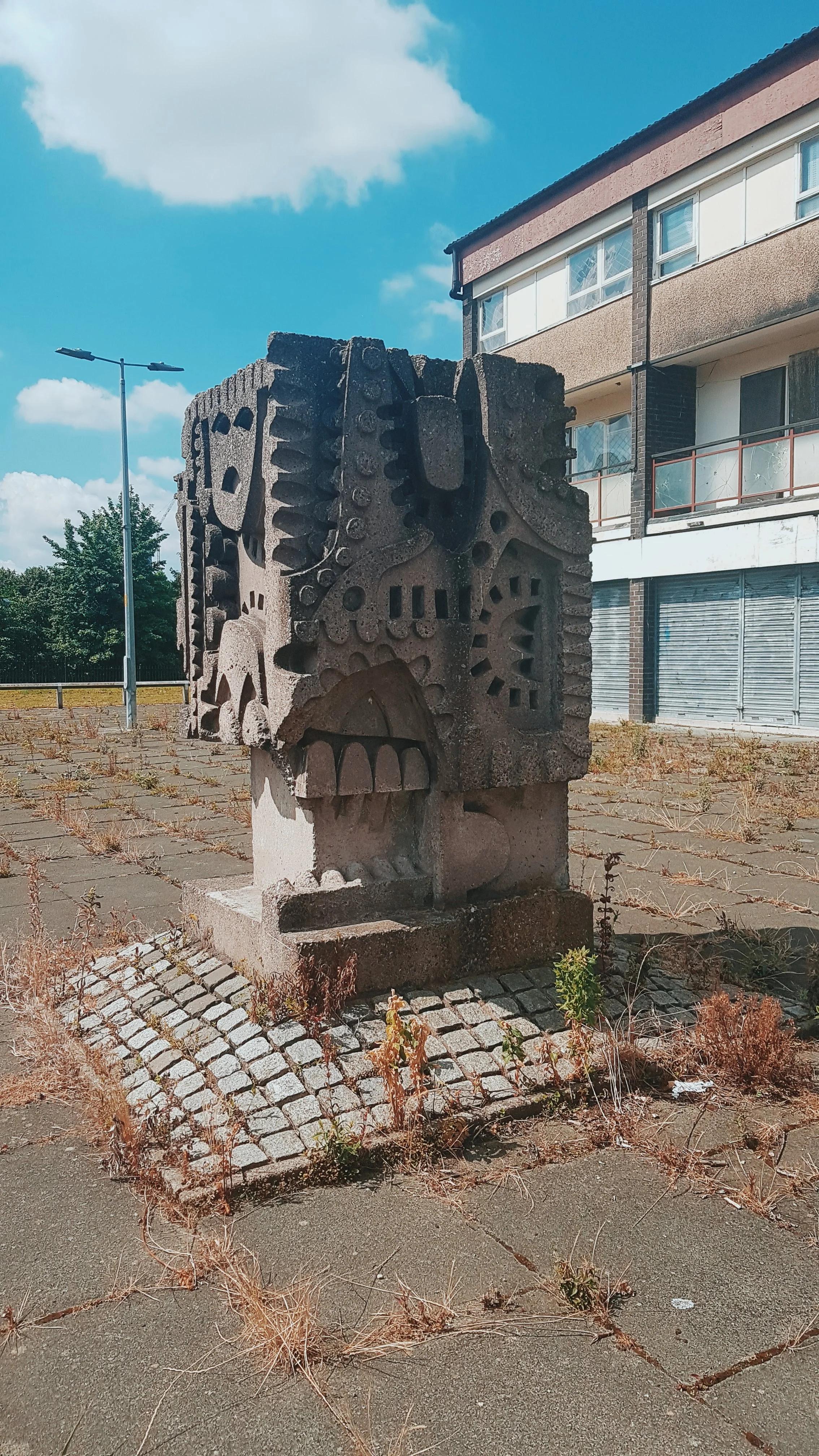
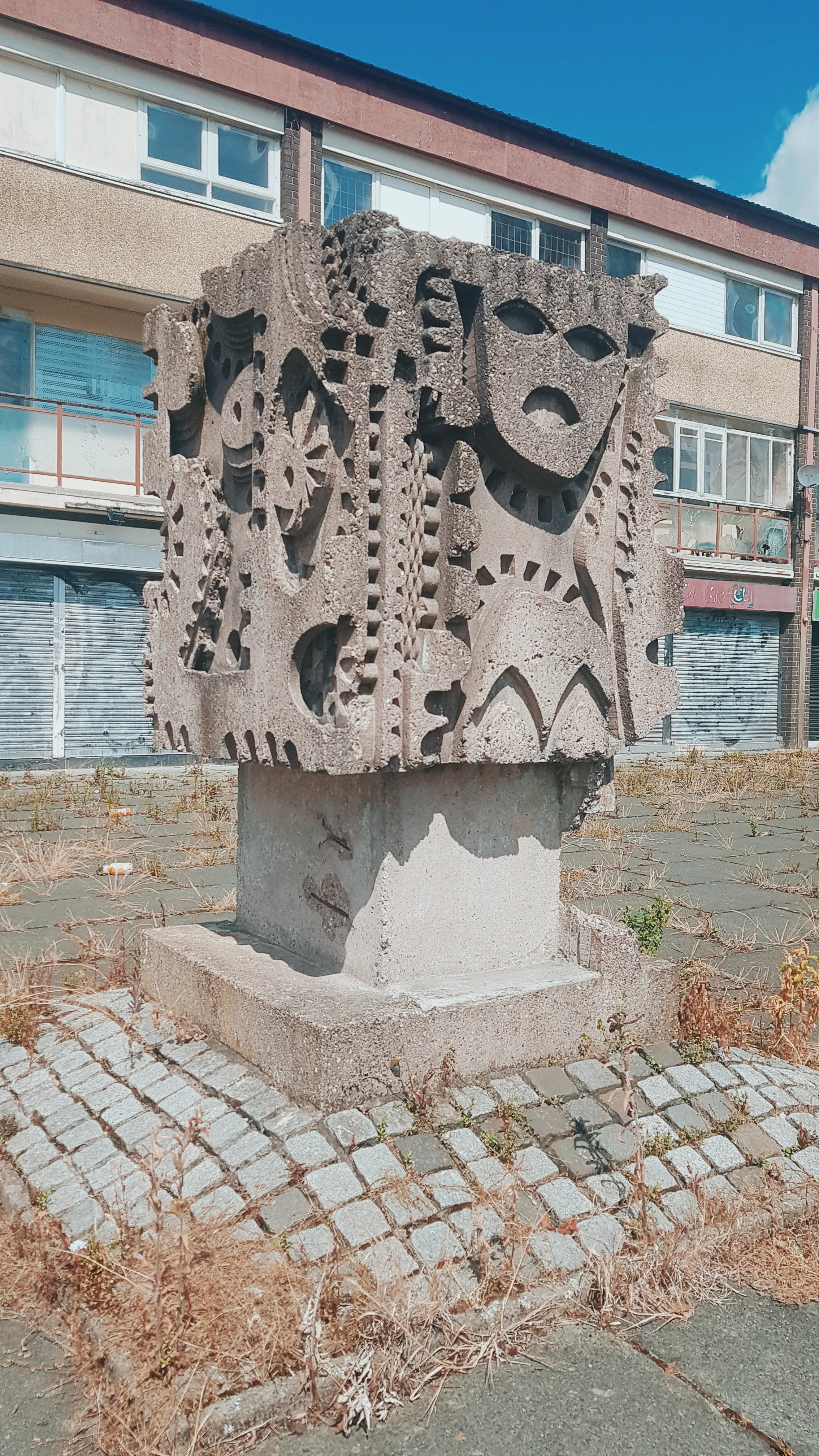
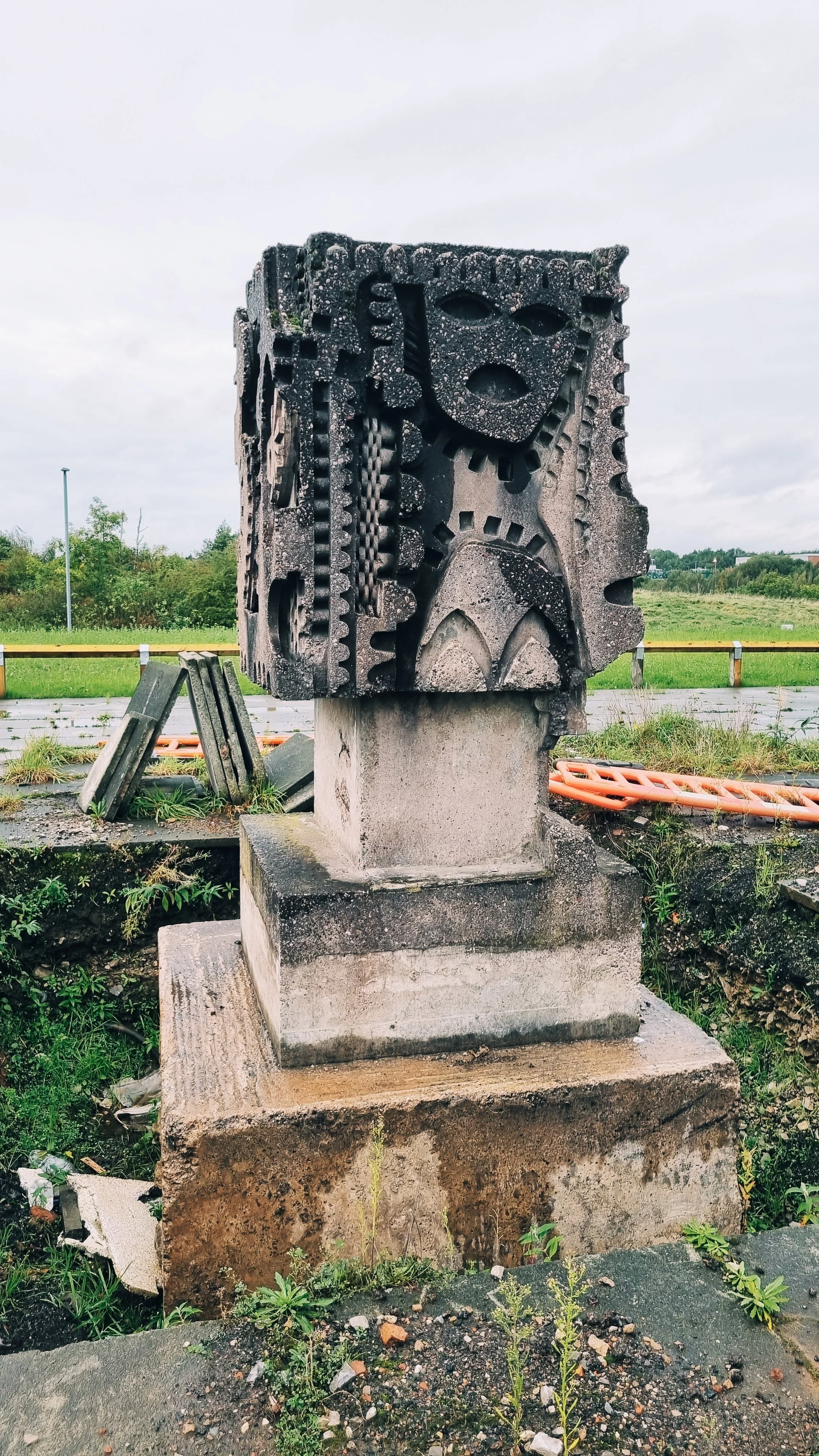
After the failed removal
THE NEWTON HEATH TOTEM CAN BE SEEN OVER ON MODERN MOOCH HERE
The Collyhurst totem was due to be removed and resited for work on Victoria North by the Far East Consortium, but it was so well mounted that it was impossible to remove and now plans are to build around it. The immovable legacy.

The Mercure mural, image by Gareth Hacking from the Skyliner tour ‘Art in Architecture’
Mitchell, to me, is that moment when you’re met by the face of someone you know in an unfamiliar place; a welcoming embrace at a strange train station.
I feel glowingly positive about any city that greets me with the welcoming arms of Mitchell’s textured concrete. In the cold form he works with there’s a warmth, in the sharpness and roughness of the edges there’s an invitation to touch them intimately and explores the grooves.
Mitchell’s work has a life of its own - reach out and touch it.
Michell was a presenter of Tomorrow’s World, an inventor of new forms of concrete, and his work continues to challenge and be challenged (many works have been destroyed but many of us smitten by his work continue to fight to save those threatened). Bill passed away in 2020. You can see William, looking most dapper, in this British Pathe video from 1960.
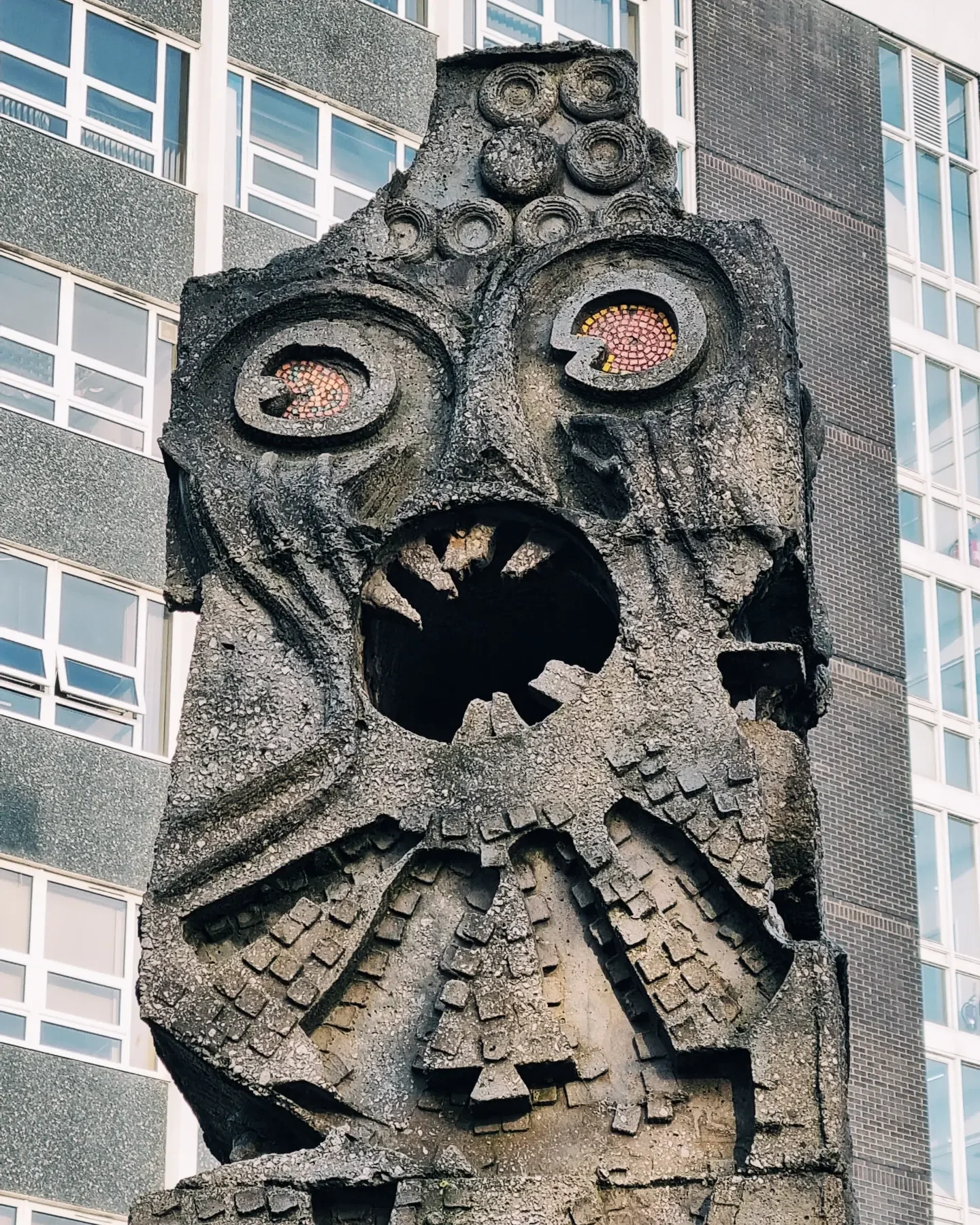
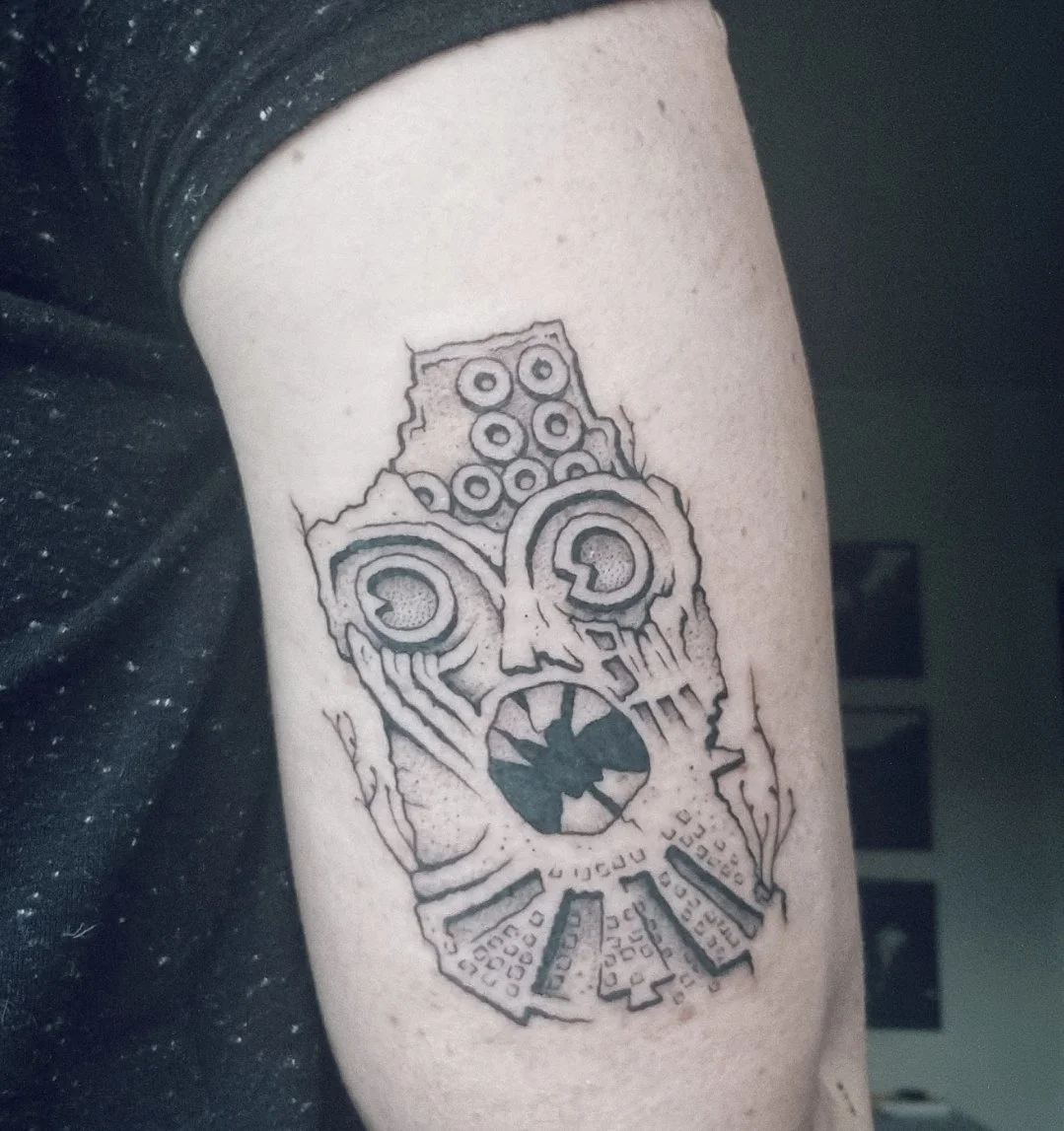
FAIR TO SAY I’M A BIG FAN OF THE MINUT MEN