Four Houses by Hayley Flynn
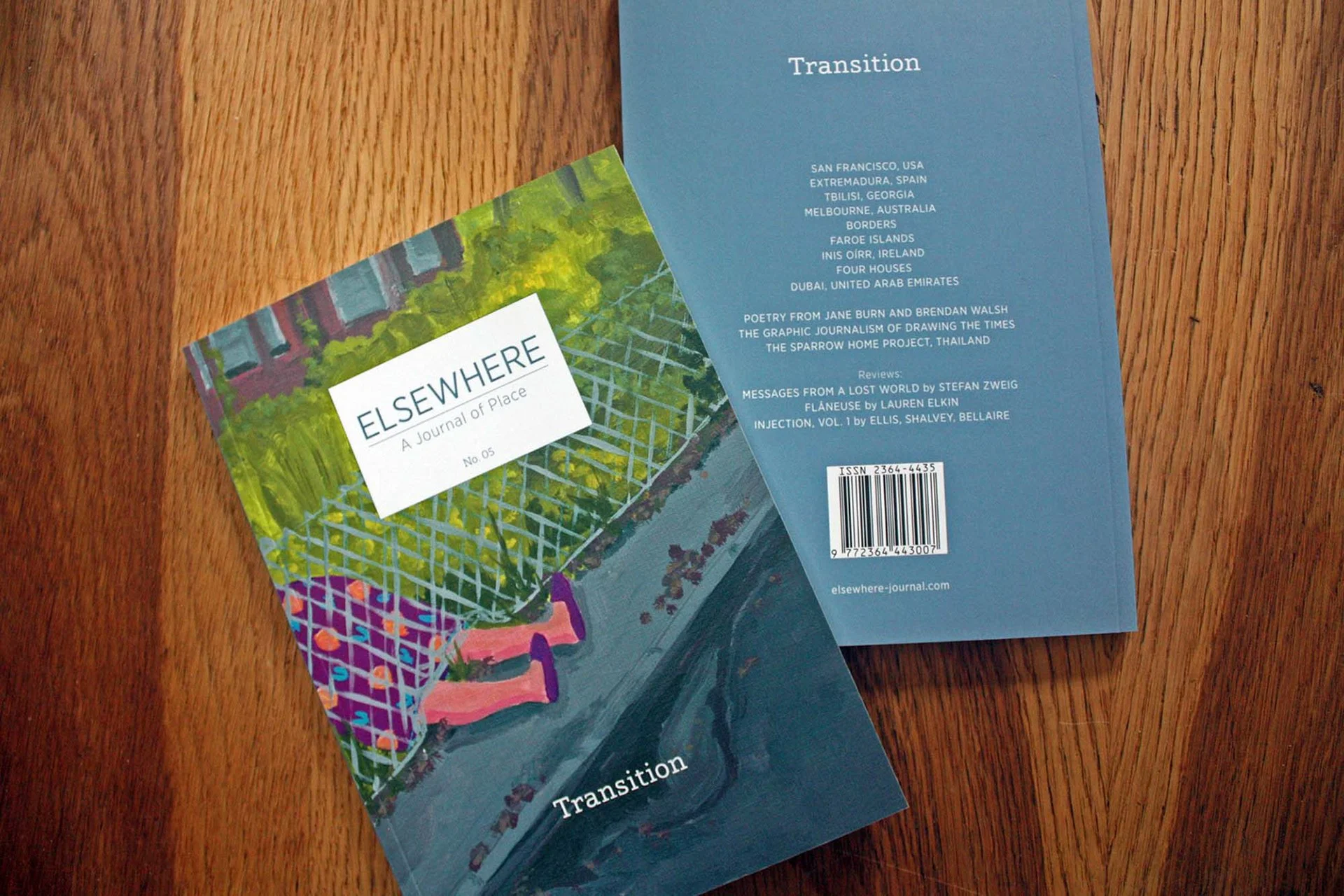
First published in Issue 5 of Elsewhere: A Journal of Place
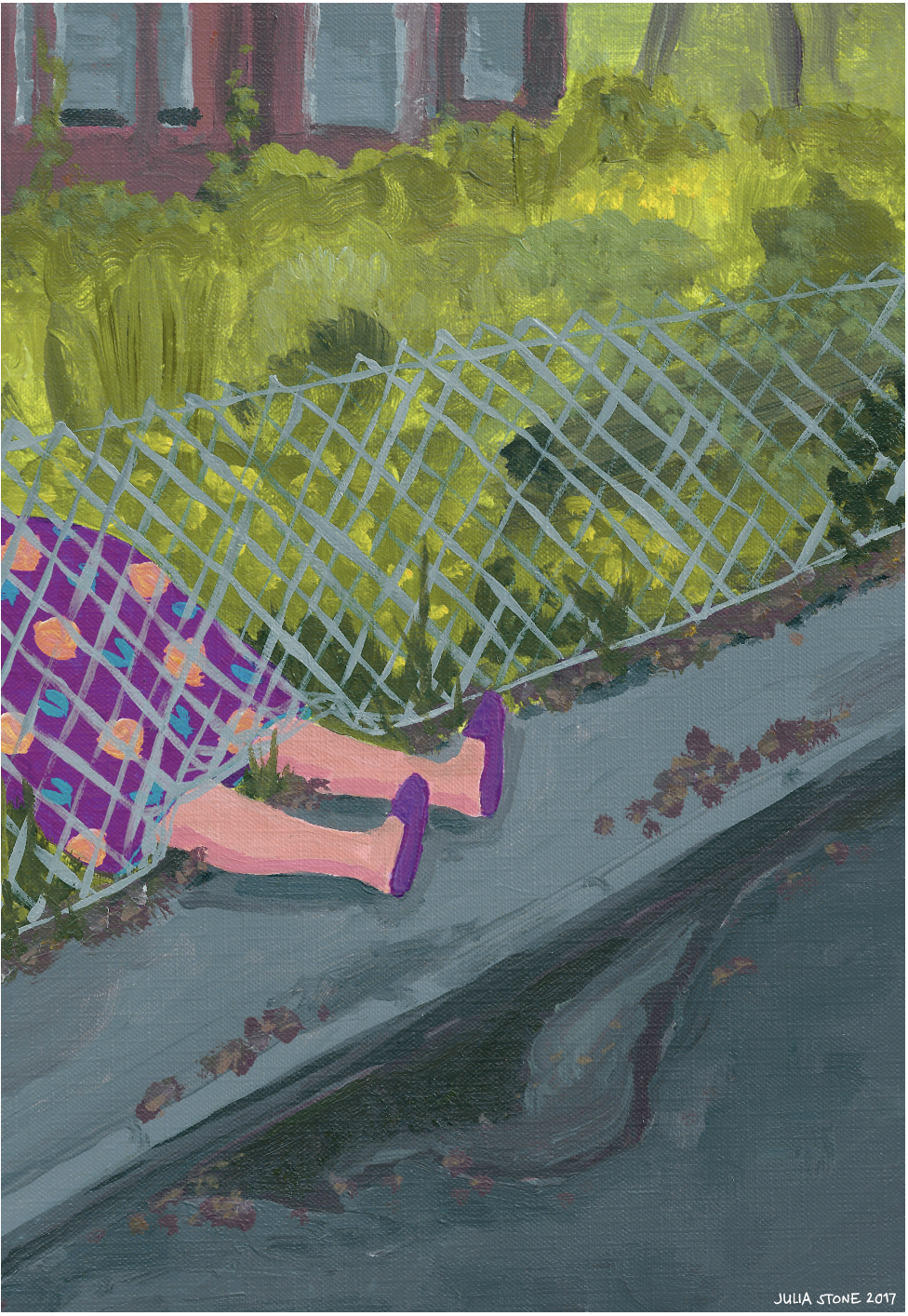
The theme of the issue was ‘transition’ and the cover art by Julia Stone was based on my story.
Demesne
I walked by a house on Demesne Road, a huge home from the suburb’s days of glory. The house was burnt out and decaying, with great cavernous holes ripped out of the roof. Were the skeleton beams that remained cinder, or just blackened from rain and rot? What was the story behind this Shirley Jackson house? In parts it was still like new – distractingly new windows upstairs – but largely it was old and creaky, and it was as Halloween-like a house I’d ever seen.
A caravan was parked on the drive, and the drive had been reclaimed by grasses. A curious collection of potted house plants were left on the driveway between the caravan and the perimeter fence, giving the impression that, while loading up the van to move out one day, the owner simply dropped dead before she could transfer the cheese plant from where she had set it down. I imagine her lying, supine on the drive, the house condemned around her that very day, cheap wire fences put up in a hurry, wild flowers and grasses spurred on to grow dense and fast by the fat body within reach of their roots. I picture her foot sticking out, off the property line onto the pavement, and being crudely fenced over, like a white line painted over a speed bump.
Cranbourne
I walked for 40 minutes to pick up a second-hand wok that a woman was selling for £5, then walked home again. My hip pain kicked in about half way and I limped along in the cold. Was it always going to be like this? Struggling for money didn’t bother me so much, but it was the bleakness of where it took me, treading down seemingly endless grey roads, wide and barren, with cars parked on pavements and wheelie bins never wheeled out of sight.
When I came home that night, I added the wok to the stack of boxes in the lounge and went to sit on the bed. I folded blankets and rugs, reached behind drawers for hair clips that had lodged themselves in the nooks and crannies of the bedroom. I was packing to leave
I lay on the bed in the dark little basement flat that I had loved and hated in equal measure. I lay there for 20 minutes or so, fingering the hair clips I had pulled out from under the bedside table and slotting them into each other, building something from things of no importance. I didn’t cry.
He took my hand in the kitchen and told me he didn’t know how to fix things; soup rolled and bubbled behind him. For the first and last time, he ran his hands around and over my full belly, and he looked at it without anger or hatred. Tears landed on my grey dress and they lingered on in dark, sad stains until they evaporated.
On the street, I was about to leave. A hydrangea bush had browned and thinned but on several of the dying branches, full heads of blooming flowers held fast and hopeful.
Woodlawn
In front of me, on the dip of a hill, a teenage boy, unaware of my presence, jumps to high five the conical white blossom of a pendulous lilac tree. The tarmac here soaks up the late afternoon sun and I want to pull off my jeans and sit on the ground to feel the warm road against my bare legs. I see a young, dead magpie laying on its side, her face turned to the floor; her small body spoons the warm black tar. The neck feathers are especially tiny, and the lightest breeze ruffles the down like wind across a rapeseed field.
My apartment is one of 78 in an elongated staple-shaped court. Around the outer edge of the staple is a strip of gardens that change in nature according to the trajectory of the sun. My own flat’s rear garden is the most shaded, a mini-woodland with bluebells and great horse-chestnut trees which relentlessly shed their blossom through my bedroom window. Reared up on hind legs, arms and paws positioned like boxers, adolescent squirrels play-fight in the very early mornings. In the centre of the complex is a tree-heavy shared garden that dips and rises inexplicably in mounds and troughs. I try to identify birdsong, but apart from a woodpecker and a neighbour’s cockerel I’m largely unsuccessful. Through the branches I see the pink of a jay and the mottle of a song thrush. In the lulls I hear the breeze on the leaves, and the cooing of my baby.
I have an impossible memory, absorbed from American television, of pitch-black starry nights, lawn sprinklers fft-fft-ffting, crickets chirruping, of days when the sky is dappled by magnolia leaves and the ground by sun.
It is not unlike my new home, yet the days still weigh a ton.
St Werbergh’s
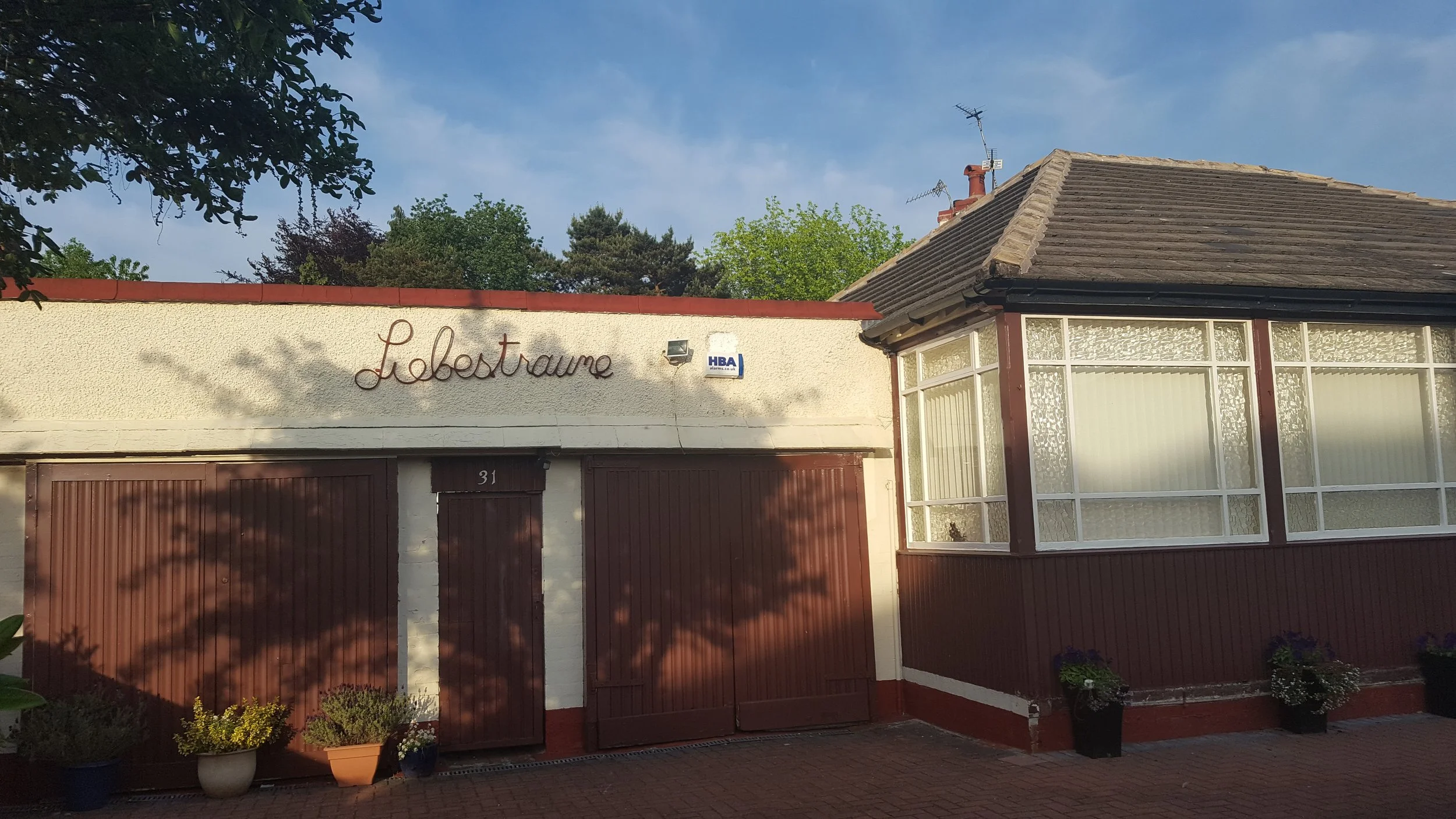
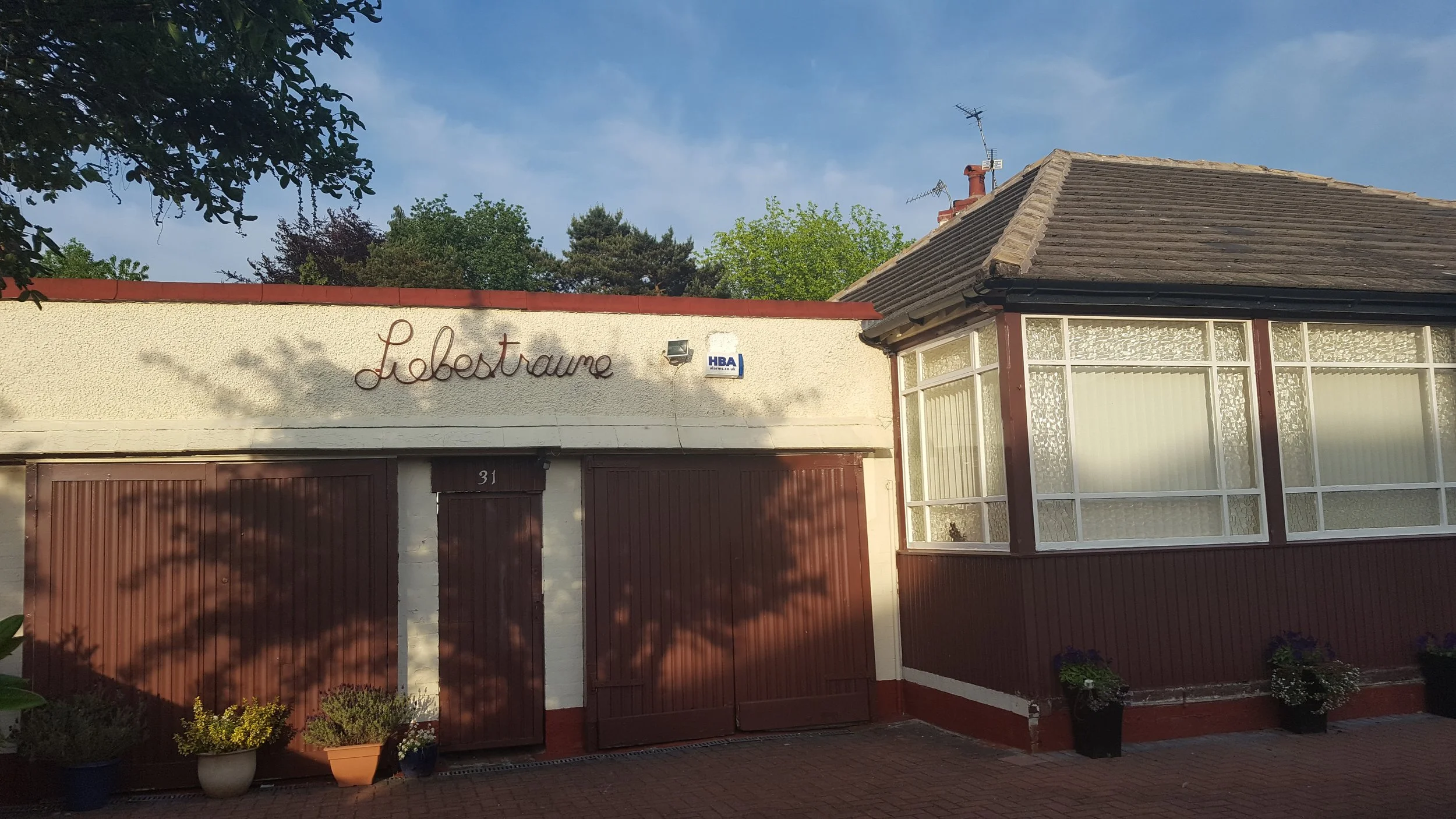
The front of the bungalow runs on into a strange outhouse or garage that has been swallowed up by the rest of the house and converted into liveable space. For some reason the garage door is still there, beside it a narrow door with the house number above it (an understudy to the main entrance, just metres away), and this is bookended by a second garage door. Above this beautiful mess of entrances, in large, cursive letters: ‘Liebestraume’. Dreams of Love.
What looks like rosebay willow herb billows from a chimney. In America, this wildflower is known as fireweed owing to its proclivity to grow on scorched earth, so it's fitting that its wispy tendrils rise up from the squat chimney pot like smoke.
I stand at the end of the driveway, admiring the fat little house that's crouched in front of me; I gaze upon its brown wood and its weathered walls rendered with white concrete, and I feel my flesh fire in the kiln until I too am built of brick, my skin is concrete white, and my angular limbs nothing but corners and eaves. I am unfaltering and sturdy, as if I too am rooted in the earth.
I have fallen in love with the houses I pass, because these days I see myself in them.