
Furze by Hayley Flynn
An ode to Orford Ness.
First published by Comma Press in Obscura: New Uncanny Tales, edited by David Hartley
There’s a dog beside the ferry and when she barks a spool of lemon-yellow tickets stream from her mouth: admit one admit one admit one, reels off at high speed. I watch the unbroken stream as it meets the ground, admit one admit one admit one start to accordion in on themselves in a neat stack. Ice cream folding on an assembly line.
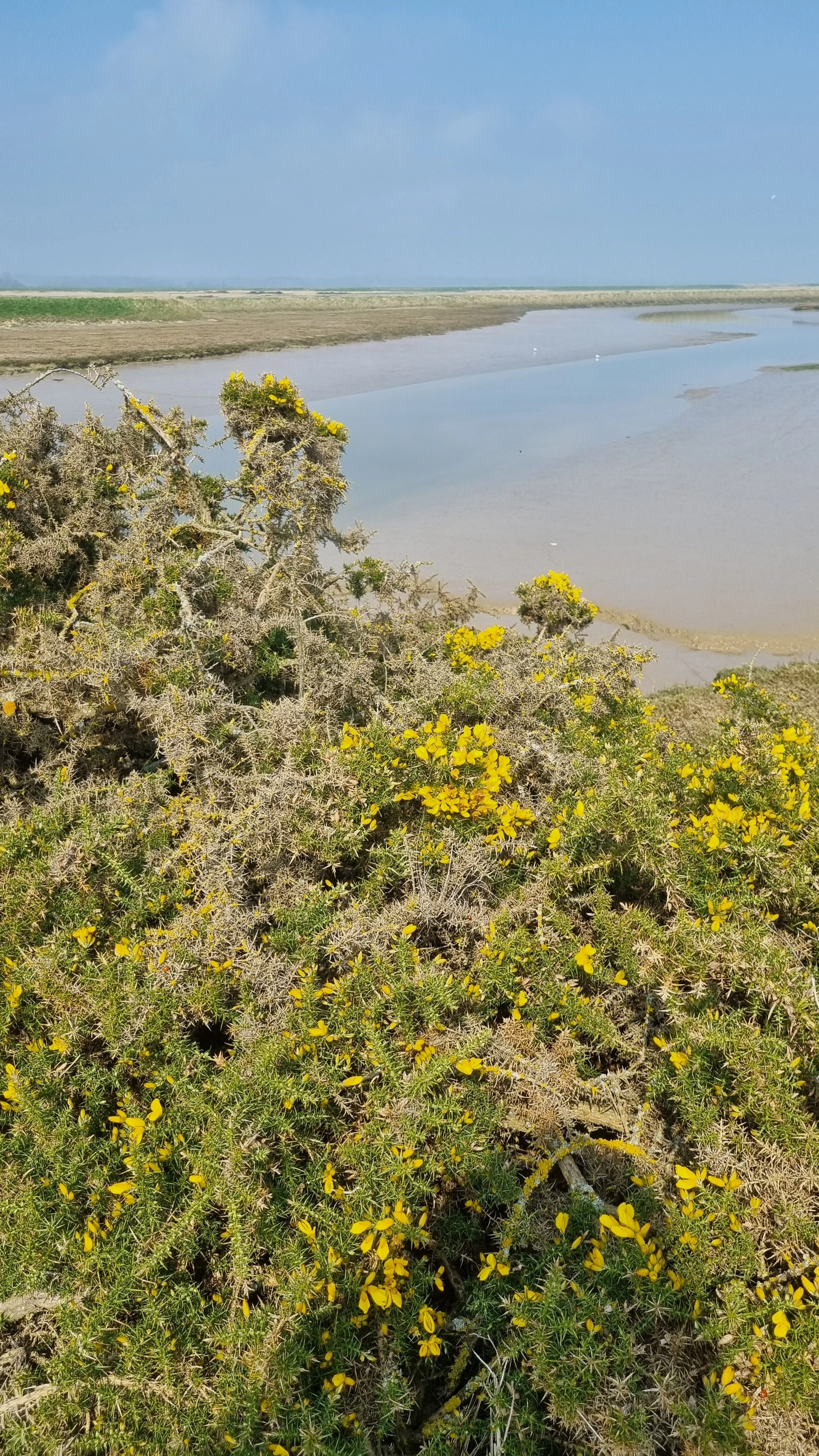
The cormorant the dog’s taken offence to continues out of sight along the berm, and she lowers her head to the shingle with a final irksome puff of her cheeks. The near silent show of disgruntlement emits one last ticket and a gust carries it away into the maw of a furze. The wind and scrub work together to tighten the bind, its perforated edges secured in the tangle.
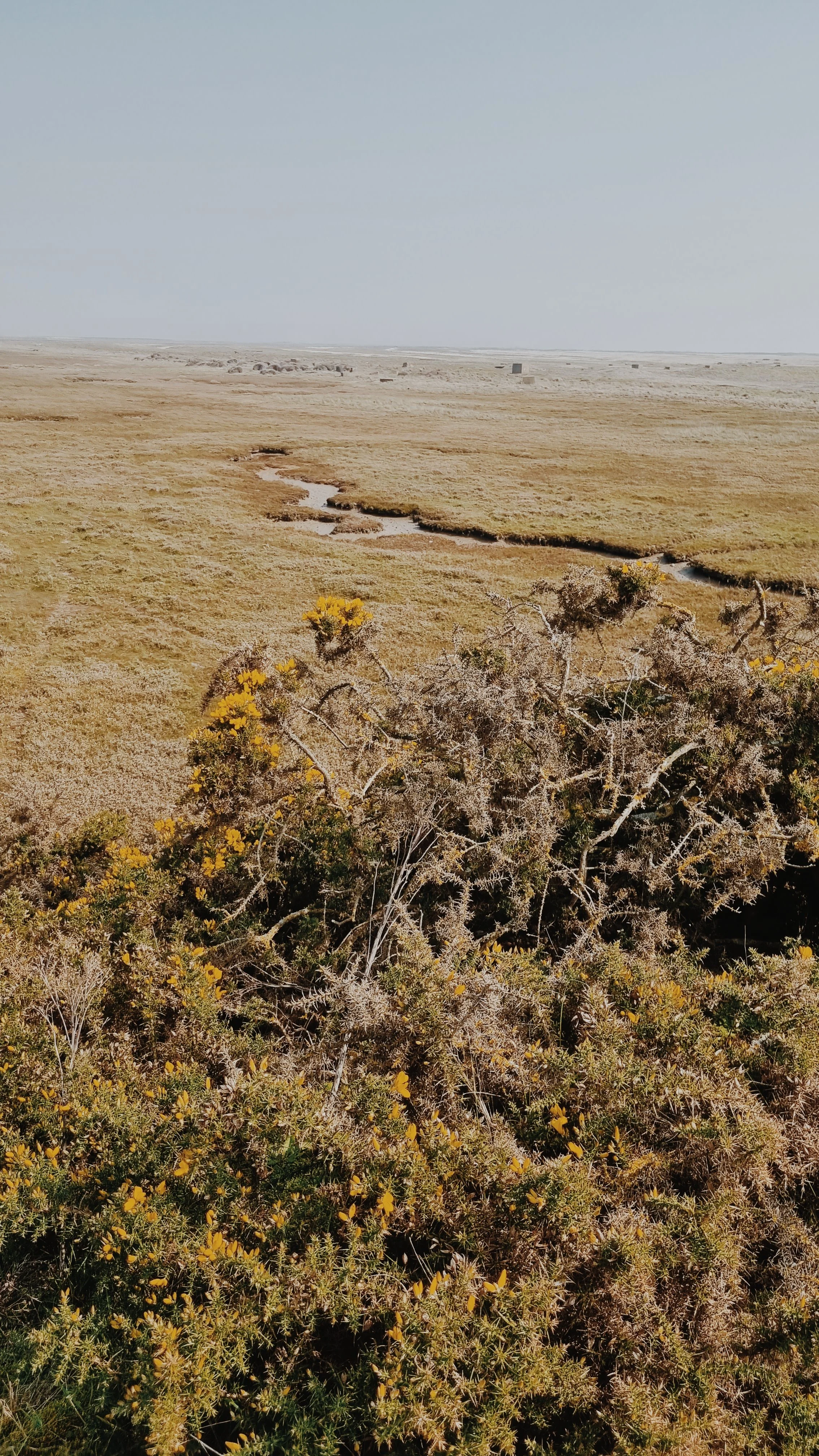
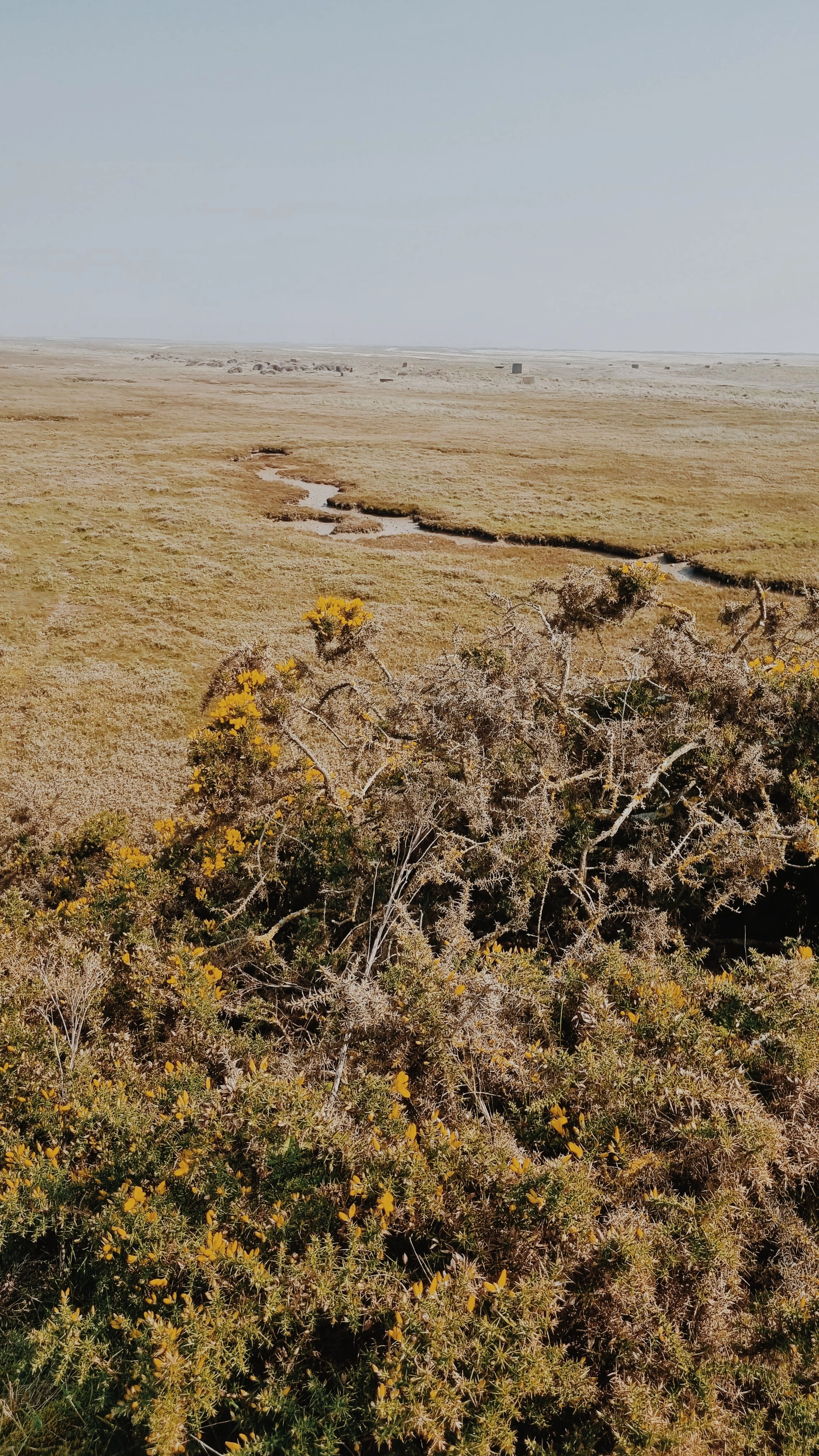
I stare at the bright yellow bush long enough that when I look up to scope out the weather, the spiny afterimage projects onto the clouds. When I blink it away and drop my gaze it seems that all along the spit the only colour is gorse.
The dog’s called to the ferry. As it shrinks towards the mainland, I see her spew another reel of tickets over the side, barking at a gull bobbing beside them. ‘Movern, that’s enough now’. The curious organic box office was never explained to us on our crossing.
Nonetheless, the strangers who were dropped here have already ripped their stubs from the concertinaed pile on the water’s edge, scrabbling to make sure there were enough. With no more left, I stick my hand under the ribs of furze and, dissatisfied and torn up, show my bloodied fingers to the ticket collector. ‘It’s not safe for you to continue without the ticket. We have to count you in’. I return to the bush, sink in once more, and a whip of hair catches as I’m elbow-deep in its teeth. I come away with the ticket but leave behind a web of greying strands.
I’m given a flora and fauna handout in exchange for my shredded ticket, the sea in my peripheral vision gives the illusion that the words are moving on the page, I feel seasick and increasingly more nauseous by the illusion of the rearranging text:
‘Many plants on the island have adapted to avoid the desiccating effects of wind, sun and salt. Silver hairs on their leaves reflect the sunlight and slow down the wind’.
I touch the hair at my temple in acceptance of what I’ve given the land.
Already I spy the rangy hares. Even I can tell that they’re different, larger and with more gold to their eyes than mainland hares. On the shingle, their form becomes colourless and indistinct, and amongst the scrub, their eyes are indiscernible from the flowers of the gorse, trefoil, and poppies. I still don’t have the lay of the land and, having barely moved, the ticket collector is within spitting distance as I assess what’s ahead: a stillness.
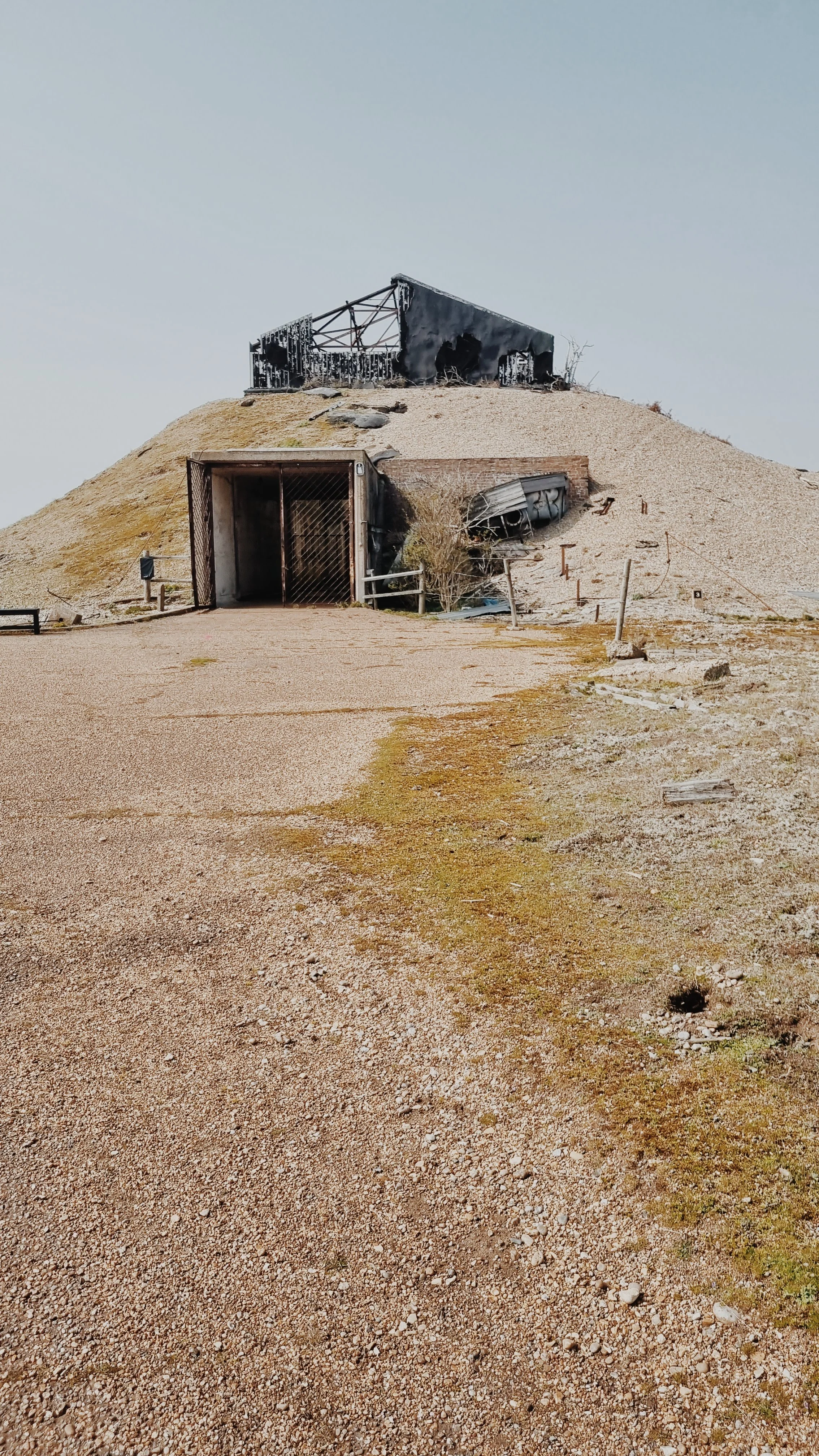
During my brief time in the tangles, the others have dispersed across the tree-free flatlands. No sign of them anywhere. I eye the hares, this time suspiciously - I see no difference in how this one nibbles its twig and how the woman besides me on the crossing had gnawed nervously on her apple. The turn of that one’s foot, it struggles to bear its weight on an injury and I scan back through the passengers for someone with a limp, a cast, a cane. Flashes of unnatural Pacamac-blue appear from behind the ballistics hall, along with it the cautious apple eater and her children thus extinguishing my fantasies of shapeshifting mammals. Regardless, it’s always wise to consider hares as a sort of deceit.
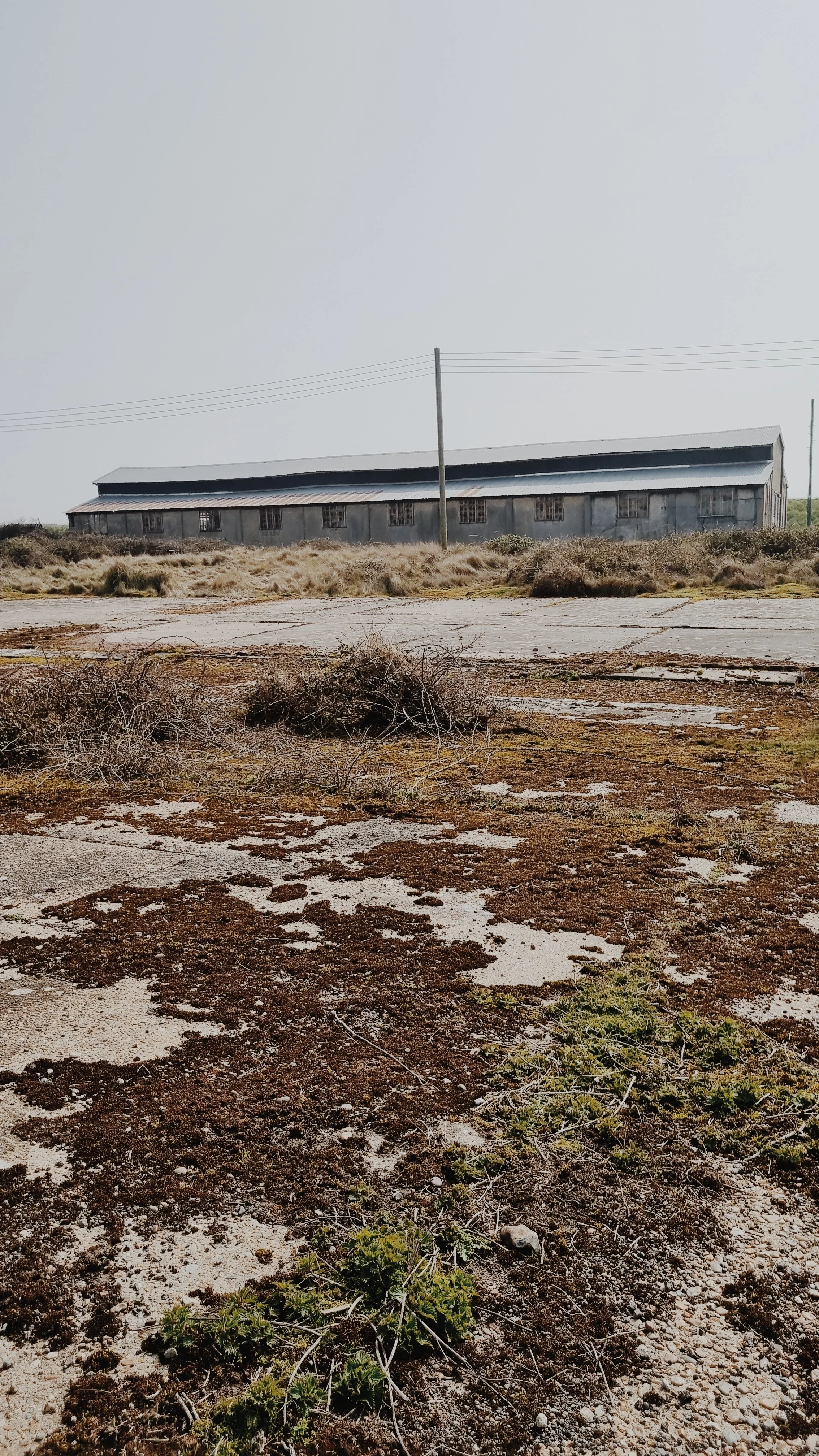
Ignoring the clutch of people ascending the concrete staircase to the roof of the hall, finch-mouthed with their binoculars ready, I head off eastwards. The route ahead is of indeterminate length - ‘there’s blackberries along the lane’, the ferryman had said with a parting wave but as I approach the first cluster of structures and ghosts of old roads, the undergrowth is nothing but warped and fallen barbed wire fencing. On the fallen concrete posts the egg-yolk lichen crusts at four inches a century.
Determined for my first blackberry of the season, I walk the whole stretch hopefully. Surely I’ve gone too far. Is this far enough? When the path runs out, signs staked into the pebbles ahead warn of unexploded ordnance. A vinegar trip is what my Nan would have called it, a fruitless journey.
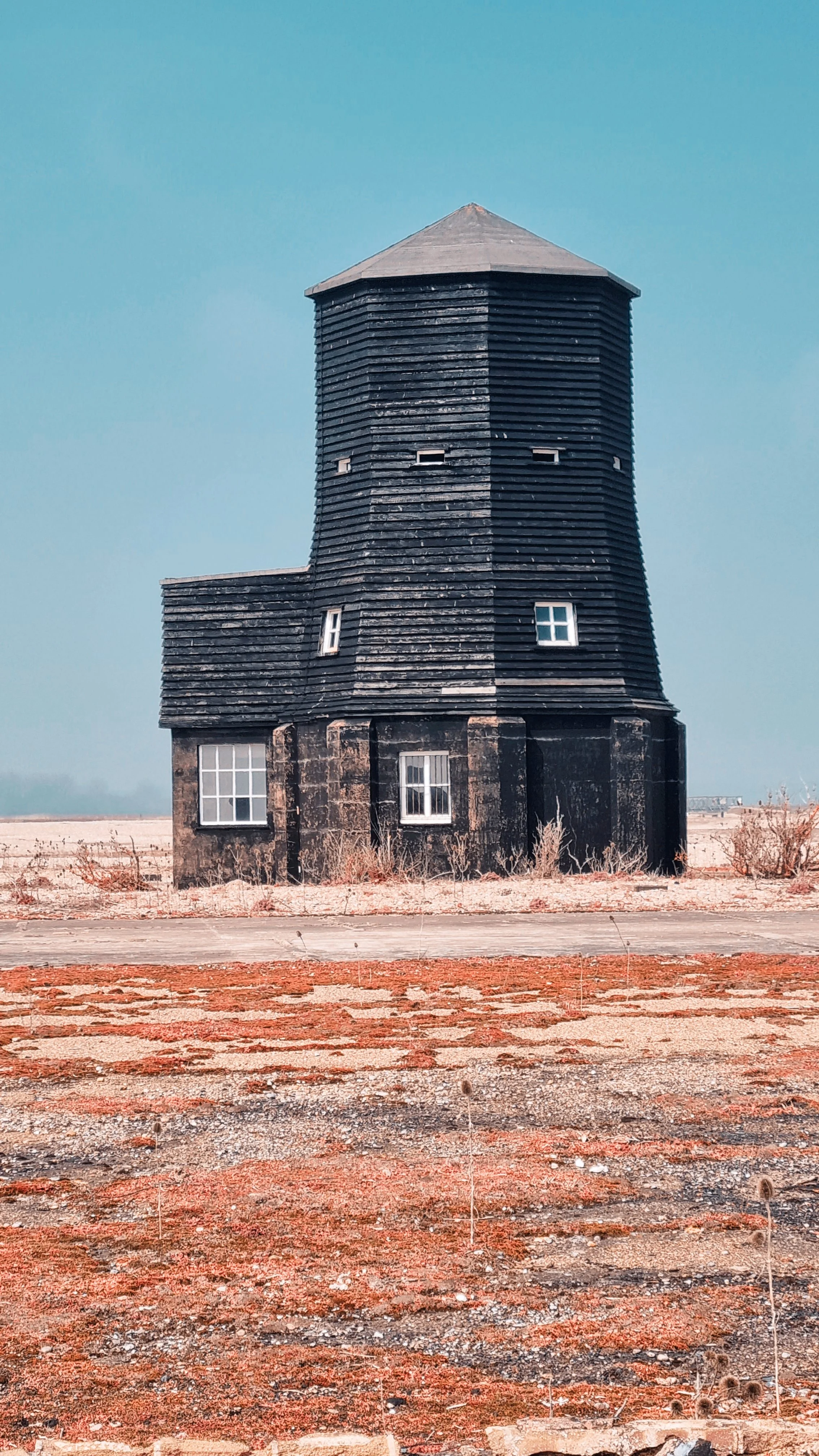
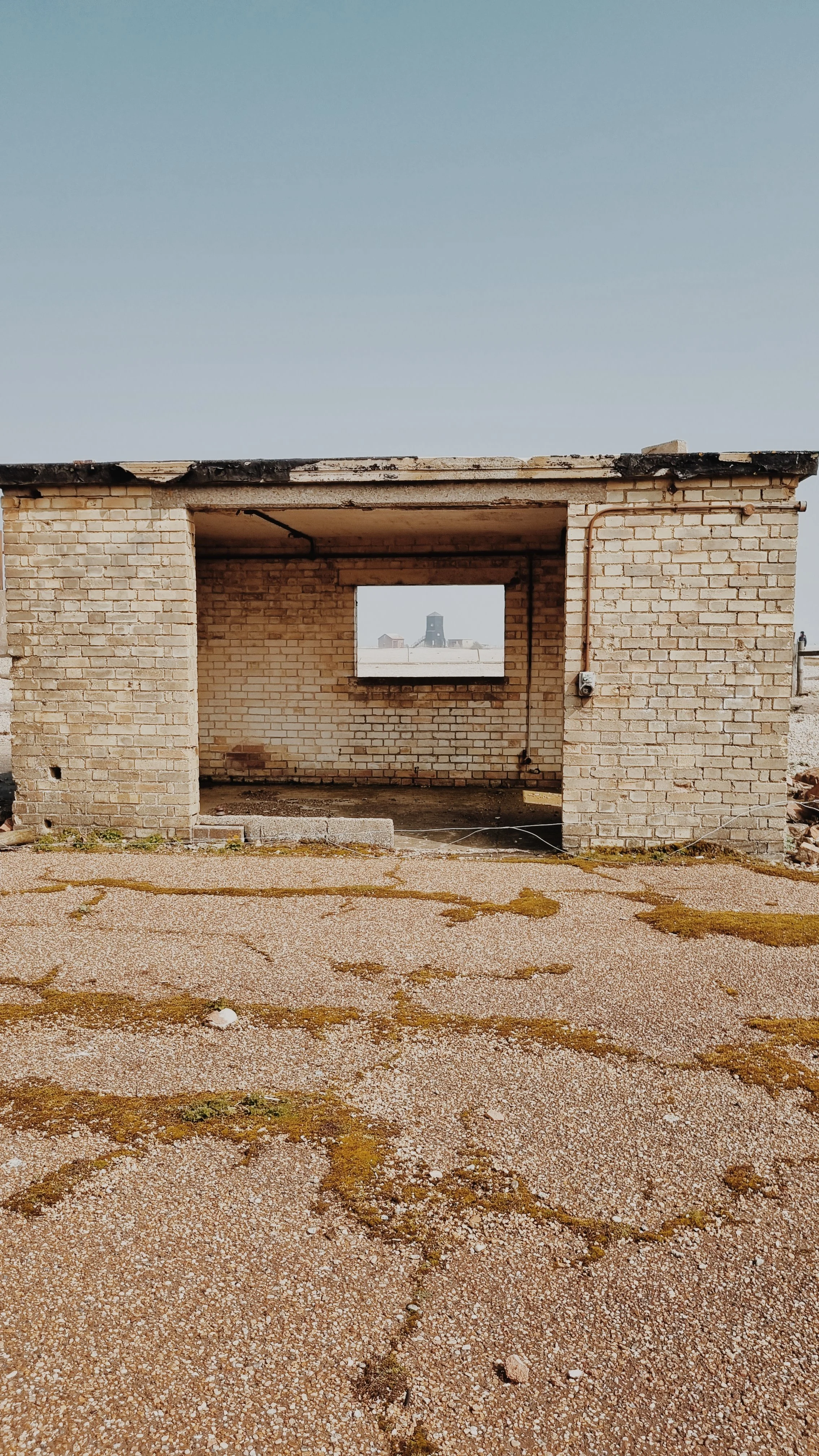
From here I notice that on an otherwise sun-drenched ness, the sea can’t be seen for mist. There's a few small brick buildings to my left and a chalked sign at the door of one reads: ‘Owl pellet dissection, 1pm’. It’s not nearly time, and I still feel the pellet dust in my lungs from the last time. I’d tweezed out miniscule jaw bones, held aloft the hipbone of a field mouse, and peered through its socket as if the void offered a divergent view.
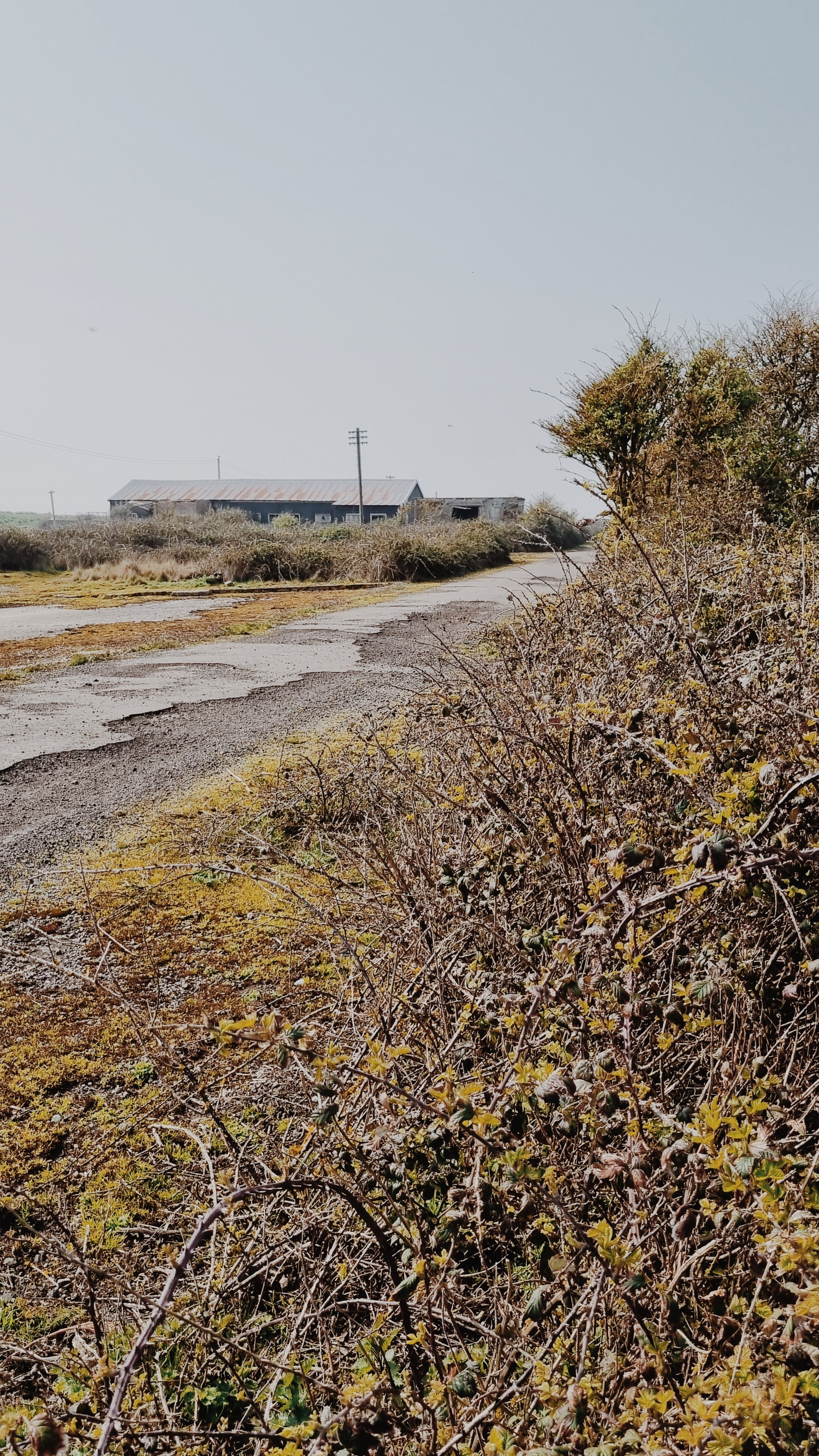
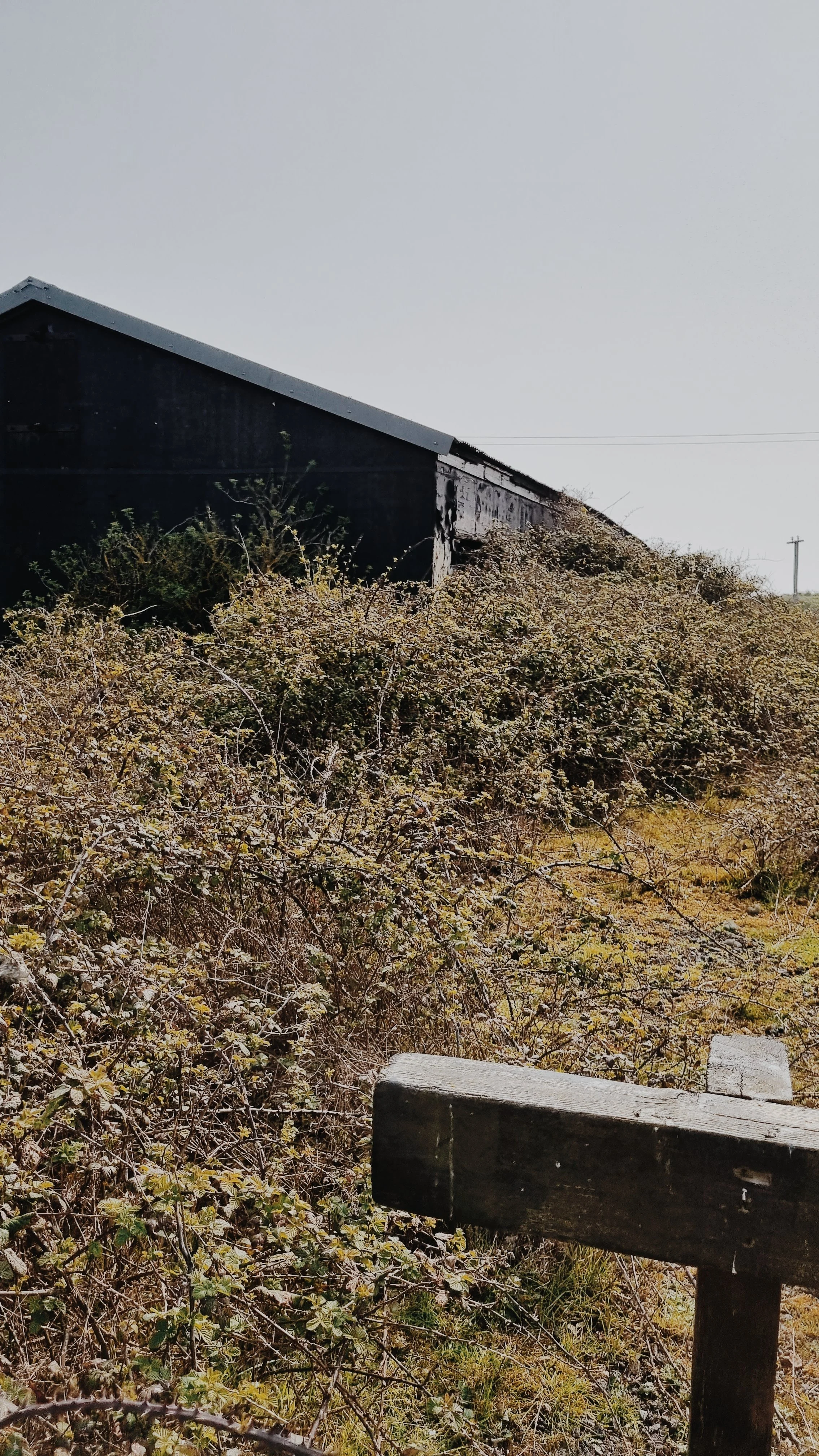
I walk a few metres off the track before thinking better of it and turning back. Maybe the light shifts now that I face westways down the road but I’m somehow confronted by a wall of blackberry bushes rising from the verge. The leaves are brackish and half dead, there’s not a single fruit, only twists of malnourished bramble knotting its way up and along the perimeter of the Information Building: the barbed fences I thought I saw.
Almost every feature and creature of the spit is in the process of transmutation. Neither one thing or the other. Furls of weed stiffen, building extremities loosen. Beneath mechanical tendrils of bramble is the gaping mouth of the armoury. A salacious black void where a door once hung, and rather than lighting the way, the sunlight is swallowed as greedily and meticulously as the blackness can eat it.
A man’s head darts out from the blizzard of thorns, ‘Have you found it?’ I look around me for someone else and back to the droplets of blood on his forehead, congealing on the branches, pooling on the path; dark and shiny pearls like...’blackberries!’ I mean only to think.
In the dazzle of yellow rising up from every furze bush, every wildflower, every swift eye, the road behind the man and his dewy face seems not to exist. ‘Blackberries? What? No, the lamb. We have to find the lamb’, but I don’t think sheep can survive in this place so I leave him behind and with every step I take, another stretch of the road reveals itself before me like a child laying tracks to keep up with a fast-approaching train.
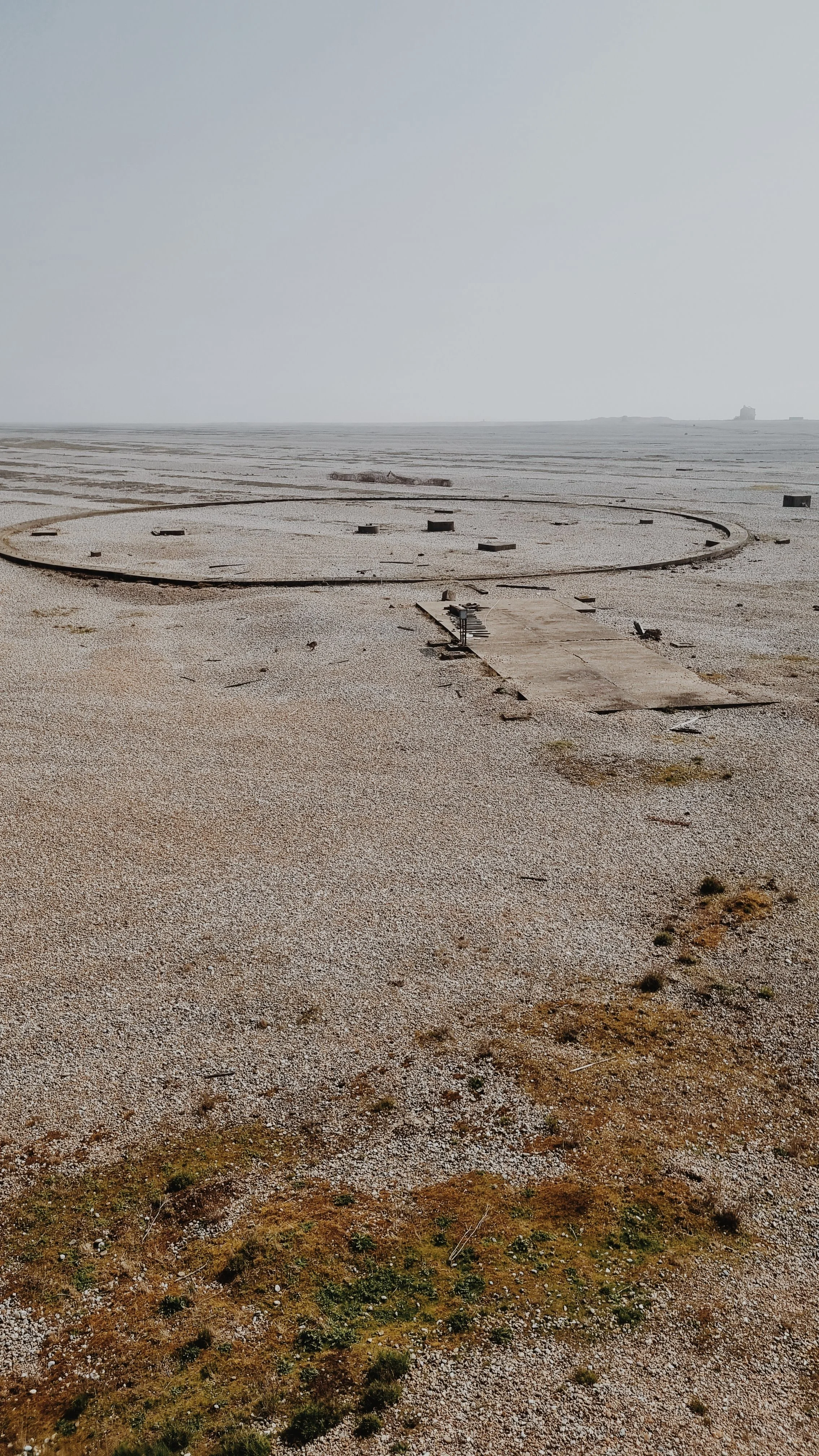
Back in the centre of the island, things seem clear again, and a sign on a patch of ragwort-riddled grassland reads: ‘Meet the sheep’ but with only two rabbit kits in the field, I remain unconvinced on the existence of the island’s livestock. I’m back at the ballistics hall, but the drove of others have moved on so I take the stairs to the viewing platform on the roof. In a corner, groundsel grows from a fracture in the concrete and a cobweb of hair smothers the leaves. It turns my stomach and I think of birds caught in a spider’s web, and trees encased in silk nets by webworms. I shake the unease off me like a wet dog. Unsurprisingly, the view from up here is more shingle and more mist where I expect the horizon should be. The lighthouse was dead ahead, once. Off to the north is a 50 metre ring, a perfect concrete circle that I will come to know as Chaplain or Pound Note - nobody alive can quite explain what purpose it served. There’s talk of radio waves, radar, nuclear detection, a missile called Blue Streak, and the science of the curvature of the earth. In the interminable landscape of stone, one hare doggedly runs the Chaplain's circumference as if tasked to prime the ring with kinetic energy.
In the weeks leading up to today I’d armed myself with books about regional wildlife - I have the knowledge of a handful of birds. I read ghost stories set on the mainland - I’m haunted by local apparitions. I’d discovered a long poem about malevolent beings approaching from the sea - I can’t help but picture the creeping tide boiling with monsters. I’d not read anything about the military, the bombs, the humans, and the closest I came to any of that was when, tired of cormorants and spooks, I’d chosen a book at random. It could have been set in a Lake District cottage, in the depths of the ocean, on a ravenous mountain in Chile, only there was no denying it - though never explicit, it could not have been set anywhere else but here. I’m sure it was happenstance but it felt like I was captive to never knowing any other geography. The story followed fictional scientists as they learned to extract human essence from their dying subjects, it reimagined the test sites as ones of medical experimentation rather than arms.
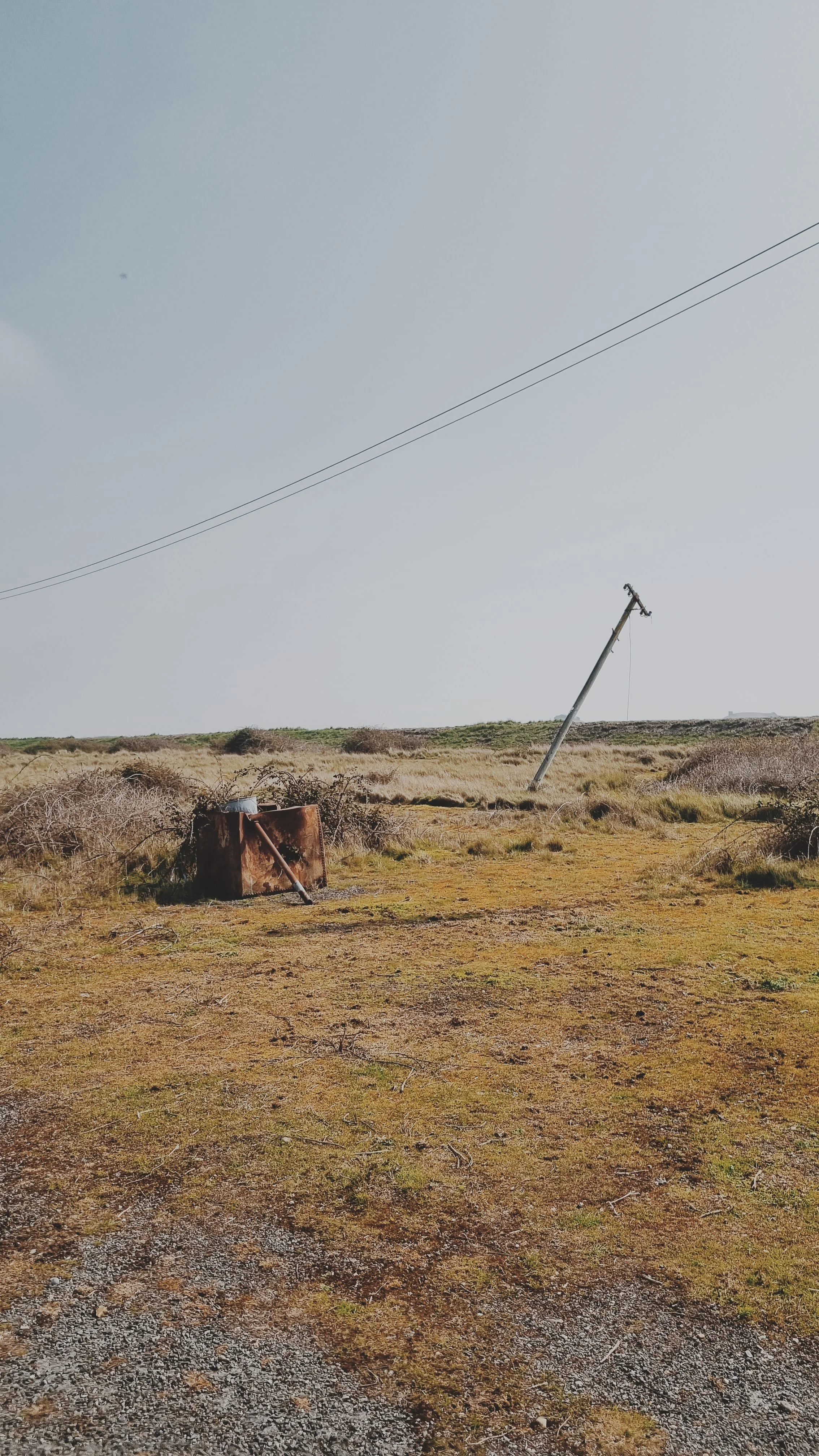
The issue with imagining this place as a soul harvesting facility is the unmistakable air of no one ever having died here, even the spirits had to follow me from the mainland. There's few things as lonely as a ghostless place. Encumbered by that thought, I head deeper into the structures of the ness - to the labs and centrifuge chamber. The rust-riddled contraptions and partially buried workshops receive my presence lifelessly, even though I bring with me the animated chiming of shingle shifting underfoot.
Lab One has no roof to speak of, and shards of sunlight scream through the pagoda onto the surface of the sea inside. The room is inches deep in water, the tributaries along the concrete walls where the rain made its way in are chartreuse with mould. Despite the doors to the lab being nothing more than wire lattice, thewater stays within the confines. The other labs are fenced off, not safe to approach much less enter, and the pathways from here are closed off for breeding season. I begin the walk back to the pickup point, ignorant to the miles I need to cover. I look to the sky and again on the clouds the afterimage of defensive shrubs flashes. My scathed arm stings and weeps in alliance with the vision and I remember how tightly the bush held. I think of the absent lambs, and tufts of fleece spun on the gorse.
It feels like hours later when the ticket collector sees me approach and hands me back my stub. I cross the line back to the jetty leaving shingle and barbs behind me. I sit in the sun and watch for waders in the salt marsh. I think about looking for the others but I’ve no real desire to find them, and moreover, I don’t want to turn around. I look landward for Morven. I can make out the dock over the water and I know people are waiting there for their turn on the island. I've nothing to do but wait.
Behind me sea kale lays down roots, bombs spin, radio waves bounce, life force is captured and it is the colour of lemon, mustard, honey, fire, furze, ragwort, groundsel, lichen, and the feral irises of never-blinking amber eyes. Out of the mist comes a husk of hares, an oblivion of distance between us.