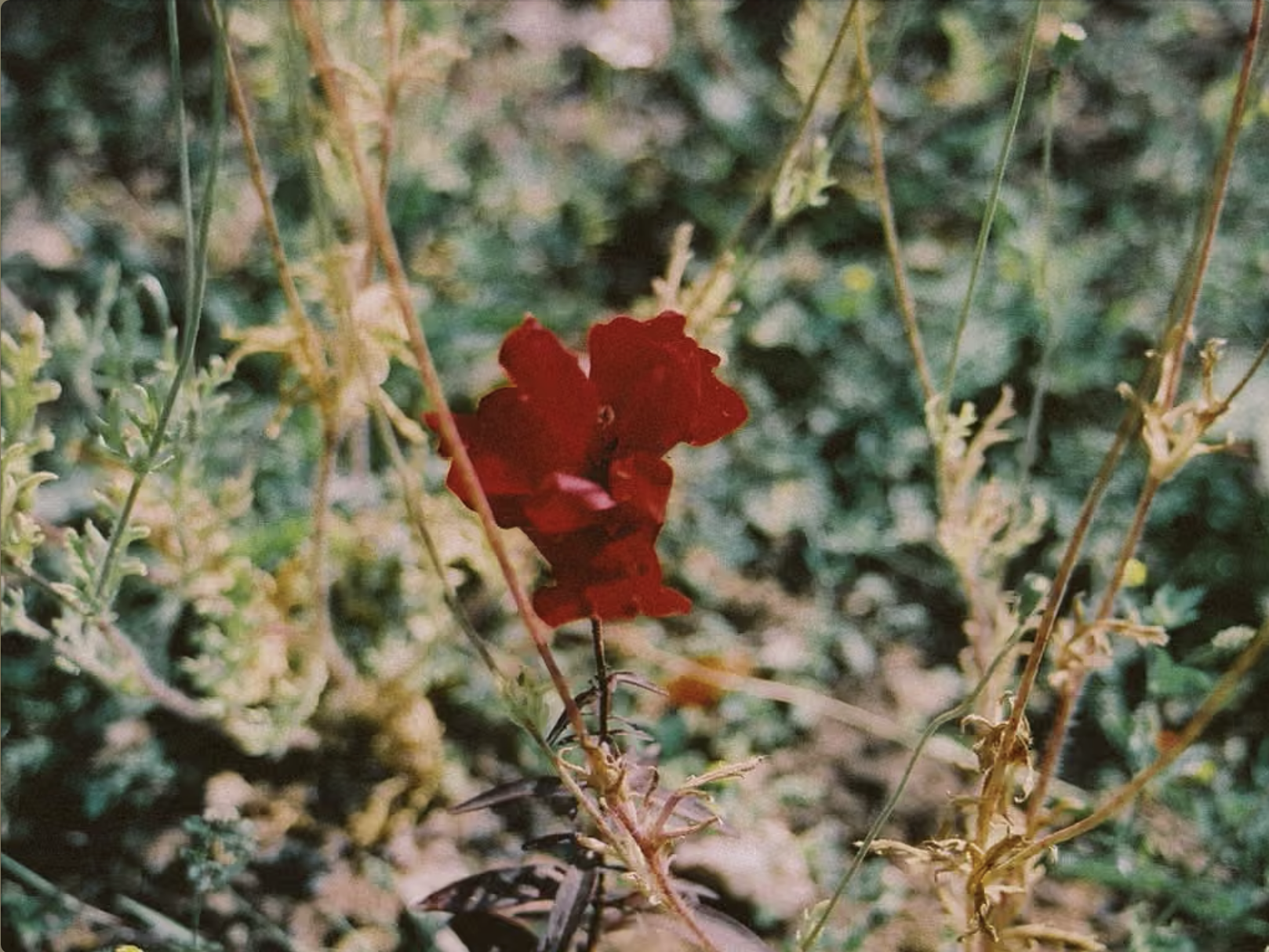
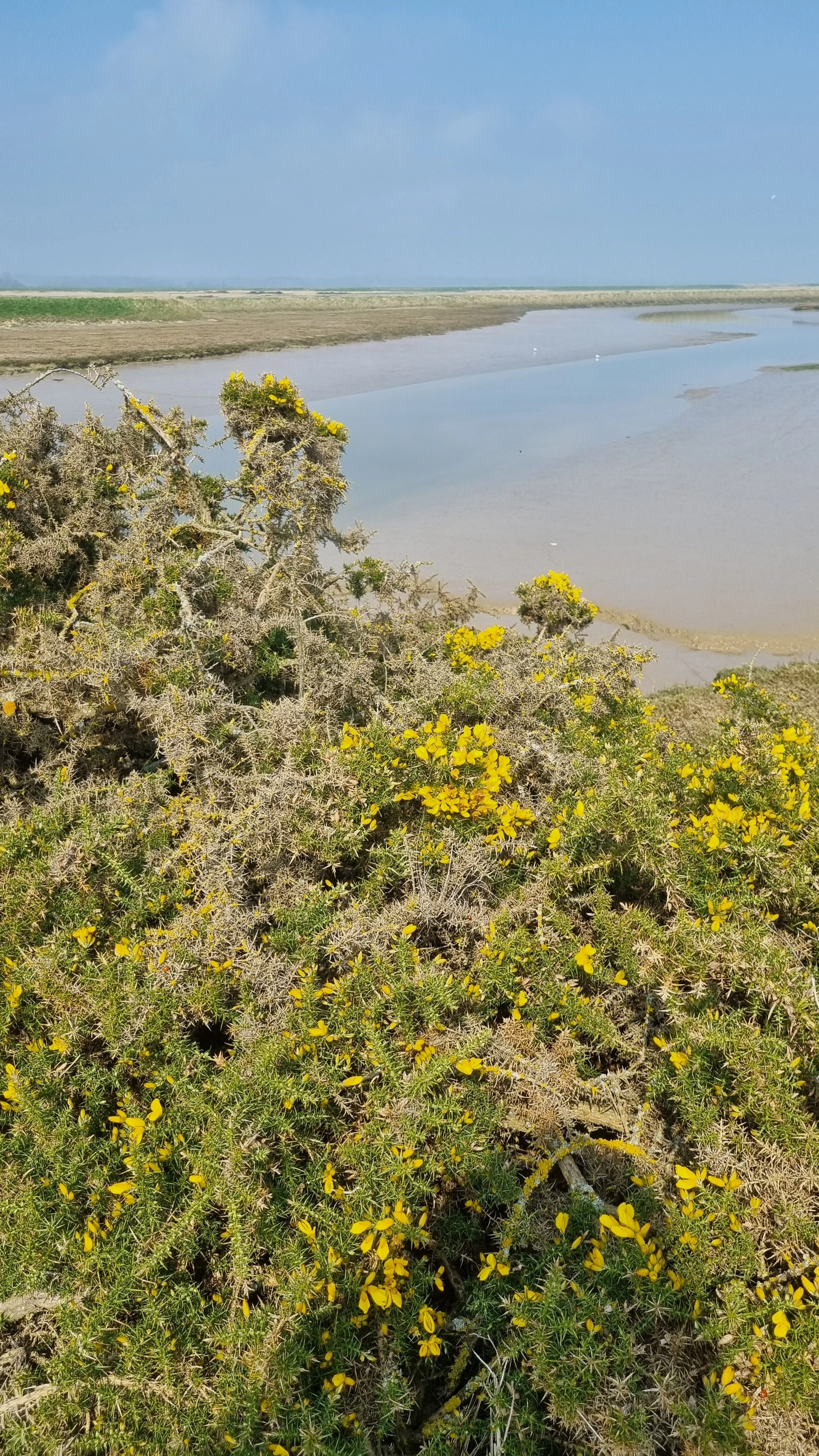
Furze

Furze by Hayley Flynn

An ode to Orford Ness.

First published by Comma Press in Obscura: New Uncanny Tales, edited by David Hartley

There’s a dog beside the ferry and when she barks a spool of lemon-yellow tickets stream from her mouth: admit one admit one admit one, reels off at high speed. I watch the unbroken stream as it meets the ground, admit one admit one admit one start to accordion in on themselves in a neat stack. Ice cream folding on an assembly line.

The cormorant the dog’s taken offence to continues out of sight along the berm, and she lowers her head to the shingle with a final irksome puff of her cheeks. The near silent show of disgruntlement emits one last ticket and a gust carries it away into the maw of a furze. The wind and scrub work together to tighten the bind, its perforated edges secured in the tangle.

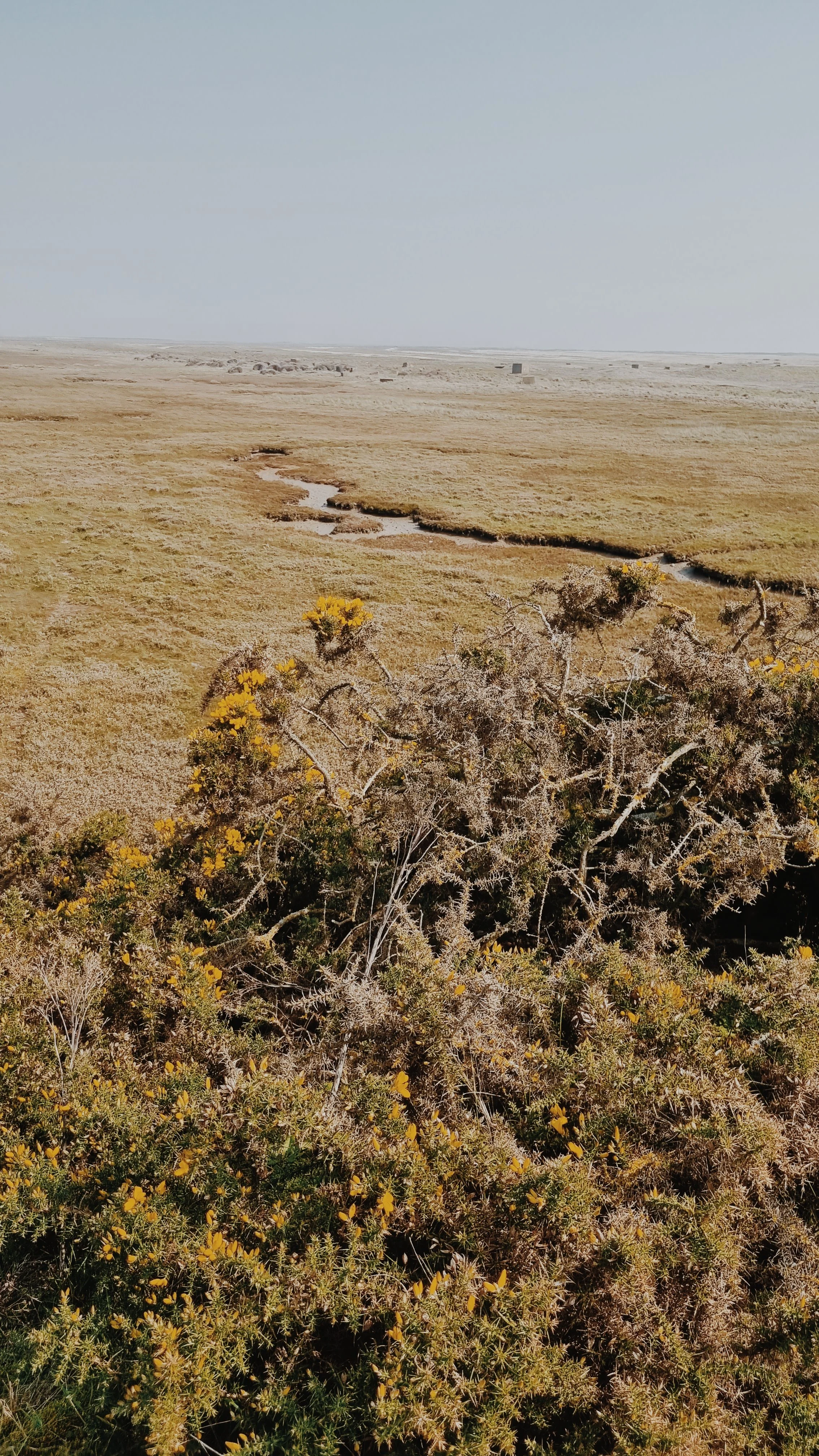
I stare at the bright yellow bush long enough that when I look up to scope out the weather, the spiny afterimage projects onto the clouds. When I blink it away and drop my gaze it seems that all along the spit the only colour is gorse.

The dog’s called to the ferry. As it shrinks towards the mainland, I see her spew another reel of tickets over the side, barking at a gull bobbing beside them. ‘Movern, that’s enough now’. The curious organic box office was never explained to us on our crossing.

Nonetheless, the strangers who were dropped here have already ripped their stubs from the concertinaed pile on the water’s edge, scrabbling to make sure there were enough. With no more left, I stick my hand under the ribs of furze and, dissatisfied and torn up, show my bloodied fingers to the ticket collector. ‘It’s not safe for you to continue without the ticket. We have to count you in’. I return to the bush, sink in once more, and a whip of hair catches as I’m elbow-deep in its teeth. I come away with the ticket but leave behind a web of greying strands.

I’m given a flora and fauna handout in exchange for my shredded ticket, the sea in my peripheral vision gives the illusion that the words are moving on the page, I feel seasick and increasingly more nauseous by the illusion of the rearranging text:

‘Many plants on the island have adapted to avoid the desiccating effects of wind, sun and salt. Silver hairs on their leaves reflect the sunlight and slow down the wind’.

I touch the hair at my temple in acceptance of what I’ve given the land.


Already I spy the rangy hares. Even I can tell that they’re different, larger and with more gold to their eyes than mainland hares. On the shingle, their form becomes colourless and indistinct, and amongst the scrub, their eyes are indiscernible from the flowers of the gorse, trefoil, and poppies. I still don’t have the lay of the land and, having barely moved, the ticket collector is within spitting distance as I assess what’s ahead: a stillness.

During my brief time in the tangles, the others have dispersed across the tree-free flatlands. No sign of them anywhere. I eye the hares, this time suspiciously - I see no difference in how this one nibbles its twig and how the woman besides me on the crossing had gnawed nervously on her apple. The turn of that one’s foot, it struggles to bear its weight on an injury and I scan back through the passengers for someone with a limp, a cast, a cane. Flashes of unnatural Pacamac-blue appear from behind the ballistics hall, along with it the cautious apple eater and her children thus extinguishing my fantasies of shapeshifting mammals. Regardless, it’s always wise to consider hares as a sort of deceit.

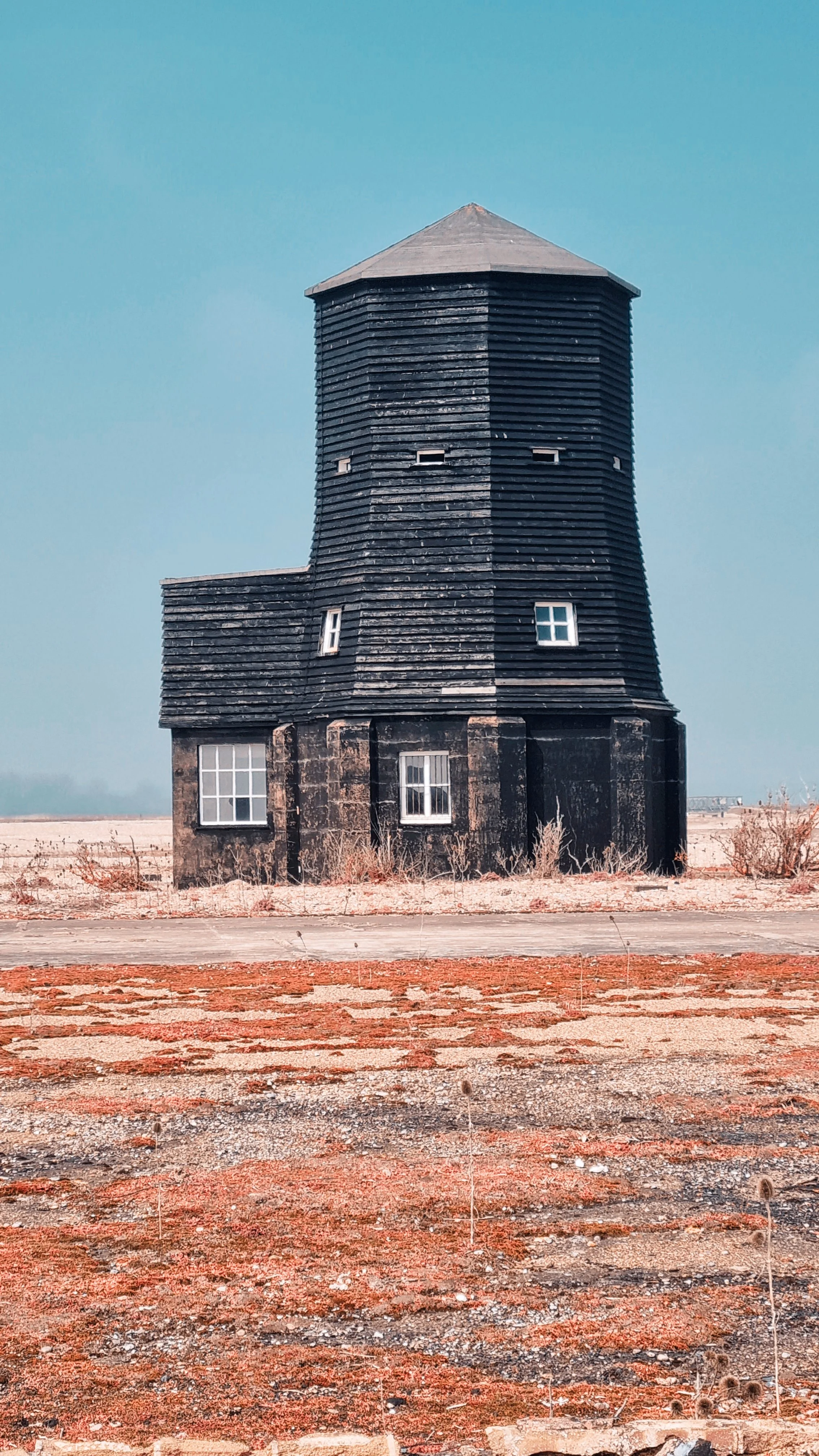
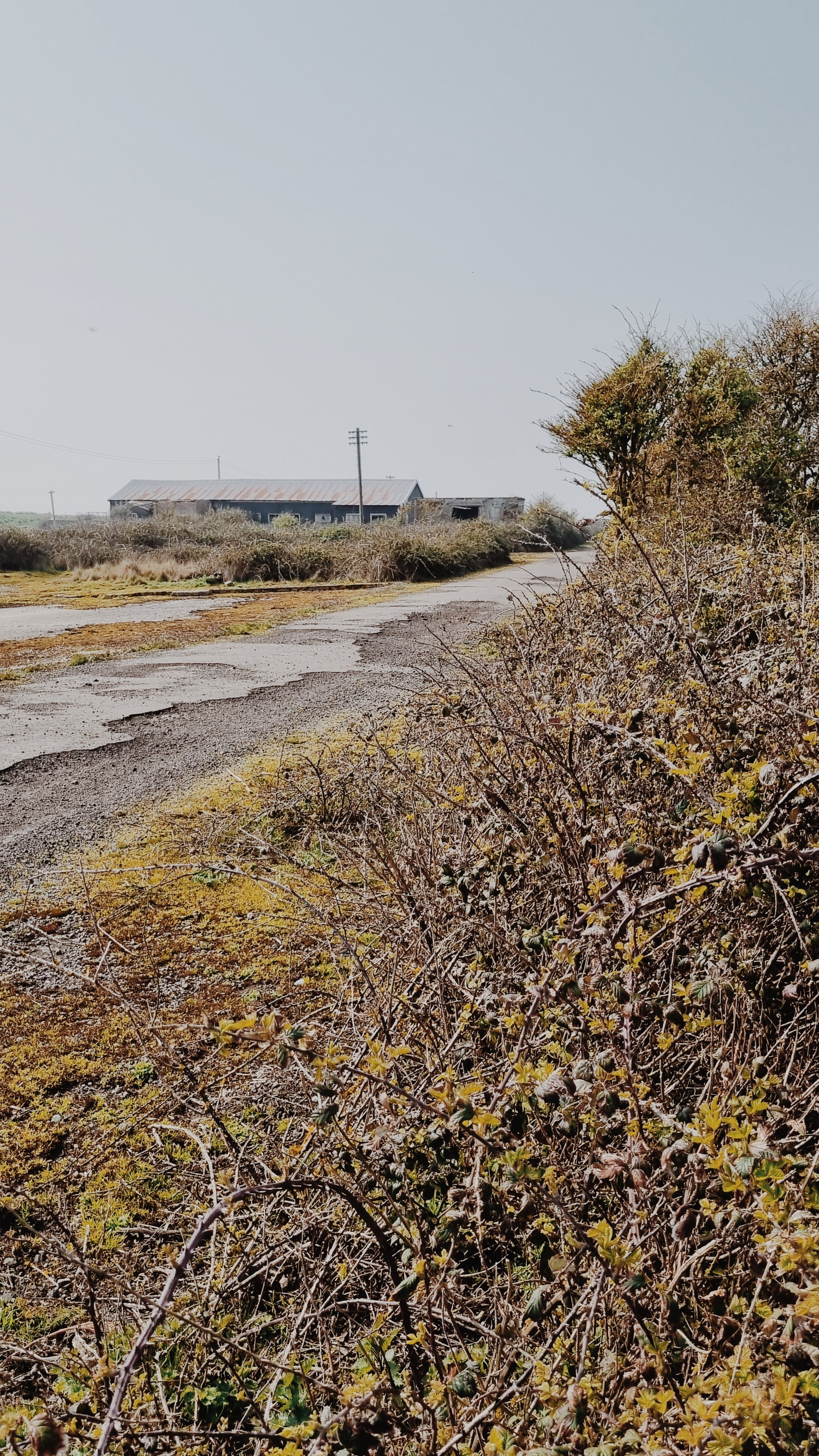
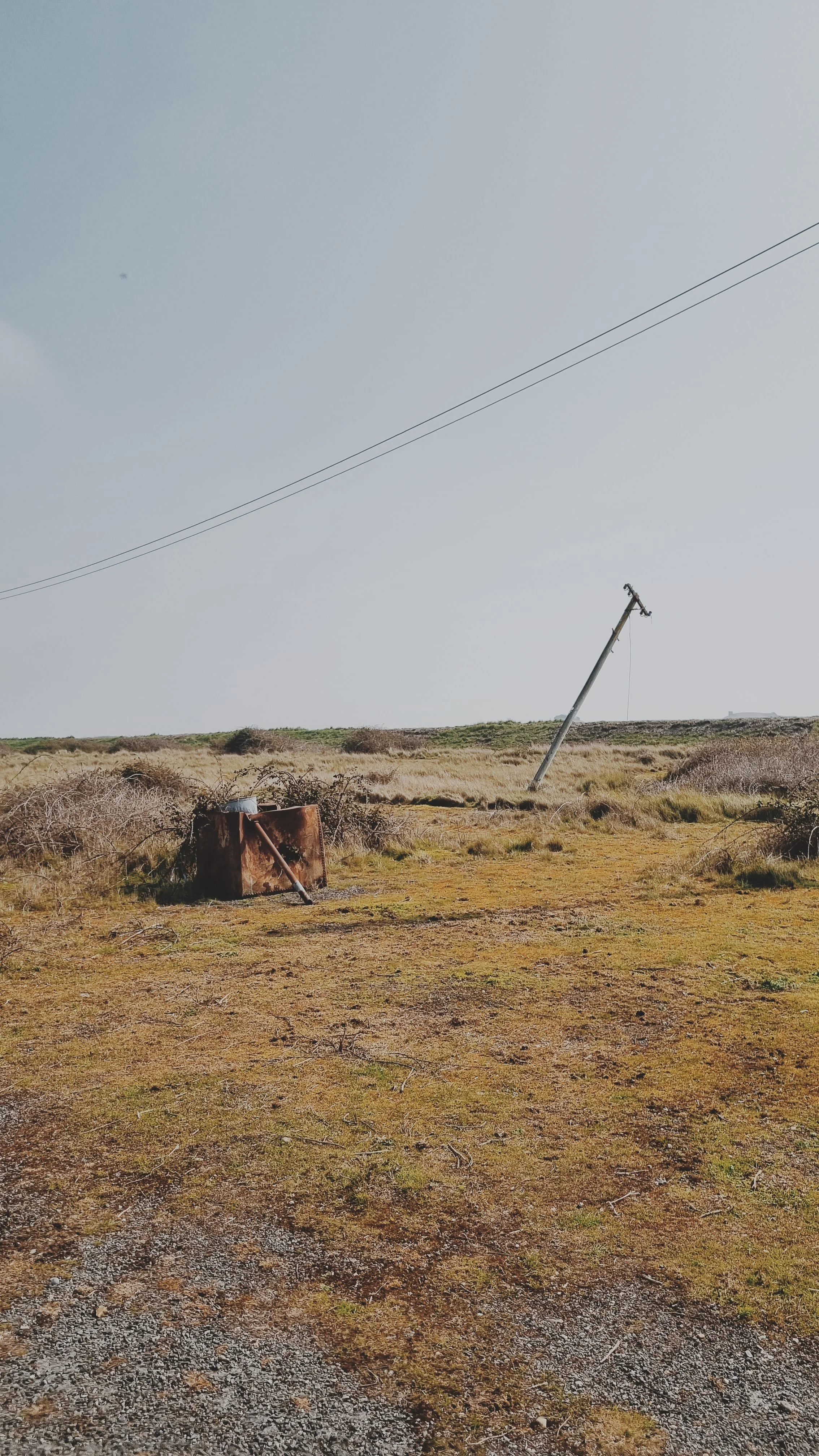
Ignoring the clutch of people ascending the concrete staircase to the roof of the hall, finch-mouthed with their binoculars ready, I head off eastwards. The route ahead is of indeterminate length - ‘there’s blackberries along the lane’, the ferryman had said with a parting wave but as I approach the first cluster of structures and ghosts of old roads, the undergrowth is nothing but warped and fallen barbed wire fencing. On the fallen concrete posts the egg-yolk lichen crusts at four inches a century.

Determined for my first blackberry of the season, I walk the whole stretch hopefully. Surely I’ve gone too far. Is this far enough? When the path runs out, signs staked into the pebbles ahead warn of unexploded ordnance. A vinegar trip is what my Nan would have called it, a fruitless journey.

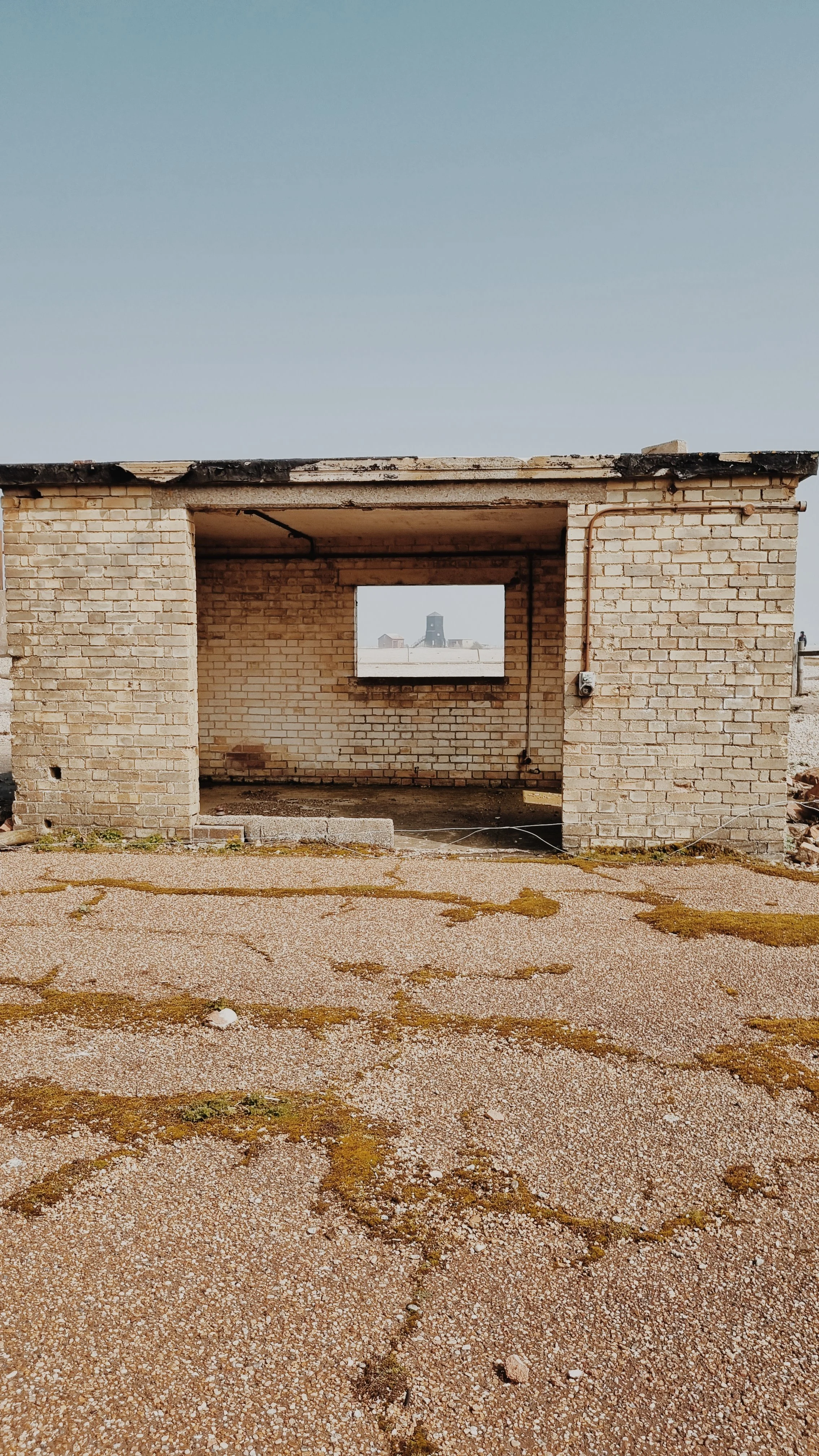
From here I notice that on an otherwise sun-drenched ness, the sea can’t be seen for mist. There's a few small brick buildings to my left and a chalked sign at the door of one reads: ‘Owl pellet dissection, 1pm’. It’s not nearly time, and I still feel the pellet dust in my lungs from the last time. I’d tweezed out miniscule jaw bones, held aloft the hipbone of a field mouse, and peered through its socket as if the void offered a divergent view.

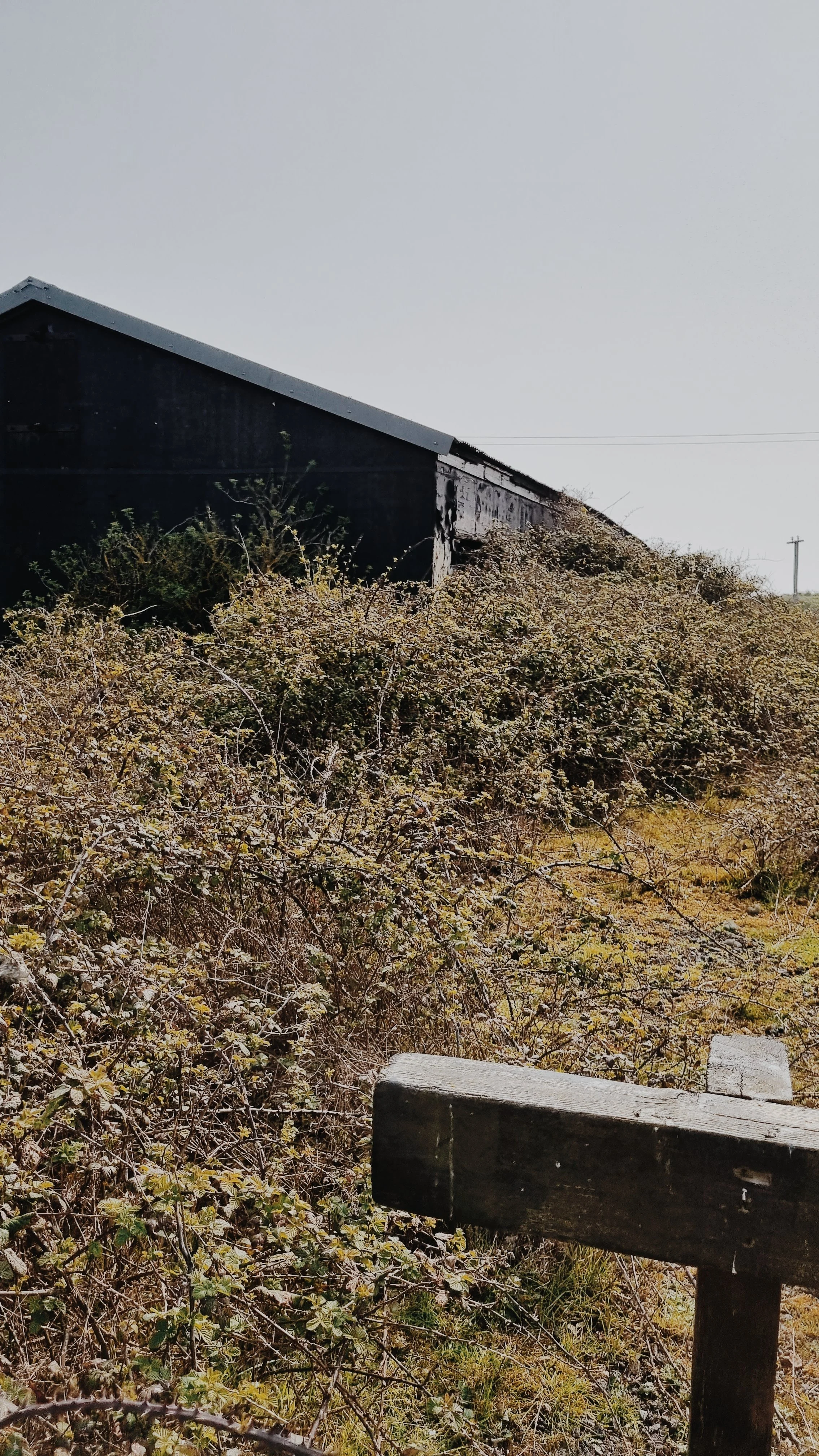
I walk a few metres off the track before thinking better of it and turning back. Maybe the light shifts now that I face westways down the road but I’m somehow confronted by a wall of blackberry bushes rising from the verge. The leaves are brackish and half dead, there’s not a single fruit, only twists of malnourished bramble knotting its way up and along the perimeter of the Information Building: the barbed fences I thought I saw.


Almost every feature and creature of the spit is in the process of transmutation. Neither one thing or the other. Furls of weed stiffen, building extremities loosen. Beneath mechanical tendrils of bramble is the gaping mouth of the armoury. A salacious black void where a door once hung, and rather than lighting the way, the sunlight is swallowed as greedily and meticulously as the blackness can eat it.

A man’s head darts out from the blizzard of thorns, ‘Have you found it?’ I look around me for someone else and back to the droplets of blood on his forehead, congealing on the branches, pooling on the path; dark and shiny pearls like...’blackberries!’ I mean only to think.

In the dazzle of yellow rising up from every furze bush, every wildflower, every swift eye, the road behind the man and his dewy face seems not to exist. ‘Blackberries? What? No, the lamb. We have to find the lamb’, but I don’t think sheep can survive in this place so I leave him behind and with every step I take, another stretch of the road reveals itself before me like a child laying tracks to keep up with a fast-approaching train.

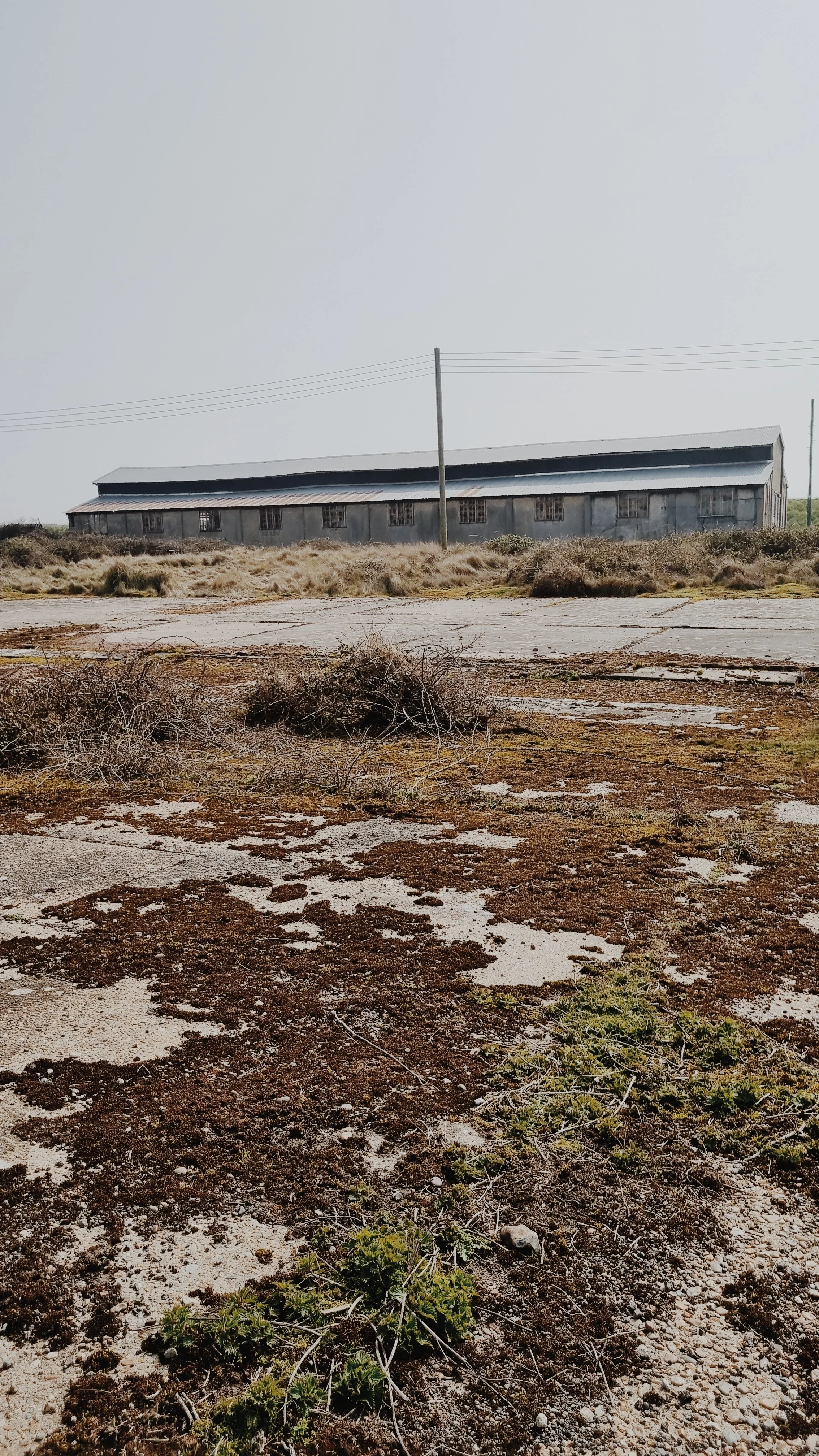
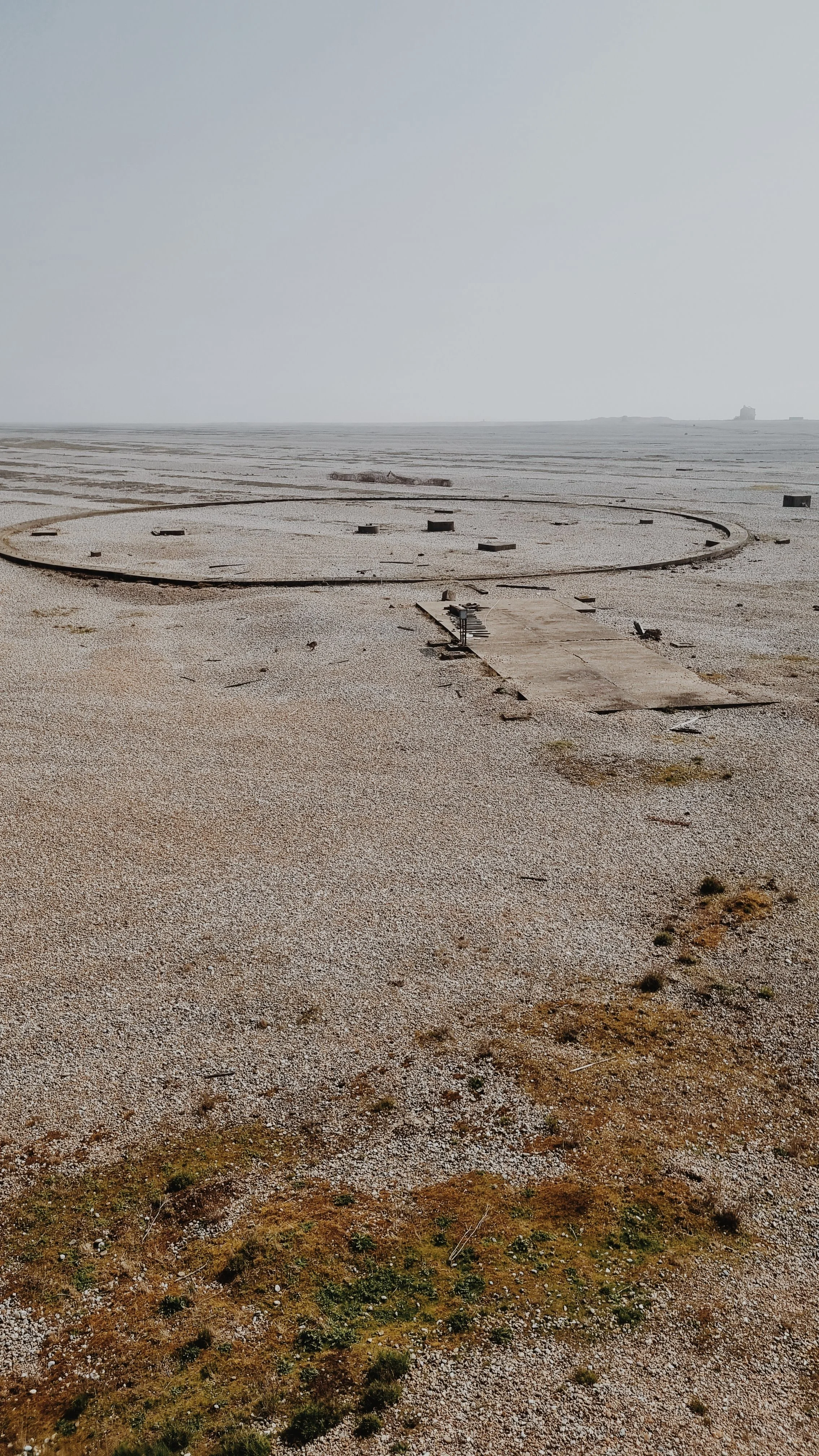
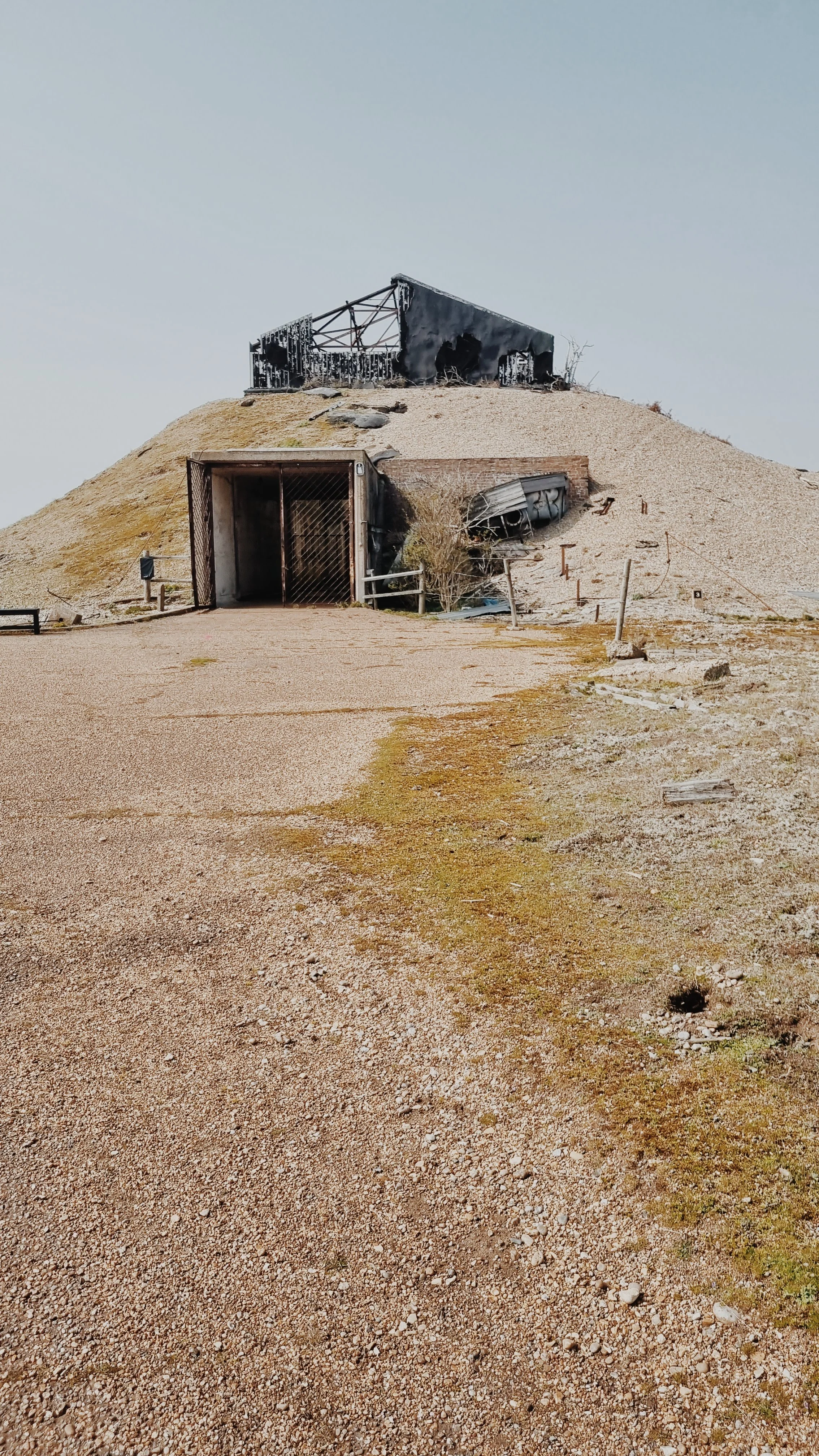
Back in the centre of the island, things seem clear again, and a sign on a patch of ragwort-riddled grassland reads: ‘Meet the sheep’ but with only two rabbit kits in the field, I remain unconvinced on the existence of the island’s livestock. I’m back at the ballistics hall, but the drove of others have moved on so I take the stairs to the viewing platform on the roof. In a corner, groundsel grows from a fracture in the concrete and a cobweb of hair smothers the leaves. It turns my stomach and I think of birds caught in a spider’s web, and trees encased in silk nets by webworms. I shake the unease off me like a wet dog. Unsurprisingly, the view from up here is more shingle and more mist where I expect the horizon should be. The lighthouse was dead ahead, once. Off to the north is a 50 metre ring, a perfect concrete circle that I will come to know as Chaplain or Pound Note - nobody alive can quite explain what purpose it served. There’s talk of radio waves, radar, nuclear detection, a missile called Blue Streak, and the science of the curvature of the earth. In the interminable landscape of stone, one hare doggedly runs the Chaplain's circumference as if tasked to prime the ring with kinetic energy.


In the weeks leading up to today I’d armed myself with books about regional wildlife - I have the knowledge of a handful of birds. I read ghost stories set on the mainland - I’m haunted by local apparitions. I’d discovered a long poem about malevolent beings approaching from the sea - I can’t help but picture the creeping tide boiling with monsters. I’d not read anything about the military, the bombs, the humans, and the closest I came to any of that was when, tired of cormorants and spooks, I’d chosen a book at random. It could have been set in a Lake District cottage, in the depths of the ocean, on a ravenous mountain in Chile, only there was no denying it - though never explicit, it could not have been set anywhere else but here. I’m sure it was happenstance but it felt like I was captive to never knowing any other geography. The story followed fictional scientists as they learned to extract human essence from their dying subjects, it reimagined the test sites as ones of medical experimentation rather than arms.

The issue with imagining this place as a soul harvesting facility is the unmistakable air of no one ever having died here, even the spirits had to follow me from the mainland. There's few things as lonely as a ghostless place. Encumbered by that thought, I head deeper into the structures of the ness - to the labs and centrifuge chamber. The rust-riddled contraptions and partially buried workshops receive my presence lifelessly, even though I bring with me the animated chiming of shingle shifting underfoot.

Lab One has no roof to speak of, and shards of sunlight scream through the pagoda onto the surface of the sea inside. The room is inches deep in water, the tributaries along the concrete walls where the rain made its way in are chartreuse with mould. Despite the doors to the lab being nothing more than wire lattice, thewater stays within the confines. The other labs are fenced off, not safe to approach much less enter, and the pathways from here are closed off for breeding season. I begin the walk back to the pickup point, ignorant to the miles I need to cover. I look to the sky and again on the clouds the afterimage of defensive shrubs flashes. My scathed arm stings and weeps in alliance with the vision and I remember how tightly the bush held. I think of the absent lambs, and tufts of fleece spun on the gorse.

It feels like hours later when the ticket collector sees me approach and hands me back my stub. I cross the line back to the jetty leaving shingle and barbs behind me. I sit in the sun and watch for waders in the salt marsh. I think about looking for the others but I’ve no real desire to find them, and moreover, I don’t want to turn around. I look landward for Morven. I can make out the dock over the water and I know people are waiting there for their turn on the island. I've nothing to do but wait.

Behind me sea kale lays down roots, bombs spin, radio waves bounce, life force is captured and it is the colour of lemon, mustard, honey, fire, furze, ragwort, groundsel, lichen, and the feral irises of never-blinking amber eyes. Out of the mist comes a husk of hares, an oblivion of distance between us.
Four Houses

Four Houses by Hayley Flynn

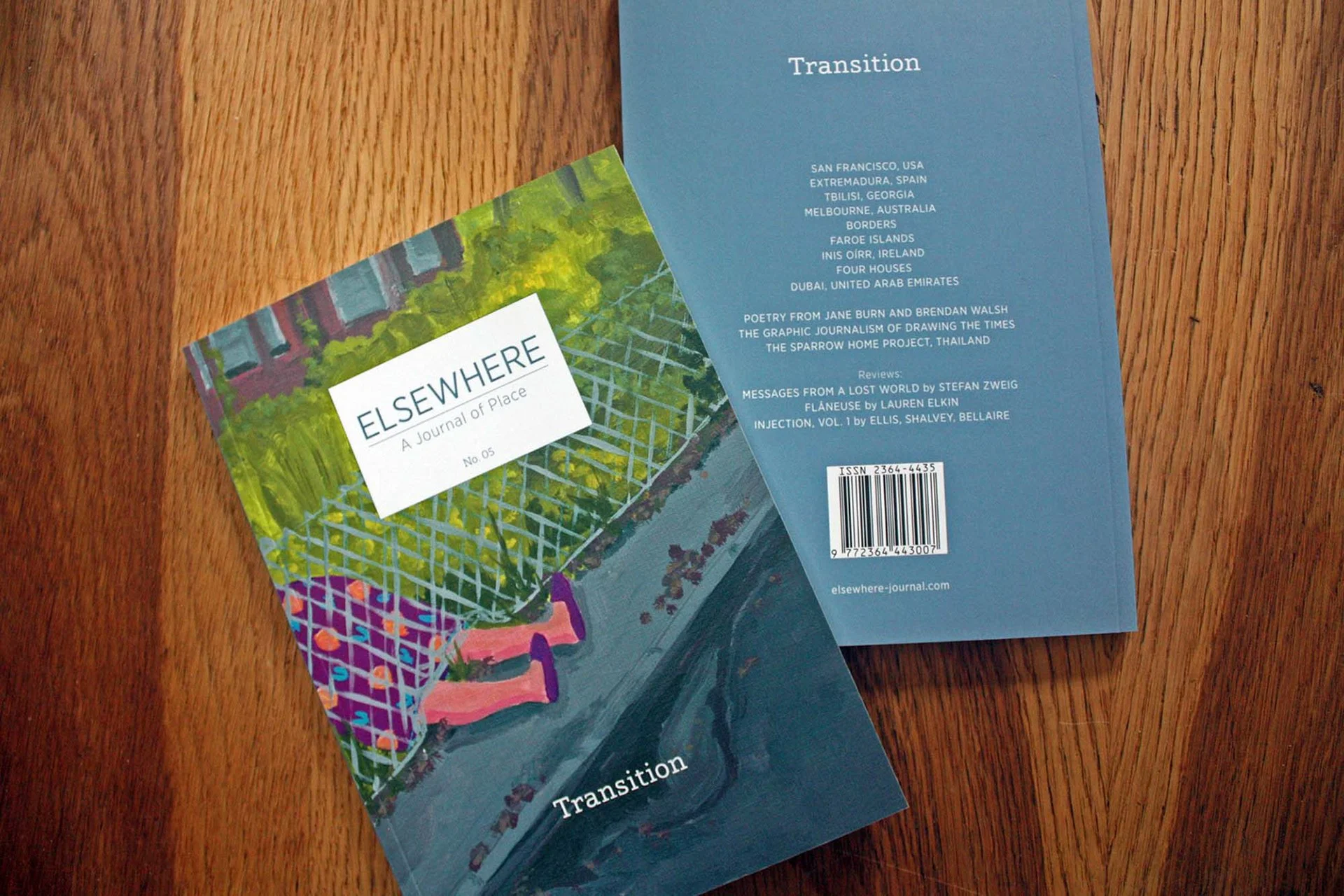
First published in Issue 5 of Elsewhere: A Journal of Place

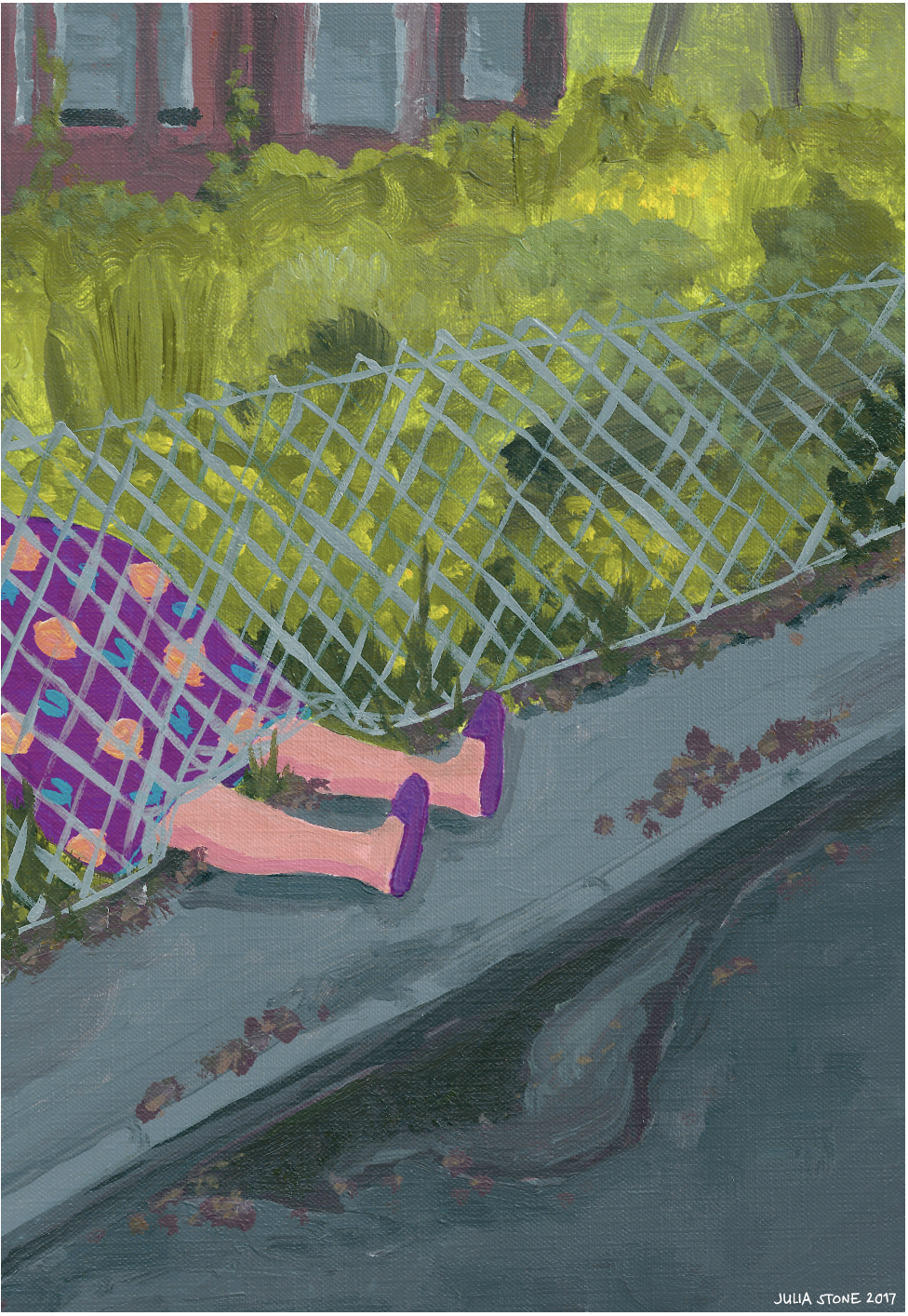
The theme of the issue was ‘transition’ and the cover art by Julia Stone was based on my story.

Demesne

I walked by a house on Demesne Road, a huge home from the suburb’s days of glory. The house was burnt out and decaying, with great cavernous holes ripped out of the roof. Were the skeleton beams that remained cinder, or just blackened from rain and rot? What was the story behind this Shirley Jackson house? In parts it was still like new – distractingly new windows upstairs – but largely it was old and creaky, and it was as Halloween-like a house I’d ever seen. 

A caravan was parked on the drive, and the drive had been reclaimed by grasses. A curious collection of potted house plants were left on the driveway between the caravan and the perimeter fence, giving the impression that, while loading up the van to move out one day, the owner simply dropped dead before she could transfer the cheese plant from where she had set it down. I imagine her lying, supine on the drive, the house condemned around her that very day, cheap wire fences put up in a hurry, wild flowers and grasses spurred on to grow dense and fast by the fat body within reach of their roots. I picture her foot sticking out, off the property line onto the pavement, and being crudely fenced over, like a white line painted over a speed bump.

Cranbourne

I walked for 40 minutes to pick up a second-hand wok that a woman was selling for £5, then walked home again. My hip pain kicked in about half way and I limped along in the cold. Was it always going to be like this? Struggling for money didn’t bother me so much, but it was the bleakness of where it took me, treading down seemingly endless grey roads, wide and barren, with cars parked on pavements and wheelie bins never wheeled out of sight.

When I came home that night, I added the wok to the stack of boxes in the lounge and went to sit on the bed. I folded blankets and rugs, reached behind drawers for hair clips that had lodged themselves in the nooks and crannies of the bedroom. I was packing to leave 

I lay on the bed in the dark little basement flat that I had loved and hated in equal measure. I lay there for 20 minutes or so, fingering  the hair clips I had pulled out from under the bedside table and slotting them into each other, building something from things of no importance. I didn’t cry.

He took my hand in the kitchen and told me he didn’t know how to fix things; soup rolled and bubbled behind him. For the first and last time, he ran his hands around and over my full belly, and he looked at it without anger or hatred. Tears landed on my grey dress and they lingered on in dark, sad stains until they evaporated.

On the street, I was about to leave. A hydrangea bush had browned and thinned but on several of the dying branches, full heads of blooming flowers held fast and hopeful.

Woodlawn

In front of me, on the dip of a hill, a teenage boy, unaware of my presence, jumps to high five the conical white blossom of a pendulous lilac tree. The tarmac here soaks up the late afternoon sun and I want to pull off my jeans and sit on the ground to feel the warm road against my bare legs. I see a young, dead magpie laying on its side, her face turned to the floor; her small body spoons the warm black tar. The neck feathers are especially tiny, and the lightest breeze ruffles the down like wind across a rapeseed field.

My apartment is one of 78 in an elongated staple-shaped court. Around the outer edge of the staple is a strip of gardens that change in nature according to the trajectory of the sun. My own flat’s rear garden is the most shaded, a mini-woodland with bluebells and great horse-chestnut trees which relentlessly shed their blossom through my bedroom window. Reared up on hind legs, arms and paws positioned like boxers, adolescent squirrels play-fight in the very early mornings. In the centre of the complex is a tree-heavy shared garden that dips and rises inexplicably in mounds and troughs. I try to identify birdsong, but apart from a woodpecker and a neighbour’s cockerel I’m largely unsuccessful. Through the branches I see the pink of a jay and the mottle of a song thrush. In the lulls I hear the breeze on the leaves, and the cooing of my baby. 

I have an impossible memory, absorbed from American television, of pitch-black starry nights, lawn sprinklers fft-fft-ffting, crickets chirruping, of days when the sky is dappled by magnolia leaves and the ground by sun. 

It is not unlike my new home, yet the days still weigh a ton. 

St Werbergh’s

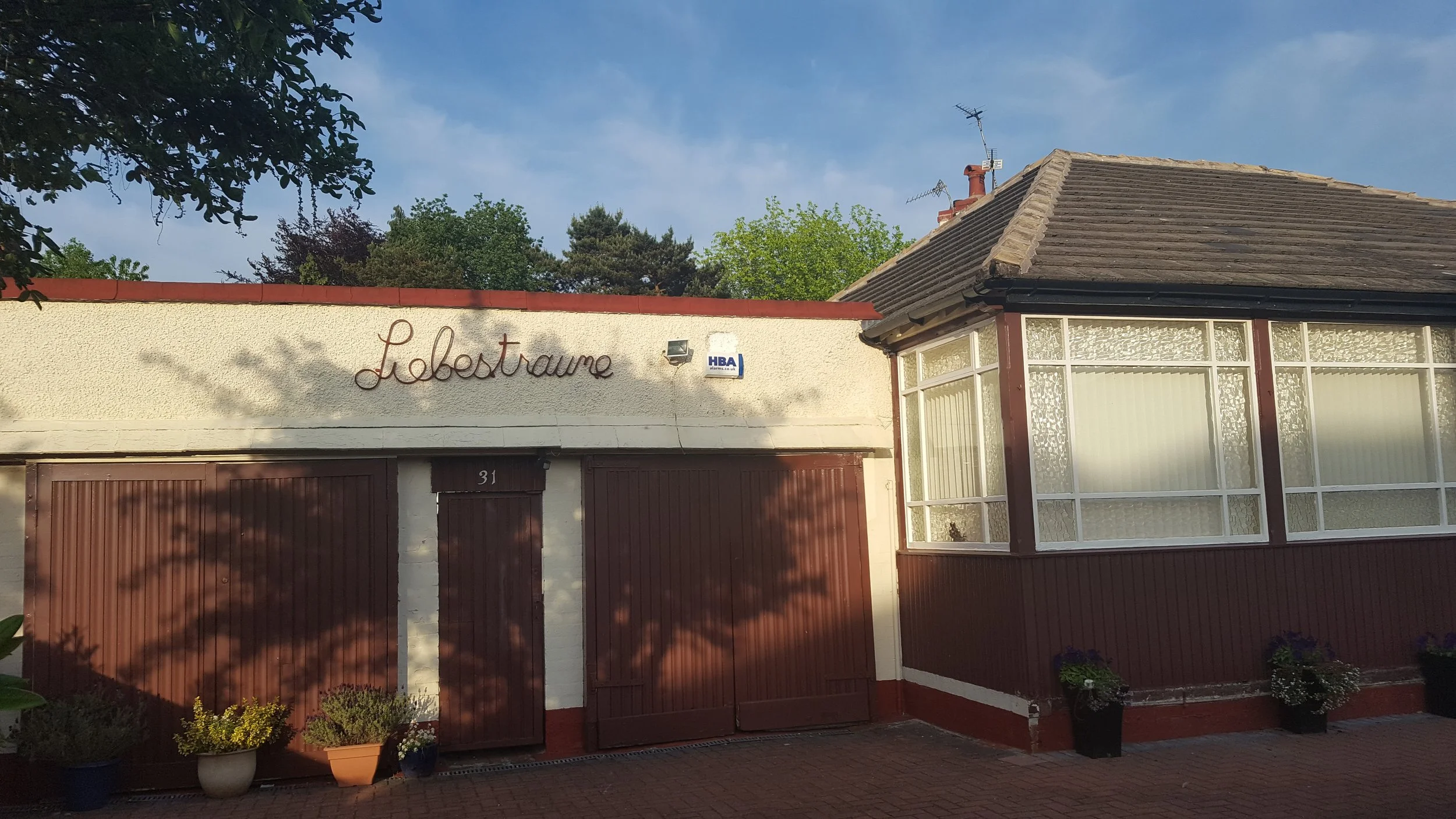
The front of the bungalow runs on into a strange outhouse or garage that has been swallowed up by the rest of the house and converted into liveable space. For some reason the garage door is still there, beside it a narrow door with the house number above it (an understudy to the main entrance, just metres away), and this is bookended by a second garage door. Above this beautiful mess of entrances, in large, cursive letters: ‘Liebestraume’. Dreams of Love. 

What looks like rosebay willow herb billows from a chimney. In America, this wildflower is known as fireweed owing to its proclivity to grow on scorched earth, so it's fitting that its wispy tendrils rise up from the squat chimney pot like smoke. 

I stand at the end of the driveway, admiring the fat little house that's crouched in front of me; I gaze upon its brown wood and its weathered walls rendered with white concrete, and I feel my flesh fire in the kiln until I too am built of brick, my skin is concrete white, and my angular limbs nothing but corners and eaves. I am unfaltering and sturdy, as if I too am rooted in the earth. 

I have fallen in love with the houses I pass, because these days I see myself in them.  

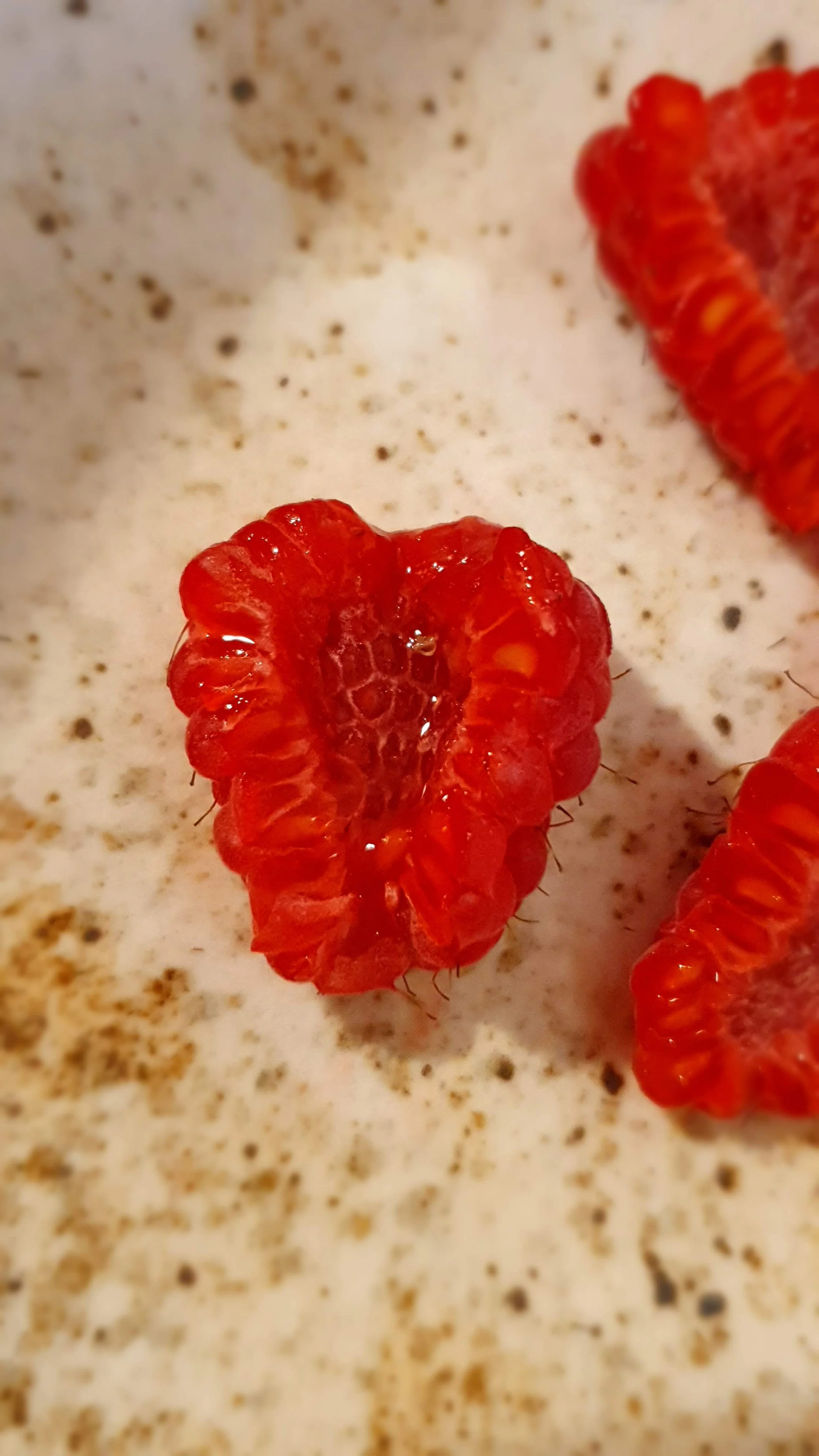
Raspberry

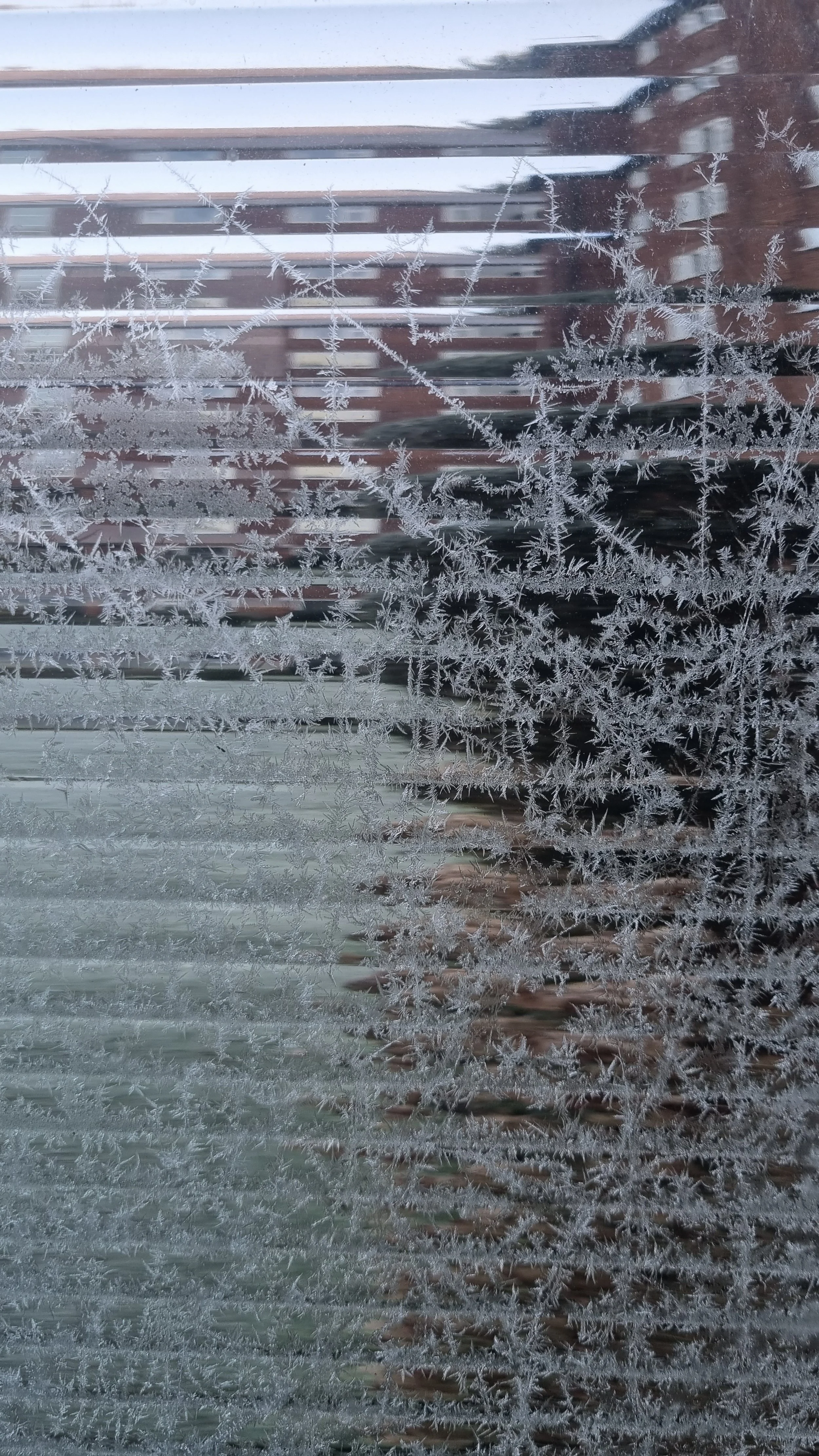
I watched as the bite of cold devoured patches of the lawn, a silver pelt of ice crystals where it once was green. I stepped onto the lawn in those places just to feel the tsunami of minute crunches crash beneath me, and my daughter, too light to make those same devastating waves, ran back and forth across the lawn and when she reached the furthest corner she shouted: ‘Mummy! I love you’ just to hear her echo. In winter the garden can’t show us love so we summon our own and it bounces off the walls into the night.

I didn’t make the neighbourhood tree planting day. Afterwards, the new saplings in their test tube casing winked at me through the kitchen window, light playing on their protective coats in triumph. They tried to coax a jealousy from me that the garden grows without my help, that it is hardy and sufficient and when it is frozen it is its truest, sharpest form.

It noted my absence on the tree planting day and withdrew from me. It never saw me tame its weeds in the kindest possible way, or tend the rhubarb when it was thin and spindly, or plant the teasels in its borders to bring goldfinches, or castrate the raspberries down to raw stubs in February. I feel like it saw us decimate the ghost berries though, picking them to crush just to hear their pop. I think it felt as I needlessly drove a stake into the earth to support a ladybird shelter which remains devoid of life, and it watched as I took its conkers into the flat but never saw me return them in the dark, away from my daughter’s magpie eye.

I have tried to make the garden my saviour, and often times it obliges, but it bears a grudge and in winter it leaves me loveless.


It rained for days. When the rain landed on my face it was a barely registered prickle, I felt numb, I had stopped looking when I crossed the road, and as if inside a perpetual grey cloud I drifted over dark pavements. I have been disappearing for some time. Rather than cocoon myself from the freezing mizzle, often I lift my face to the sky. I threatened the moon that met my gaze during those times: show me something I can feel.

And she did. There was a sea change in me. Anger which had swelled like waves took over the calmer waters too, it fizzed at the surface with ever-increasing ferocity and the thin shell that had contained the expanding mass beneath now became infected by it. The rain, the sea, the tide inside. I fled to still waters, submerged in a pool, dolphining silently above the tiles. In the pool, there is no weather.


There is a time the pool and the garden co-exist within me and when the rain and the sea seem not to. Lying on the bed, I see a tall drooping branch of the raspberry bush bowing at my window.

Where it bends I see shoulders, the curved section that bobs under the weight of the arc like a head makes slow and small moves, swaying from side to side, and its movements are that of a lover between my legs and when my eyes close I see bright flashes like the neverending white pits in a jam jar, and blood rushes to my skin and makes me the colour of the just-reddening fruit. I invite the garden into my bedroom then.

I am untethered, my phone slips from the duvet. I listen. I listen to the air pass over my lips, then to the absence of sound like the black space between stars.

Quiet sighs oscillate across the heavy bedroom air. Again I sigh, I gasp, on my bed I float on my back, and the pool and the bed fight for reality beneath me. I push off from the wall, pulling myself across the water in a fast backstroke. The only sound I hear is my straining breath and with my ears submerged I hear it only from within.

As my breath escapes into the space above me I am on the bed, in the clutches of the raspberry bush, my face to the sky looking for a feeling and finding one. I push my body through the pool with an urgency. Around me people race, crawl, tread water, swim laps, track their speed, count their lengths, submerge, but none of them hear the noises I make when I try to quietly orgasm. When I pull myself out of the pool the spell is broken. I am just a mass of chlorinated body parts that wobble and goosebump as I walk to the showers.

On Rufford Road

Content warning: sexual assault, VAWG

On Rufford Road by Hayley Flynn

First published by Caught By the River

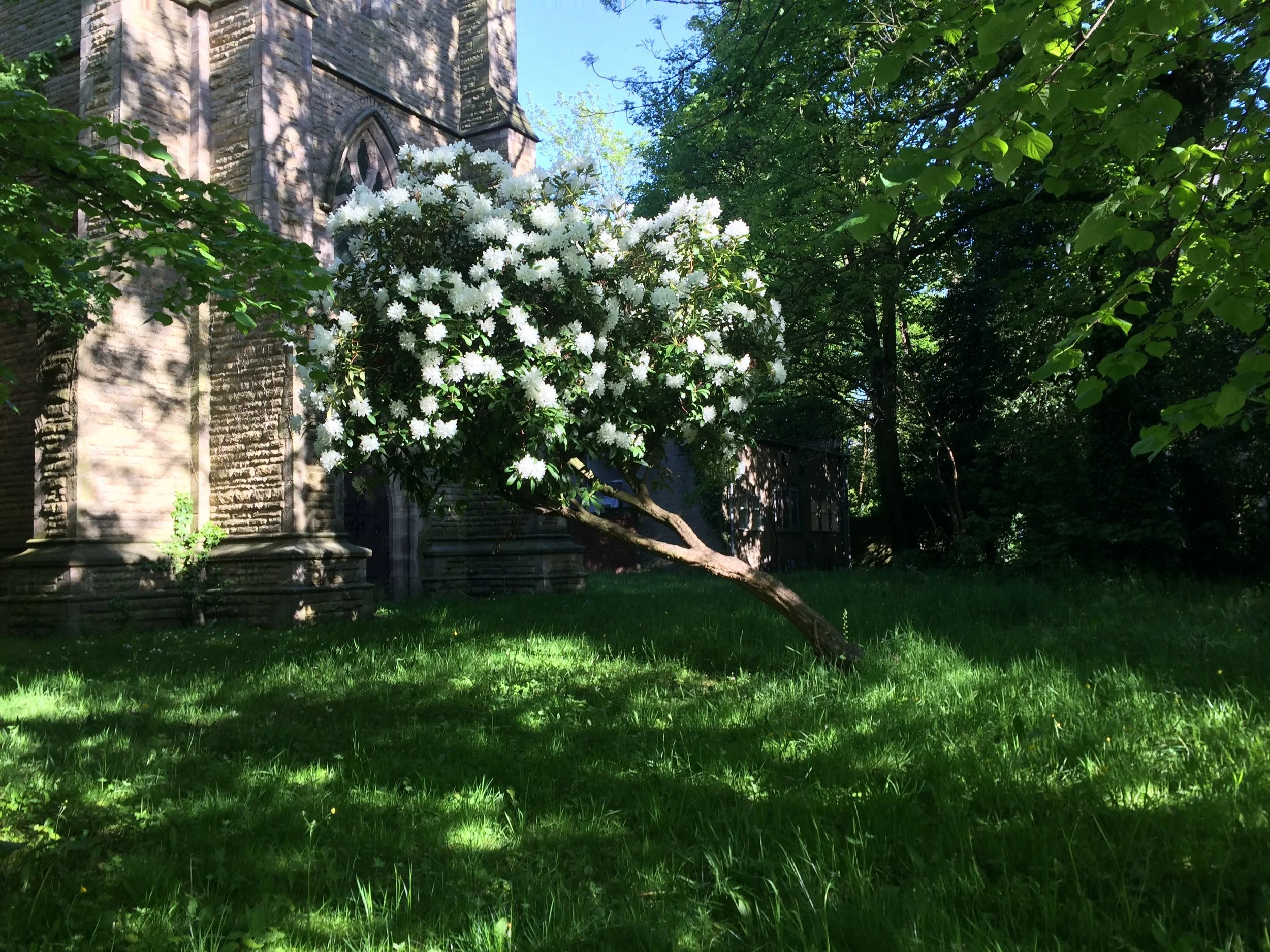
Before its cackle, it’s the flash of iridescent green on her tail I notice first. Down in the spinney between horse chestnut trees a magpie pecks a fat chick she’s thrown from a nest. She drags him toward the shelter of a leaning rhododendron. 

His beak must have taken the impact of the fall – the upper mandible a bloody Jackson Pollock, and through his thin skin I make out blue and engorged organs, stumpy wings either side of his belly – hopelessly underdeveloped. As the fat baby lays supine, exposed to the sky, the heat evacuates from his body. He is not quite altricial; his eyes are formed and shiny and seem to fix mine, the beginnings of a feather stubble erupt violently in wild patches around his ribs. ‘I am trying to help’ I mouth, but I feel as paralysed as he. I shoo the magpie away and attempt to loom large as I pull myself over a perimeter wall. 

I look back and forth between it and the magpie waiting on the limb of a horse chestnut, and doubt creeps in – could it be a magpie too? Is this a rescue attempt I’ve thwarted? But the magpie doesn’t caw or swoop no matter how close I get to the chick. She eyes me with curiosity and yields, for now, waiting to see if I’m there to steal her breakfast.

Transfixed by its plight, I stare dumbly at the bird whilst cooing lies of reassurance to my toddler on my hip, ‘What a cute baby bird resting on the ground’. Belly to the sky, I can only look it in the eye and hope to establish some fleeting connection, but I know I can’t help and I feel ashamed to meet his gaze. I know that feeling of exposure, I know that feeling of peril. Fight or flight? He doesn’t need to tell me the magpie is not his mother, he is mute and still and his slow sensory shutdown is the only chance he has at flying away from this.

I don’t know what to do but to step back over the wall and abandon the hopeless creature, and as I resign it to its fate I try not to falter as I tell my daughter ‘Let’s leave it to get some sleep’. I back away and break the backs of leaves beneath my feet, their fragile spines turn to dust, and momentarily the plump little bird seems grotesquely robust; his mother has fed and nurtured him so successfully that he can’t dare to claim such vulnerability amongst this fragile forest of ghosts, but the magpie’s beak is long and resolute. The baby’s swollen gut and darting eyes revisit me often and I cry for him. One day when I pass the spinney I realise I’m crying for myself. 


Before I hear its high pitched signal, it’s the flash of the green man I notice first. I am in the city with the river behind me. The frantic beeping sends me across the zebra crossing. I step off the curb, take two steps into the road and immediately backtrack on to the pavement. As I ebb backwards I will the man behind me: please keep walking. Not quite in my peripheral, but undoubtedly still there, the man mirrors my movements. I know for certain now that he’s following me. I don’t see him, I will never see him in fact, but I feel the air between us as tangible as if it were magnetised. With my back exposed to the dark, to the river and to the man between me and it, my body seizes and shuts down. I am mute – I could have told someone ‘I do not know this man’, only I couldn’t open my mouth. My eyes looked only ahead, my arms were as useless as those pathetic wing stumps but my legs, thankfully my legs, they took flight. I cut through the night.

For a lifetime the dark side streets ran on. I raced fruitlessly as if making no progress, and on the treadmill-road I was thankful that at least I never wore heels. The man who chased me would not quit, blindsided by his desire to inflict pain, but he could never gain enough speed to drag me to him. I felt in slow motion the few seconds in which his fingers intertwined with my hair; as if watching from above I saw the sodium orange glow of the streetlight on wild strands of dark hair as they evaded his grip and whipped around his thumb and tips of his fingernails. There was a feeling I was sinking, falling behind, but then the treadmill I’d been pounding suddenly fell apart. Its parts cascaded around me as the screws came loose and I finally gained ground. As the cobbled road rose to meet me I fell into the door of my hostel and ran for the stairs. The front door swung open behind me. I kept running.

As the man on reception put himself in the path of the intruder I felt his shouts through my bones but all I heard was a fizz of white noise from within me – blood and oxygen pulsing, organs pushing at my flesh. Then all was quiet. Normal. Safe. 

I got into bed on the top bunk of the dorm room my friends and I had booked and I waited for my senses to tune in. By the time my friends came back, I felt, more than anything, ashamed and utterly unable to put into words the absolute certainty that his intention wasn’t ‘just’ to rape me. Uninjured as I was, sat up in bed as if I’d been reading a book, the strength that got me there withered and all that came out was: ‘I was followed home’. It was sympathetically brushed off as a non-event by the group who were on a high from dancing and gin and I sensed them keen to change the subject, so for the next 16 years I put it in a box until I saw that flash of green in the coppice. I don’t know if the chick sensed death waiting in the tree the way I felt it lurking behind me at the zebra crossing, but I am lucky to have never seen my magpie.

Shadows and Reflections

Shadows and Reflections

First published by Caught By the River for their regular series in which contributors look back on the year.

Throughout the year I’ve spent several weeks returning to regions of Spain that I loved uniquely. San Sebastian for its tiny Victorian seaside perfection. Seville for its insouciant way with a map and compass – a city which insists on orientating its maps in the prettiest, rather than the correct, way. I wondered how many thousands of people were lost at any one moment in that city.

In Seville I visited my good friend – we somehow found the most insalubrious bar in all of the city where I watched, mesmerised, as cocaine was overtly ordered over the bar. I wandered around the labyrinthian street for hours on end; it was Easter and Spring. The orange blossom was everywhere and I craved the smell to the point of wanting to do more than just inhale it but to eat it or somehow become it. I heard of a ‘heladeria’ that made orange blossom ice cream but I walked for an hour only to discover it had closed down. Santa Semana, or Holy Week, was a strange time to be in the city. There were hooded figures walking the streets ahead of religious statues; people dressed all in funereal black on Good Friday; and kids held out bread to priests and clamoured over one another to touch the parading statues. Incense filled the air. Jesus figures would appear from the clouds of heavy smoke like apparitions. I stayed with a Flamenco teacher, an art historian, and later in the year I returned to stay in the flamboyant nightmarish apartment of a famous set designer. Mannequins without heads stood at the foot of my bed and strange masks mounted the walls.

The art historian had artefacts all around the flat, there was a glass cabinet beside my bed full of shards of ancient pottery. My room was a glasshouse on his rooftop with the blue and white tiled dome of a church almost within touching distance of my bed. All around me were art studios and old Moorish structures but a patch of wasteland to one side of the building was my favourite view. I’ve always been in love with wastelands. They remind me of that limbo of youth; pre-teens and of spending the day with boys I had taken a shine to, lighting matches, setting fire to aerosol cans, and enjoying being there on the warm tarmac and concrete that had split and ruptured beneath the grasses we’d crouch amongst.

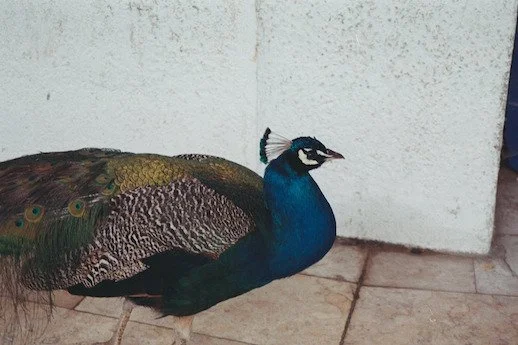
I spent a few days in Caceres, a three hour bus journey from Seville. I listened to dark, brooding music as I rode through the countryside and the smell of wild lavender fields perfumed the bus. The scrubland was olive green, with flashes of red poppies, and bordered by candy-floss Tamarix bushes. I stayed in a room with a turret and looked over the medieval city. I stood, enraptured by the storks nesting in the rooftops in nests as large as architectural domes, and I watched a peacock for ten minutes one evening as its iridescent tail made a waterfall of feathers down the ancient wall upon which he perched. Just a few days later on my return journey to Seville it seemed as though many of the Tamarix were already balding and brown but I saw them fleetingly, like much of the region, at their most blooming and fruitful.

I improved my Spanish on my trips out there and then I came home and started to learn Swedish. I enjoyed the new way to wrap my lips and tongue around a word.

I began to notice more this year – the nature in the cracks of the city, that sort of thing. I took notes of train journeys I made. I often visited the depths of the Calder Valley, sinking lower and lower into floods and raging rivers, finding myself stranded by the affects of storms.

At Littleborough one on such impossible return journey an older man sat across from me and narrated the journey to his German guest. “You’re in the promised land now” he says, signalling the crossing of the Pennines not far back “It wasn’t Israel, it was Lancashire…”

He talked incessantly and wistfully of the British Empire until his polemology fast became as monotonous and incidental as the sound of the engine. A wood pigeon flew alongside the train as we slowed into Mills Hill. It was a few days before June and it was cold and grey. As we chugged into Manchester I glanced back towards the British man who fell briefly silent and pointed out the Strangeways prison with peculiar pride – the first and only landmark he chose to draw attention to. I took notes of these conversations even on short tram journeys and discovered I worked best during those windows of otherwise lost time.

In late summer I caught a bad case of flu at a wedding amongst the sun-filled flats of Glastonbury, the flu then turned to pneumonia. For weeks my heart raced fast and hard until it felt that my ribs could no longer contain it and my lungs dragged slowly on, shallow and weak. I was also pregnant.

Life was hard at home once there was a third person in the equation and at the end of the year I learned that no matter how much someone loves you it doesn’t mean they can live with you, and that not everybody will accept the prospect of fatherhood. In the run up to Christmas when others were buying trees and planning time with families I found myself wandering the streets, homeless and recently unemployed to boot. I was wearing totally inappropriate shoes for the cold: the ones that happened to be the closest pair to the door the day I left. Each day I looked for a bed and each night tried to shake the feeling of utter failure at adulthood – I’d get into a position at night where I could feel my baby kick and it would remind me to carry on and not to assume I’d fail in motherhood too. I’d shift into a new position and notice the cold of a leather sofa on my hips and hope the next night to have warm fabric beneath me. I’ve discovered that strangers are the kindest of all: friends always assume you have another option.

One day I sat in the middle of a meadow, in the cold mud, not knowing whether to ever stand up and leave again. Pools of murky water filled my shoes through the holes in them and I imagined them becoming sodden and heavy and drawing me into the earth. I saw the dwindling winter light fade rapidly. I played with the idea of sitting there forever through the dark and cold and under the waning black moon, seeing the days pass and the moon grow full and milky again. I envied the birds that flitted from tree to tree.

I put my hand on my belly and thought of freedom and strength. If it’s a boy he’ll be Finch – one of those free birds I so badly wanted to become. If it’s a girl she’ll be Malin – a Shipping Forecast baby; a wild unforgiving sea full of strength.

Elements of this piece reoccur elsewhere across my work as it became the basis for my Place Writing MA and the Manchester Writing School

Perma-light

Perma-Light by Hayley Flynn

First published in Caught By the River

The are three dazzling street lights, migraine-white, that, from this perspective in my ground floor flat, teeter like War of the World martians, gripping the paving stones as they loom in on me. An all-encompassing blaze.

If I’m sat on the armchair or the sofa, or if I’m knelt down on the rug (picking toddler detritus; peas, rice, stickers from its shag-pile mane) then the light’s angle broadcasts a kaleidoscopic collision of thumbprints across my window. The sticky prints bump and spin into each other, overlapping in a wide belt before flaring outwards as high as a child can possibly reach. Whilst entrenched in the shag pile I think of the word ‘kaleidoscope’ and try to make sense of it. I’m certain it’s Germanic and I’d happily bet that it’s something boisterously Victorian: ‘Collision Vision’, but I check the dictionary and find its origin to be Greek. It means “observer of beautiful forms’, and I suppose that when my mood is right the besmirched window is beautiful. The greasy tracks; memories of days that bump and spin into each other, too fast.

Just beyond my stained glass windows are sparse flowerbeds that orbit the block of flats; a stomping ground for cats, any number of which want in at all times. I’ve encountered many sprawled across my sofa on the warm nights I’ve left a window open wide, and I’ve brushed up shards of plant pots and the soil within that’s mushroomed on impact as they’ve slinked onto the windowsill oblivious. In the early darkness of winter I look outside to see their lithe silhouettes seemingly vacuumed into the light of open windows as they pass. Peter and Dudley sucked into flat 19, a black and white kitten sucked into number 56. The cats in the upper floor windows only stare out helplessly, suspended in the dust bag.

At the corner of the garden is what I knew for most of my life as a monkey tree. Its younger branches are covered in a down like that of a baby monkey, and growing up the kids from primary school would come to our front garden opposite the school gates to stroke these branches. I not only remember the summer glow of its mousey hairs and how its warm, rain-showered fur would appear sprinkled with caster sugar, but I remember the fingers of all the children who would crouch under its canopy and tickle its coat, such is the intensity of experience for a child in nature.

This childhood tree had vivid green palmate leaves which would astonish with crimson come September. It was always sunny besides the tree, the grass beneath dappled with light, the brick driveways parallel to it always warm to the touch. The staghorn sumac is a forager’s tree, amongst them it’s known as the lemonade tree. I create a memory of drying the blossom on paper towels along the kitchen window-sill, anticipating the time when it can sour the freshly-boiled sugar-water in a jug on the counter. In reality I never even noticed it flower. Nothing mattered beyond its pelt.

The small bush to the right of the car is the sumac tree which grew with me

In the grips of winter, twenty-five years later, the same tree but a different garden, its naked branches wear gothic, once-red horns. These panicles are made up of small furry drupes which attract air pollution like a cigarette filter. The coughed-up lungs of the city vacuum wrap themselves around the burgundy-black drupes and these morbid cones refuse to shed. They cling to the monkey limbs even now in the death throes of January.

The position of the sumac tree is on the very periphery of the communal garden, and at night it is soaked with that angry white glare of streetlight. Bone white branches. Step beyond the tree and that is when you step into the real darkness; those sour horns have absorbed the awaiting blackness like litmus. When the wind ravages the clawed boughs sway in unison, tipping their panicles to the inner garden – nodding you towards the light.

I can’t reconcile that tree with the one the children were riveted beneath, and I cross the garden to this night-watchman and raise up on tiptoes to reach the thinnest branch above the hedge. I stroke the pelt to try to reignite the life of it but it denies me. The monkey tree was evergreen, but the sumac is barren.

As I move back inside and into the rear bedroom the thick woodland edges beyond it are obscured by the perma-light which now comes from the security lights docked above the communal doorways. Sometimes a fox steers into the glare but all other life is beyond what I can see, out in the dense gloom twenty metres from here. I am separated from the darkness by an intensity of light, and I sleep furiously in envy of the people on the third floor who, as payoff for climbing the stairs, live above the flame.

Upper Chorlton

An excerpt from Nightbathing

There's a wild place just over the road where rules are so long forgotten they cease to exist. It's a solitary house on a busy suburban road, a main road which creates a hem along the city's southern boundary. Whilst the wild place is cheek by jowl with the life and movement of the city: a steady neon blur of cyclists and hot white headlights, there is no doubt as to its utter isolation. Not joined to any of its neighbours the slightly rotten little house brittles and cracks from neglect, yet far from being abandoned, it is teeming with children rampant as weeds. They climb the walls and lean far too far out of the upstairs windows. The house itself as unkempt at the kids with its grubby grey concrete render and the long spiky grass which grows between cracks in the driveway. The house is loud but unnoticed: screaming into a vacuum. It is as feral as a thing built of brick can be.


There are two boys and a girl living at the feral house, at a guess I'd age them between eight and eleven. The girl's long black hair obscures her features and splays out in wild loops and tangled fingers like the ugly roots of a cheese plant. It doesn't rise and fall gracefully as she jumps and hops, nor does it blow in the wind, until that is, it seems the wind has already passed. It's forever catching up with her, held back by the gritty weight of its dirt and knots. 

The girl is often the recipient of a ball to the head, thrown from the bedroom window aggressively by a brother. The windows are the defining feature of the house design - that kind of bay window which wraps around a corner creating a turret from which to lookout, and it's from here the battle cries of the boys resonate. It's hard to picture the family without giving them muddy-faced war paint and a conch. It's those windows found only on the north side that gives the house an unnatural imbalance as if it is the remaining half of a whole. What happened to the other half of the house? It’s as if the south side of the building, in reality just the other semi-detached never built for whatever reason, had actually been swallowed into a sinkhole, parents and all, and the kids were left alone; cursed to live on the edge of fear and the edge of the hole. They only lean out of the windows in that wild way they do to tip the balance - to steer away from the void and to keep their castle from crumbling. 


Although there are great patches missing from the hedges in the garden I can only hear the yelps and hollers of the children. I peer a little from across the street to try and catch a glimpse of their Stig of the Dump existence, but I don't cross the street for fear of falling in.

Pomona Island


Pomona Island by Hayley Flynn

First published by Caught By the River.

I am on an island amongst only wilderness and ghosts; bricks and concrete. Waterways on two sides of the island run parallel to each other – the River Irwell to the North and the Bridgewater Canal in the South. Running through the island is the great brick spine of the railway bridge. At night this seems to loom closer. The island is not strictly an island.

Island: “A piece of land surrounded by water”, “A thing regarded as resembling an island, especially in being isolated, detached, or surrounded in some way”

Although it is not surrounded on all sides by water, by the latter definition it still qualifies by its isolation. People come here for nefarious reasons – like the people who come here to train stolen dogs for dogfights – but generally, people don’t come here. The island sits across three regional boroughs and is the confluence of railway, river, canal and road. It is the joining staple or the fold in the map. It connects many things but is not part of them. It’s surrounded by the city and is bound by obstacles, cut off from the world around it by its lack of signs and obvious access points. Isolated. Detached. Surrounded.

The sea which Pomona feeds into is many miles from here but the path beside the river has a distinct brackish quality and the air smells salty; seagulls perch on the twisted railings that seem to have been bent out of shape without explanation. The black iron rails bend and buck severely as if, after all these years, they have decided to mimic the crooked fingers of the blackberry bushes surrounding them.

Eventually the island tapers up river until it dissipates to nothing, becoming merely a path flanked by gargantuan hogweed: its great blooming poisonous heads each as large as my outspread arms. In the other direction it becomes even less than that, it peters out into a desire line across a steep ditch and that ditch abuts an empty road somewhere in the forgotten corners of Trafford. The bindweed is the only continuous trace of wilderness now, its seemingly perpetual white pillows spread like a rash right to the curb. The river and canals continue their paths out to the Mersey and back to the Irwell Spring.

I am on an island. The moon above me is fat and yellow like clotted cream. Being almost winter all that remains of its bounty of wild flowers are the murky brown droops of decaying buddleia and the barren spines of blackberry bushes recently swollen with their own ripeness, now picked bare. The fireweed is wispy now – the long stems hold onto the feathery cotton seeds like plumes of smoke waiting to be blown out, or in this case, away. Their crimson fire tops have all been shed. Pomona, the goddess of fruit trees, hibernates.

As night approaches, the riverside streetlights that I expect to fire up at any moment remain cold and dark. A bird of prey drops a bloody seagull carcass on the path ahead of me. A graveyard of blue-grey snail shells crunch like bones beneath me. The night falls and darkness envelops everything. The island has become a black hole.

The cranes from the surrounding scrapyards screech and scream: “What made you think you could come to our island?”

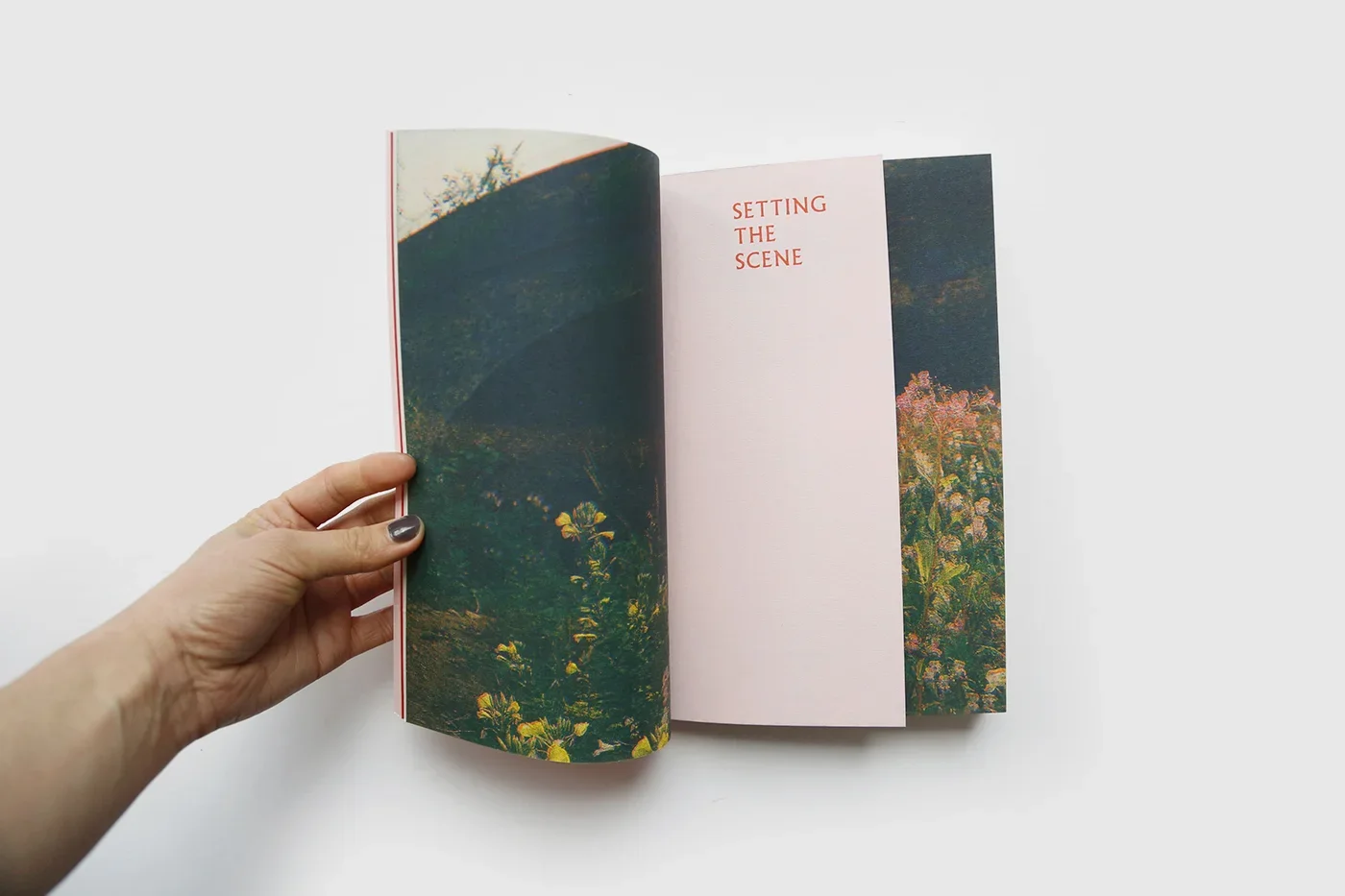
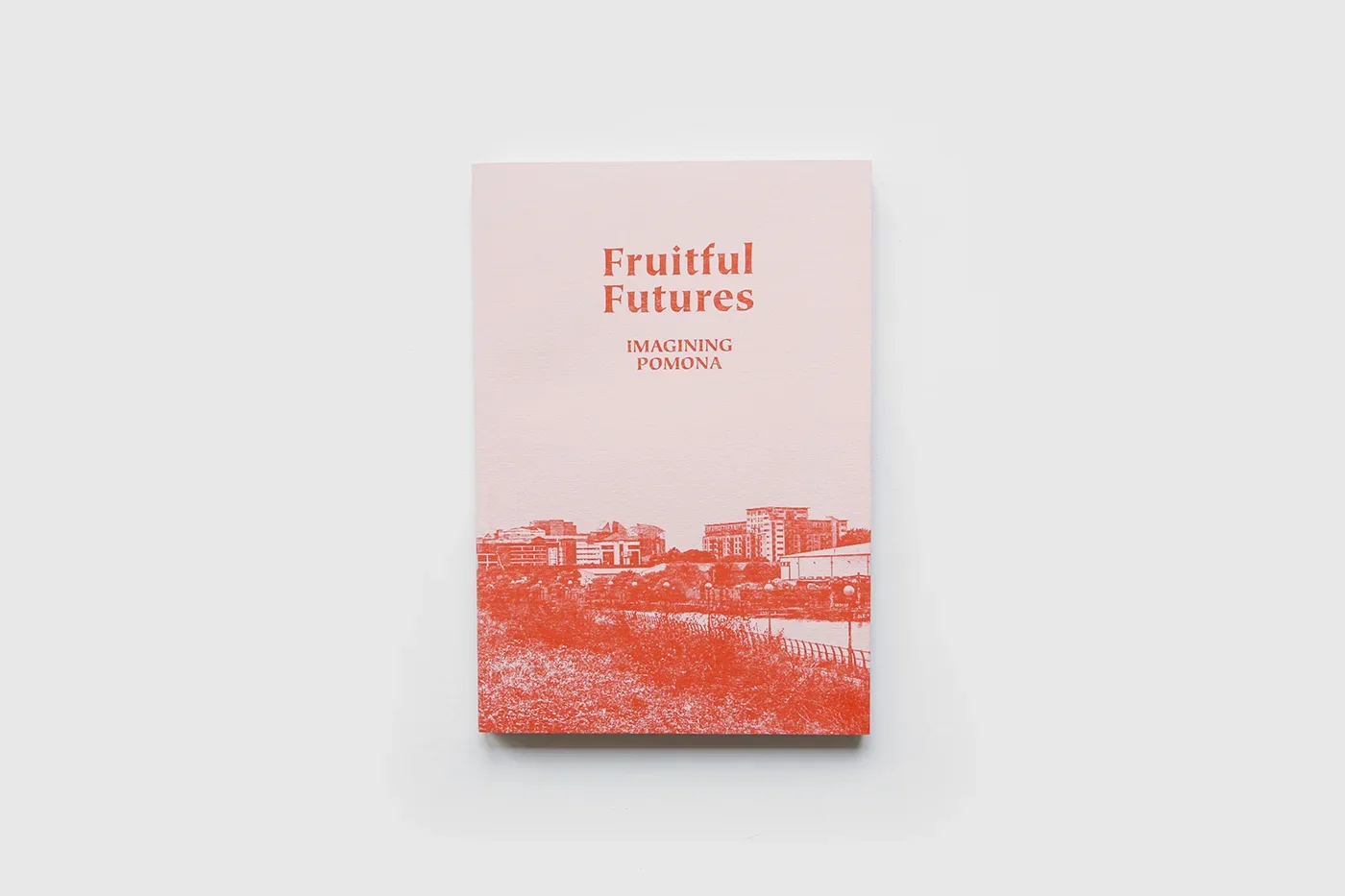
One of many pieces about Pomona, more detailed articles I’ve written on it are published in various publications including The Guardian, and as the foreword (and photography) for Fruitful Futures.

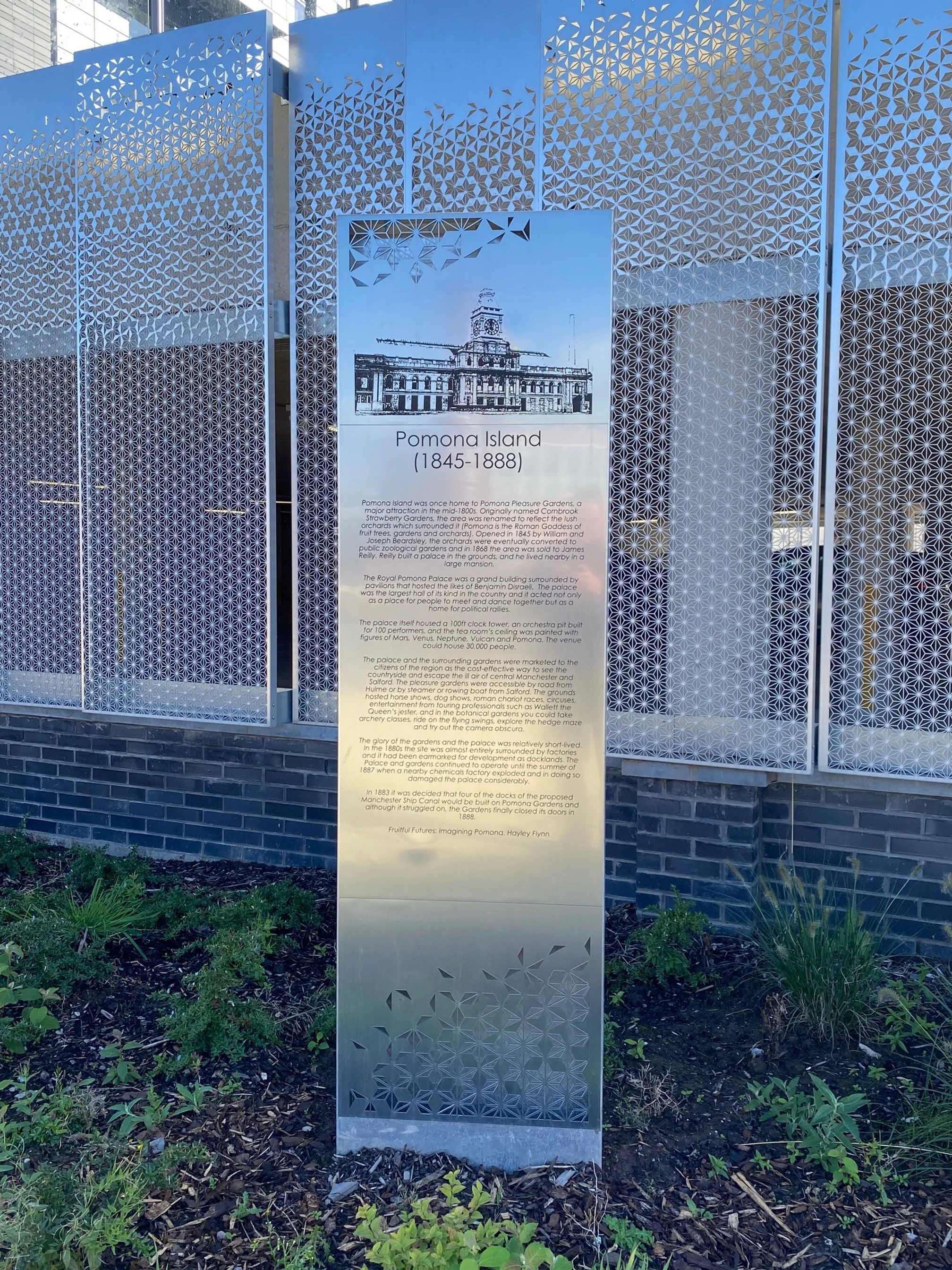
Extracts of my work on Pomona have also featured with my accompanying photography throughout city centre buildings curated by Simon Bushell for Bruntwood’s digital art and film programme, and passages of this article have been turned into a public art panel on Pomona itself.

I also featured in the film Pomona Island (2014) by George Haydock.

Hollow Seasons

A journal entry written whilst walking home through Hulme.

Most nights the road is ordinary. The sky - varying shades of blue to match the season. The puddles yo-yo between milk thin or thigh splashers, but they’re almost always there. On winter nights, when its pitch dark by five, the pizza shop throws yellow light out through its windows and the walkers outside who had set off in the light receive it gratefully like a warming flame.

Tonight there is a desert sky and the road becomes a river. Leaves and litter along the pavement seem to swirl and eddy at its banks, yellow gingko leaves gather on the swell. The tarmac carries me along as an imperceptible current rushes me on, the blackness of the paving like that of deep, still water. I know there were houses here once, lining the route, but now I can only see them as cliff faces.

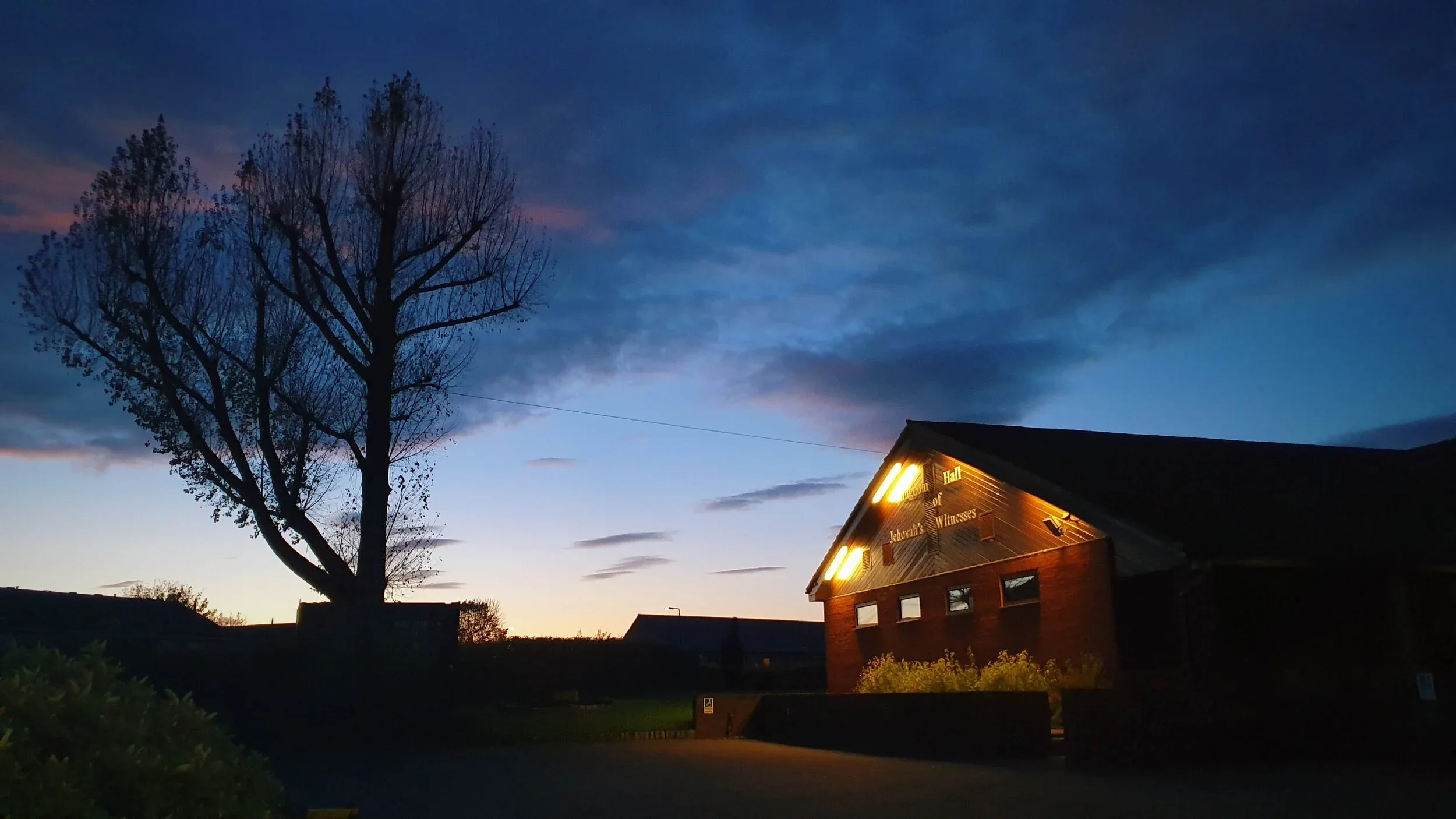
At the Jehovah’s Witness Centre the sky darkens, indigo at its edges, besides it there’s a winter tree (a poplar, maybe) in silhouette. Its multitude of tiny twigs grow straight from the trunk post-pollard and seem like the spines of a monolithic cactus. I mistake the uplit wooden facade of the A-framed building beside it for that of an American motel. It’s closed now; lit for no one. Empty rooms. Hollow seasons.

The Kool Runnings van just past here is an evergreen: roadside jerk chicken transcends the seasons, in all weathers chicken bones in the gutter turn pink as cars pass by, illuminating them in the brake light. Approaching the van the candyfloss detergent from the hand car wash lingers, but downwind of it, the only smell is charred meat. To me that barbecue smell is the summer of 1994 and the years between are engulfed by the road until I pass through the smoke. All of the 90s in my nose and mind, the dead leaves at my feet I imagine as those of the drained swimming pools of California, I hear skateboard wheels clatter against their brim - it’s a misplaced nostalgia inherited from someone else, somewhere else, and by the time I’m past the van, approaching the crossroads, I am back in Hulme.

There’s a tree surrounded by a dense bed of clover, ferns, and Cat’s-ear, and last summer somehow the inside reel from a VHS tape found itself entwined in the branches like tinsel. Coming home the sun would hit the tape and it would sparkle silver, a breeze through the branches made the light on the tape dance, from the northside of the tree it resembled a disco ball. Once, when, it was behind me I turned to see that the light had no effect from the south side and it was just a dying tree covered in a flimsy black band, and amongst the Cat’s-ear fly-tipped junk outnumbered the ferns.

Rowan

An excerpt from Nightbathing.

Times are that nostalgia grips me and I lose track of where I am on the map. There’s a house similar to my high school best friend’s where Donna and I spent most of the summer of ‘97 eating heavily buttered tiger bread and slathering ourselves, unevenly, in fake tan. September that year, for our return to school, we strutted along the driveway together with irrevocably streaked legs thinking it was finally our time to be the cool girls. Before the crushing realisation that we would never be the cool girls we continued to fill that summer with a cocktail of innocent adolescence - sunbathing and water fights and hiding and climbing amongst bushes and dens in a wild expanse behind Donna’s house. We’d flit between spending hours playing Super Mario and covering ourselves in candy floss fragranced salves and potions whilst staring enviably at models with model boyfriends in teen magazines. On the outside wall of the house I imagine running a stick of chalk along as I walk and when I next pass I see someone, much smaller than I, had done just that. There’s nothing remotely similar about where I live now and the suburb of my youth but there’s something hypnotic enough about the endless grey road running on ahead of me that enables me to time travel. 

Now that I observe the suburbs with such purposeful scrutiny I’m indoctrinated into them in the way only children seem to be. Although I don’t know the ginnels and alleyways, the shortcuts and hiding places the way my daughter one day will, I am exploring in much the same way as her, the kind of exploration thought of as a luxurious flaneurism in cities is really more of an unavoidable aspect of parenting alone, and of being poor. In wastelands, children are attracted to the lack of authority, but in exploring the suburbs the draw is territorial - they are the rightful owners and can map the terrain in a way no adult ever could. The shortcut through the grounds of the Muslim Centre, the hidden kissing fenceposts on an alley that appears at first to be a dead-end, these are places you discover effortlessly as a child and are drawn to unwittingly. 


I don’t imagine I’ll discover these cut-throughs, or notice ideal spaces in the bushes for a den, but I am as curious of the ground as much as I am the birds - it compels me to sit at the curb edge and poke at dirt and pebbles in its gulley. There’s an affinity with stones again, the joy of finding one with that enviable hand-feel, a smooth valley in which to rub my thumb back and forth. I read that rock collecting is a commonality between large numbers of meth addicts; in America they are also inextricably drawn to Native American arrowheads, one user described the strange hobbyists in action: ‘You just get to walking and looking at the ground. You get to looking and an arrowhead catches your eye. Many nights [I] found [myself] in fields full of fellow arrowhead hunters. The strangest things you find out there is other dopeheads’. I wonder what replaces the fields and arrowheads for the addicts living amongst the city lights.

The road out of the suburb is a thick strip of tarmac laid over old cobbles from the suburb’s early days. At the gutter edges the tarmac runs out and a half metre wide strip of cobbles on either side is visible for the length of the road. The tarmac strip and its rough edges look like a huge glob of flattened Play-Doh and I imagine peeling it back to reveal the entire cobbled road once more. There’s a satisfaction picturing the deep, accurate indentations of each cobblestone left on the dough’s underside.

It seems alien now in the short winter light how I could ever imagine the road as freshly-poured black treacle bitumen the way I do in summer. Last May marked the start of a fiercely hot blaze that ended just as August arrived, the trees sucked the life from their leaves in order to shed them and fortify their trunks, fruits ripened too 

soon (or not at all) and died on their stalks, and the lawns turned to straw and 

stubble. In America as the meth addicts trade pebbles, the arid gardens around them are being spray-painted grassy green. I watch, unbelievably, a variety of online adverts for competing lawn paint companies, each feels a parody of the last. The ads link to real websites, and the websites sell real products but I can’t shake the feeling it’s a satirical prank. The camera zooms in as tiny pearls of green spray from the hose and eddy across dead blades of grass: ‘Simply spray your lawn problems away!’. How long can we deny these ferocious days before the paint fades and peels? 

I look around me at the streets and realise there are no rowan trees on Rowan Avenue.

Riverbed

I learned of gentleness through riverbed rocks 

Ritual undressings

Finding scars like seams of quartz:

white scyth 

you couldn't see.


I saw you in a riffle on the Calder

a sheet of penny brown.  

Learned your landscape with one hand 

submerged; 

wrist split the light. 


I felt the river warp its course to absorb 

the sinking of a limb. 

I grasped as it forked, fingers 

beckoned

whorls of silt.


I feared, at first, to disturb that moss-stitched rock

Or serpentine stone of

red-orange rust, which rose through 

gold rings - 

shattered the sun.


I heft slabs up along the banks, spume-storms rose

around bone-chilled ankles.

I stacked these sturdy structures;

with cairns

built you a home.


We brooded on kindred things. Houses that 

crumbled around you, that 

fortified around me. 

Stone-sure

I saw you there:


I came to tenderness through riverbed rocks. 

Your mother called them hazel.


Ossa

There’s nothing there

on the tip of my tongue

except soft flesh

I’ve explored before.


My skull though: a dam.

Pebble and sand

words worn smooth

on the bone.


Lower. My breastbone;

heartthings grow.

In that cuttlebone

alone: a turbine,


and my ribs, only exist

as beams of wild light;

backstays; burst fierce

from the core.


I will the dam a weak spot;

fissure and fracture from here

on your cheek

where I rest it. Break!


But words only dissolve in the slipway,

or rattle hollow

amongst our teeth.

Perhaps one or two make it through -


do they? I’ll send them direct.

Shift higher in bed,

to press my forehead to yours,

tell you this:


“I’m sending you messages this way”.


My bones are telling you soft words

too hard for my mouth to say.

Cumber

My hollows brought me here, being as they were

on the outside. Pushed through

gooseflesh

by a mudslide of millstones


It wasn't only the then-burning skin

or the cooling rock as it set between ribs.

It wasn't only the failing words as you

glass-eye stared.


I had salted away shale, my collarbone

grew heavy; tried to topple me

in my throat

the cobblestone crowned.


A cumber of rocks that I knew 

to acknowledge,

then sand in my lungs, and the ache

as the sinker plumbed mud.